

Cyber Frauds India 2026: Spot Scams, Prevention Tips And Safe Investments


As technology becomes a bigger part of our lives, so do online scams.In fact, records for cyber fraud in India, up to mid-2025 (June 30), show 1.25 million cybercrime incidents have been recorded. In fact, over 5.82 lakh cyber fraud cases were reported in India in FY 2024 alone1. From fake investment schemes to phishing messages that look eerily real, today’s cybercriminals are smarter, faster, and harder to spot. These scams don’t just target the tech-savvy — anyone can fall for them, especially when they’re disguised as trusted brands or urgent financial alerts.
However convincing they might be, you can still prevent being a victim of these scams with only a few protective measures. In this article, you will learn all about such cyber fraud and how to prevent it.
Common Types Of Cyber Scams
Over the years, with the increasing number of reported crimes, a lot of these crimes have diversified, finding new ways to infiltrate your device and extract information. To learn cyber scam prevention, first understand the types of crimes out there.
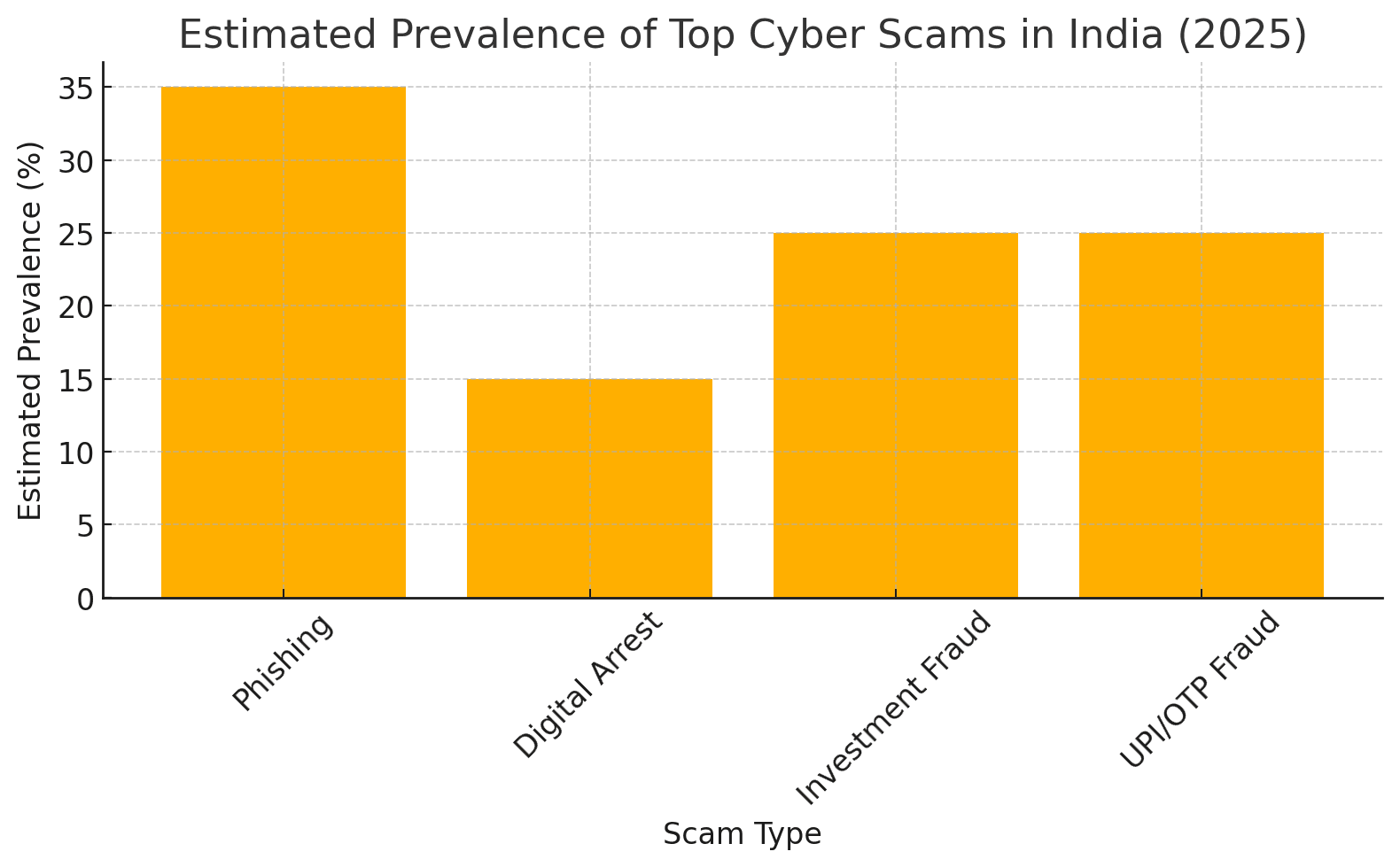
Most commonly reported scams at the National Cyber Crime Reporting Portal have been discussed below:
Phishing and Smishing Scams
Phishing scams in India remain the top-listed cyber scam among others. In these types of scams, fraudsters usually send emails or links via SMS and WhatsApp, pretending to be courier companies, banks, or income tax officials.
Things to look out for:
- Realistic branding
- Sense of urgency
- Fake KYC
- Delivery failures.
Digital Arrest Scams
Digital arrest scams and online financial scams are one of the fastest-growing scams of 2024-2025. These cybercriminals impersonate CBI, NCB, RBI officials or the police, claiming that your documents are linked to a crime, causing panic.
Things to look out for:
- Fake video calls with fake uniforms
- Forged warrants
- Pressure or urgency to transfer money to unknown accounts.
Trading and Investment Scams
These scammers are known to run cloned or fake apps, displaying a fake dashboard showing high profits to the victim. They encourage you to invest large amounts but block withdrawals in the name of “processing fees. Beaware of the investment scam red flags as discussed below:
Things to look out for:
- Claims of high returns
- Fake celebrity endorsements
- Investments via WhatsApp or Telegram
- Asking for personal UPI IDs.
UPI or OTP Frauds
These attackers misuse QR codes, UPI ID requests, fake refund calls, or trick you into sending funds to unknown accounts. They might also pressure you into doing so.
Things to look out for:
- Asking for UPI IDs, QR codes for receiving money
- Asking for OPTS for money transfer
- Sending fake SMS showing the transfer of funds
- Collecting requests disguised as verification from banks.
Step-by-Step Prevention Guide
As cyber fraud in India has become increasingly sophisticated, staying alert to small details can help you avoid being scammed. Below, we have discussed an easy prevention guide.
Verify before you click.
Always remember to verify links from unknown senders before you click on them. In case of emails, check the email ID or domain, and hover over the links to check for clear URLs. Avoid clicking on unfamiliar links.
Never share your OTP
Avoid sharing OTPs or requests from unknown numbers. Real banks and agencies never ask for OTPs, UPI pins, QR codes or remote app access. Remember that scanning QR codes never credits money, only debits an amount. Ensure that UPI collect requests are from known merchants.
Download apps from the official store.
While downloading a new app, always use the Google Play Store or the Apple App Store to download it. Avoid using an unknown APK file shared via WhatsApp or SMS.
Verify caller IDs
Always verify caller IDs before receiving a call. Even after you have received a call, ensure that you have proper knowledge about the call or that the call is somewhat expected. Scammers usually disguise themselves as the Police, CBI, banks, Income tax, courier companies or trading platforms.
What to Do After a Scam
In case you suspect that you are being scammed or if you notice any unauthorised transactions in your account, immediate action is the best way to improve your chances of retrieval. Here are some initiatives you can take within the first few hours.
- Immediately stop any additional payments, disable your UPI for the affected account, and block and stop all transactions from that account.
- Call the national security helpline and report the crime. Dial 1930 to connect with the Indian Cyber Crime Coordination Centre. Quick action may be able to reverse or stop any unwanted transactions.
- File a complaint on the official portal of NCPR. Click on “Report Other Cybercrime”, choose “Financial frauds”, upload all evidence and details of the crime, and remember to note your complaint number.
- Contact your bank and let them know that the transactions were not made by you. Tell your bank that you have been scammed, the amount that was debited, the transaction ID, the time of fraud, and the account details of the beneficiary. Doing this might allow the bank to freeze transactions, trigger interbank alerts, or escalate through NPCI in UPI-related cases.
The Digital Trap: When Scams Look Legit
Here are some new-age cyber crimes that can be difficult to consider a trap:

1. Rise Of Impersonation
Scammers are known to impersonate important establishments, brands, etc., to deceive people and take away their important information. They create a sense of urgency through their conversations and manipulate you into believing that they are legit.
2. Phishing, Vishing, And Smishing
Cybercriminals use clever tactics to trick people into sharing personal or financial information — and three of the most common scams are phishing, vishing, and smishing.
- Phishing: This is a type of email scam where fraudsters pose as trusted organizations (like banks, payment platforms, or government agencies) and send emails with fake links or attachments. These emails often urge you to click immediately — leading you to a fake website that captures your login credentials or installs malware.
- Vishing: Short for "voice phishing", this involves fraudulent phone calls. Scammers may pretend to be from your bank or a government agency and use urgency or fear to convince you to share OTPs, bank details, or personal data over the phone.
- Smishing: This stands for "SMS phishing". You’ll receive a fake SMS alert — maybe about a blocked ATM card, a package delivery, or a suspicious bank transaction — prompting you to click a link or call a number, which leads to a phishing trap.
All three are forms of social engineering attacks designed to manipulate your trust. Stay alert, verify the source, and never share sensitive information without double-checking.
Why Are You The Target ?
Scammers often target you because you are online, and it has nothing to do with your financial status. Here's how it works:
The Psychology Behind Financial Scams
The scammers know that people often react haphazardly under pressure. So, they deliver fake scenarios like investment returns, charities, tax refunds, etc., which create a sense of urgency and force you to make impulsive decisions.
How Scammers Exploit Trust, Urgency, And Fear
Scammers often pretend to be some trusted brands, banks, or even people to make them seem trustworthy and thus lower your defences. For example, you are more likely to believe a bank employee who asks you for money to save your account. This creates a sense of urgency and makes you listen to them without any doubts.
Link Between Digital Growth And Cyber Risk
The rise in digital growth has also given rise to cyber risk. Now that more data is shared, stored, and exposed online, scammers have multiple opportunities to use it to their benefit, further putting you and your finances in a vulnerable position.
Your Financial Footprint Is Everywhere
Accessing financial details online leaves a trace behind, which can cause cybercrime and financial fraud. Here is how it forms:
1. The Data Trail You Leave Behind
Whenever you use a financial app that uses your financial details, you leave behind your personal and financial details. This includes your login details, credit/debit information, location, etc. Cybercriminals can use this data to identify you and gain access to your accounts.
2. How Safe Are Your Investment Apps and Wallets?
With several digital investment tools like stock trading apps, crypto wallets, etc., it has been difficult to trust their security and levels of protection. Some can cause potential risks like weak security, fake impersonation of apps, failure to detect suspicious activities, etc.
3. Spotting Red Flags Before It Is Too Late
Online scams are getting smarter — and at first glance, many can seem completely legitimate. But if you look closely, there are often subtle warning signs that something isn’t right. Here are a few common red flags to watch out for:
- Typos and unusual URLs
- Unverified apps in the app store
- Pressure to act fast on unusual payments
- Requests for sensitive information
When Returns Seem Too Good to Be True
Scammers often present large returns on little to no risk on investments, unlike legit investments. Here is how you can spot such scams and have digital fraud awareness:
The Anatomy Of Fake Investment Schemes
Fake investment schemes pretend to be professional-looking websites and offer features like guaranteed returns with no risk. They often pressure you to invest quickly, and you will almost always find no legitimate contact information.
High Returns VS. High Risk: Learn The Difference
Legitimate investments can certainly bring a significant amount of profits, although these values can also fluctuate rapidly. Usually, investments with higher returns carry more risks. Therefore, investments promising high returns with little to no risk can often seem suspicious.
Evaluating Trust in Investment Platforms
It is better to assess the platform's credibility before investing in their platform. Checking for licenses, third-party reviews, verifying sources, etc., can help evaluate trust in such investment platforms.
Such trustworthy investment options can include something like the Senior Secured Bonds by Grip Invest. These bonds reduce the risk by putting collateral on assets like real estate, cash, etc. while providing debt securities.
Future-Proofing Your Finances
In order to save your finances, it is better to future-proof them by choosing better investment options. Here is how you can do that:
1. Investing In Safety And Structure
To have long-term financial security, it is better to start investing safely and securely. You can choose from secure investments in India such as investment options like senior secured bonds, fixed deposits, government bonds, or PPFs, which provide reliability and safety.
2. Credit Ratings & Regulatory Oversight
It is better to check for credit ratings before committing to an investment option or platform. Ratings like AAA+ can indicate that it is trustworthy or credible. Similarly, these platforms, etc., must follow some standards or regulations to be considered safe.
3. The Comeback of Secure And Fixed Returns
With unpredictable markets, investors are turning to fixed-income options that offer stable returns and predictable income. These options include senior secured bonds, lease-backed investments, etc., making it ideal for investors who do not like huge risks.
Conclusion
Today, cybercriminals have become experts in scamming people to the point that it has started looking legitimate. Thus, it has become imperative to recognise such online financial scams; knowing where your money goes and prioritising your financial safety can help protect your assets and prevent falling into such traps.
For such responsible investments, you can start investing with Grip Invest. Through their regulatory compliance, real-time reporting, etc., you will find fixed-income opportunities that will help you build a better and secure financial future.
Frequently Asked Questions on Cyber Frauds In India
1. What should I do if I fall victim to a cyber scam?
If you fall victim to a cyber scam, then you should first report it. After this, you should change all your important details, such as passwords and alert agencies for your PAN, Aadhaar, etc. Finally, keep a close eye on your accounts and report unusual activity.
2. Will banks refund scammed money?
The type of scam will determine if your money will be refunded or not. If you willingly shared your information with the scammer, then you will not be refunded the money. However, if the scam was unauthorised and you did not share your information willingly and reported the scam within 72 hours, then you will get a refund.
3. How can I secure my investment accounts online?
To secure your investment accounts online, you need to have a strong password and always activate two-factor authentication. Moreover, with the help of Grip Invest, you can invest safely since they are known for safekeeping financial data and growing your wealth securely.
4. How to report cyber fraud in India 2025?
Reporting cyber fraud in India can be done on the National Cyber Crime Reporting Portal (or NCRP), or by calling the National Helpline at 1930. Once you enter the link, mention all your details, phone number, transaction ID, screenshots, and bank statements. This will promote faster action.
5. Are crypto investment apps safe from scams?
Crypto investment apps are one of the most targeted platforms by scammers. They do so through fake platforms, cloned websites and apps, or phishing links. To avoid getting scammed, only use RBI-regulated, SEBI-registered, or globally verified exchanges. Avoid all unsolicited investment tips and avoid transferring money to personal wallets connected to social media.
6. What’s the RBI guideline for investor scam recovery?
According to RBI guidelines, it is recommended that you report the fraud immediately to your bank, complain to cybercrime.gov.in, and also notify the 1930 helpline. Doing this will allow the bank to freeze any suspicious transactions temporarily, raise chargeback requests, and also initiate internal investigations.
7. How to spot digital arrest fraud?
To spot digital arrest, you can look out for the following:
- Unexpected calls from unknown numbers claiming to be the police or CBI.
- Call to discuss threats or legal action claims.
- Call from an unknown number pressuring to remain on call or make instant payments.
8. What are the best secure investment apps for Indians?
The best secure investment apps in India are SEBI-regulated, RBI-regulated, and backed by reputed financial institutions. Some of these Indian apps include Groww, Zerodha, Upstox, ET Money, Kuvera, and Paytm Money. INDmoney. Official banking apps include SBI YONO, ICICI Direct, and HDFC Securities. The recommended way to download these apps is by using the Google Play Store or the Apple App Store.
References:
1. https://www.thehindu.com/data/cyber-fraud-in-banking-transactions-surges-in-fy24-data/article68813626.ece
Want to stay at the top of your finances?
Join the community of 4 lakh+ investors and learn more about Grip Invest, the latest financial knick-knacks, and shenanigans in the world of investing.
Happy Investing!
Disclaimer - Investments in debt securities/municipal debt securities/securitised debt instruments are subject to risks including delay and/ or default in payment. Read all the offer related documents carefully. The investor is requested to take into consideration all the risk factors before the commencement of trading.
This communication is prepared by Grip Broking Private Limited (bearing SEBI Registration No. INZ000312836 and NSE ID 90319) and/or its affiliate/ group company(ies) (together referred to as “Grip”) and the contents of this disclaimer are applicable to this document and any and all written or oral communication(s) made by Grip or its directors, employees, associates, representatives and agents. This communication does not constitute advice relating to investing or otherwise dealing in securities and is not an offer or solicitation for the purchase or sale of any securities. Grip does not guarantee or assure any return on investments and accepts no liability for consequences of any actions taken based on the information provided. For more details, please visit www.gripinvest.in
Registered Address - 106, II F, New Asiatic Building, H Block, Connaught Place, New Delhi 110001


