

Sectoral Mutual Funds India In 2026 : Top Returns, Benefits And Risks


Introduction: What Are Sectoral Mutual Funds
Imagine being able to ride the wave of India’s fastest-growing industries, from cutting-edge technology to booming infrastructure with just one investment. That is the power of sectoral mutual funds.
These funds channel 80% or more of their assets into a single sector, offering investors a front-row seat to the spectacular growth stories unfolding in areas like pharma, banking, or renewable energy, as mandated by SEBI guidelines1.
Unlike diversified funds that spread your money across many industries to keep risk in check, sectoral funds embrace concentration, making them a thrilling ride of high risk and potentially high rewards.
They are ideal for those who know the sector pulse, can weather market ups and downs, and want to amplify their gains through focused bets. For adventurous investors aiming to turbocharge their portfolios, sectoral funds can be an exciting tool to capture India's dynamic growth landscape.
In the next section, we will explore some of the top-performing sectoral mutual funds in India for the year 2025, highlighting 4-5 notable funds along with their impressive 3-year and 5-year performance metrics to help investors make informed choices.
Example Of Sectoral Mutual Funds
When it comes to riding the wave of India’s fastest-growing sectors, sectoral mutual funds provide targeted exposure with the potential for impressive returns. Exemplary funds like ICICI Prudential Infrastructure Fund is growing- have a look to the below graph-
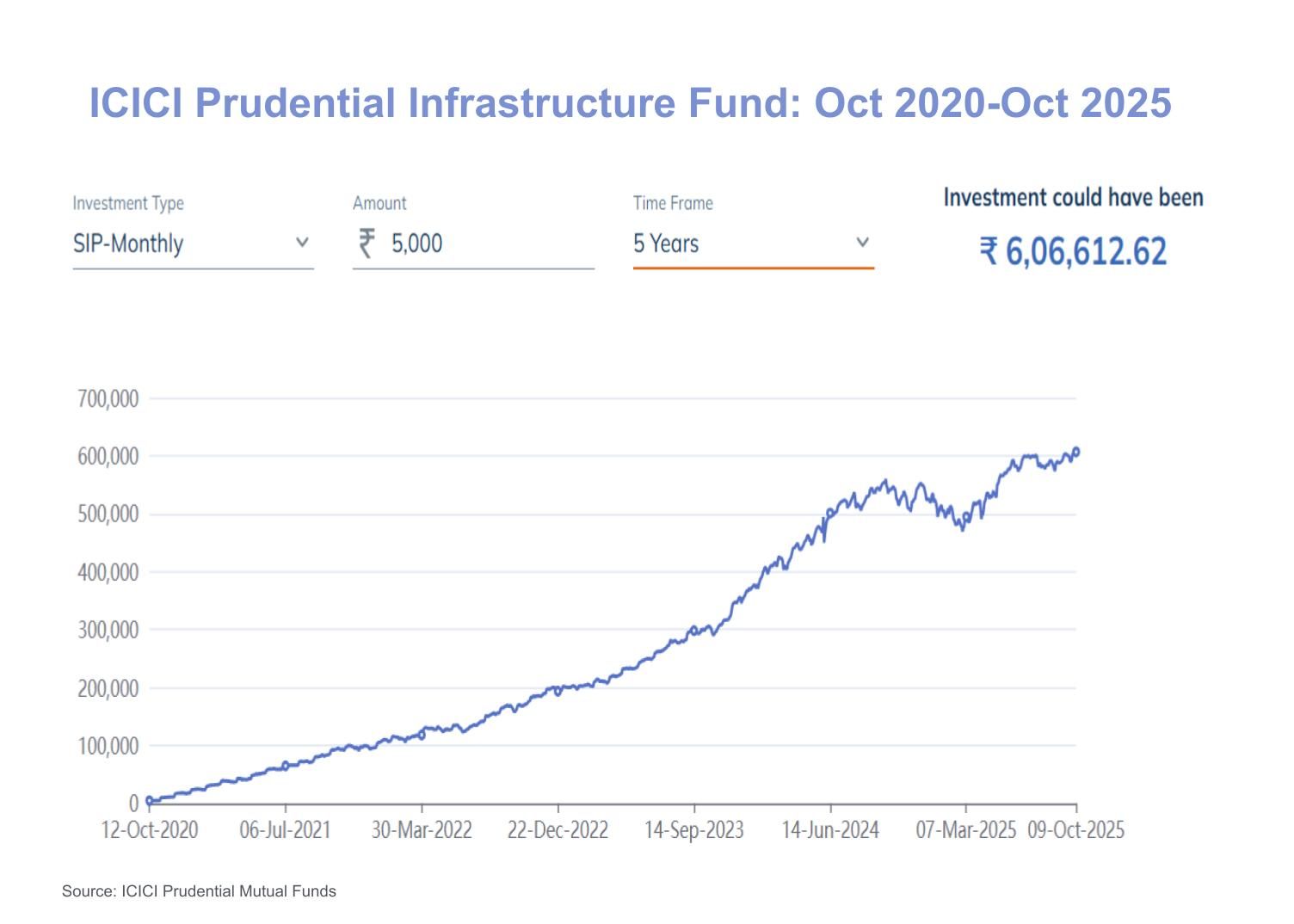
Let us look at some exemplary funds that have consistently delivered strong performance over the last 3 to 5 years. These funds not only showcase the power of concentrated sector investing but also highlight the sectors fueling India’s economic growth in the year 2025.
| Fund Name | Sector | 3-Year Annualized Return | 5-Year Annualized Return |
| ICICI Prudential Infrastructure Fund | Infrastructure | 24.95% | 32.19% |
| Franklin Build India Fund | Infrastructure | 23.32% | 27.53% |
| SBI Healthcare Opportunities Fund | Healthcare / Pharma | 25.08% | 19.64% |
| Nippon India Banking & Financial Services Fund | Banking & Financial Services | 17.10% | 26.18% |
| LIC Mutual Fund Infrastructure Fund | Infrastructure | 29.92% | 32.93% |
Source: Moneycontrol2
These strong returns reflect India's big bets on infrastructure development, healthcare expansion, and financial sector transformation. Infrastructure funds especially have thrived on government spending and private investments, underpinning India’s growth story. Healthcare funds remain steady thanks to rising demand and export opportunities, while banking funds ride the wave of digital finance adoption.
It clearly demonstrates how focused sectoral investment can lead to superior portfolio growth, for investors willing to embrace sector-specific risks. Now, the question is what are the benefits of investing in these funds next?
Benefits Of Investing In Sectoral Funds
Following the compelling examples of top-performing sectoral mutual funds, it is essential to understand the key benefits that make these funds an attractive choice for certain investors.
Targeted Growth Potential
Sectoral funds focus on specific industries such as technology, healthcare, or banking, giving investors the opportunity to benefit from the growth potential of a particular sector. By concentrating investments in high-performing or emerging sectors, these funds can deliver above-average returns when the chosen industry outperforms the broader market.
For investors who have confidence in a sector’s long-term prospects, this targeted approach allows them to capitalize on thematic growth trends that general mutual funds might not fully capture.
Additionally, sectoral funds are ideal for investors seeking to implement tactical investment strategies. They can be used to overweight sectors poised for short- to medium-term growth based on economic cycles, policy changes, or technological advancements. When carefully timed and combined with diversified funds, sectoral funds can enhance portfolio returns while aligning investments with evolving market opportunities.
Portfolio Diversification Benefits
While sectoral funds inherently involve concentrated bets, they play a vital role in diversifying an overall investment portfolio when combined with broad-based diversified funds. They provide tactical exposure to specific sectors that may outperform the market, thereby enhancing the portfolio’s risk-return profile.
This combination helps investors capture thematic growth stories and cyclical industry upswings without solely relying on sectoral funds, which mitigates overall portfolio risk. Incorporating sectoral funds strategically allows investors to tailor their portfolios to evolving market opportunities and personal risk appetites.
Together, these benefits make sectoral mutual funds a powerful addition for investors seeking focused growth with a balanced diversification approach. As we explore the promising benefits of sectoral mutual funds, it's equally important to be aware of their risks and considerations. The next section will focus on the volatility and market sensitivity inherent to sectoral funds and why thorough timing and research are crucial for investors looking to navigate these risks effectively.
Risks And Considerations Of Sectoral Mutual Funds
Building on the benefits of targeted growth and diversification, it is important to understand the risks sectoral mutual funds carry. These funds tend to be highly volatile because their investments are concentrated in a single sector, making them more sensitive to market fluctuations than diversified funds. Economic cycles, regulatory changes, or sector disruptions can cause sharp ups and downs in fund value.
Timing plays a critical role; investing without thorough research or during a sector’s downturn can lead to significant losses. Investors need to analyze sector trends, government policies, and company fundamentals before investing.
While sectoral funds offer the potential for higher returns, they require a strong risk appetite and should generally be part of a diversified portfolio. This approach allows investors to harness the growth potential of sectors while managing the amplified risks and volatility inherent in these focused funds. Understanding and preparing for these risks helps investors make more informed, balanced investment decisions.
How To Choose The Right Sectoral Fund
After discussing the benefits and risks, the concern raised for any investor is to choose the right sectoral fund. Choosing the right sectoral mutual fund requires a careful approach focused on performance history and fund management quality.
1. Analyzing Past Performance and Fund Manager Expertise
Look for funds with a consistent track record of outperforming their sector benchmarks over multiple time frames, especially 3 to 5 years. Past performance shows how well the fund navigates different market cycles. Equally important is evaluating the fund manager’s experience and expertise in the sector.
A skilled manager with deep industry knowledge and a strong investment process can significantly influence fund outcomes by selecting high-potential stocks and timely exits.
2. Tools and Platforms For Smart Investment
Today’s investors have access to a variety of digital tools and platforms that provide in-depth data on fund performance, risk metrics, expense ratios, and expert reviews. These tools enable side-by-side comparisons and real-time monitoring, helping investors make informed choices aligned with their risk appetite and investment horizon. Additionally, Systematic Investment Plans (SIPs) help mitigate timing risks by spreading investments over time.
By combining rigorous analysis and smart technology, investors can better select sectoral funds that match their financial goals and risk tolerance, enhancing their chances for success.
Conclusion
Sectoral mutual funds offer a powerful way to tap into India’s most dynamic and high-growth industries, including technology, healthcare, infrastructure, and BFSI, in 2026. While they present attractive opportunities for targeted gains, these funds come with heightened volatility and require careful timing and research.
Investors should balance sectoral funds within a diversified portfolio, selecting those with strong historical performance and expert fund management. Leveraging digital platforms and SIP strategies further aids disciplined investing. With thoughtful selection and risk awareness, sectoral mutual funds can effectively enhance growth prospects in India’s evolving economic landscape.
FAQs on Sectoral Mutual Funds In India
1. What are sectoral mutual funds and how do they differ from diversified funds?
Sectoral mutual funds are investment funds that allocate at least 80% of their assets to stocks within a specific sector or industry, such as technology, healthcare, or infrastructure. Unlike diversified funds, which spread investments across multiple sectors to reduce risk, sectoral funds concentrate on a single sector, offering focused exposure to that industry's growth potential but also increased volatility.
2. Why are sectoral funds considered high risk and high reward?
Sectoral funds are high risk because their concentrated investments make them more vulnerable to sector-specific downturns, regulatory changes, or economic cycles impacting that industry. However, they offer high rewards when the chosen sector experiences rapid growth or favorable market conditions, enabling potentially superior returns compared to broad-market funds.
3. Who are the ideal investors for sectoral mutual funds?
Ideal investors for sectoral mutual funds are those with a strong risk appetite who understand sector dynamics and seek concentrated exposure to high growth mutual funds India. These investors are comfortable with higher volatility and use sector-focused funds India as tactical investments to capitalize on specific economic trends while balancing their portfolios with diversified assets.
4. What is the difference between sectoral and thematic mutual funds in India?
Sectoral funds invest exclusively in companies from a single sector or industry—such as banking, pharma, or infrastructure—making their performance heavily dependent on that sector’s cycles and trends. Thematic funds, on the other hand, invest in multiple sectors linked by a broader idea or megatrend—like digital innovation or ESG (Environmental, Social, Governance).
This means thematic funds offer more diversification and generally carry lower concentration risk than pure sectoral funds. Sectoral funds suit investors with strong conviction in one industry, while thematic funds are ideal for those seeking exposure to several industries connected to a long-term theme.
References:
1. Bajaj Finserv, accessed from: https://www.bajajfinserv.in/investments/what-are-sectoral-mutual-funds
2. MoneyControl, accessed from: https://www.moneycontrol.com/mutual-funds/performance-tracker/returns/sectoralthematic.html)%5B2
Want to stay at the top of your finances?
Join the community of 4 lakh+ investors and learn more about Grip Invest, the latest financial knick-knacks and shenanigans that take place in the world of investing.
Happy Investing!
Disclaimer - Investments in debt securities/municipal debt securities/securitised debt instruments are subject to risks including delay and/ or default in payment. Read all the offer related documents carefully. The investor is requested to take into consideration all the risk factors before the commencement of trading.
This communication is prepared by Grip Broking Private Limited (bearing SEBI Registration No. INZ000312836 and NSE ID 90319) and/or its affiliate/ group company(ies) (together referred to as “Grip”) and the contents of this disclaimer are applicable to this document and any and all written or oral communication(s) made by Grip or its directors, employees, associates, representatives and agents. This communication does not constitute advice relating to investing or otherwise dealing in securities and is not an offer or solicitation for the purchase or sale of any securities. Grip does not guarantee or assure any return on investments and accepts no liability for consequences of any actions taken based on the information provided. For more details, please visit www.gripinvest.in
Registered Address - 106, II F, New Asiatic Building, H Block, Connaught Place, New Delhi 110001


