

State Government Bonds
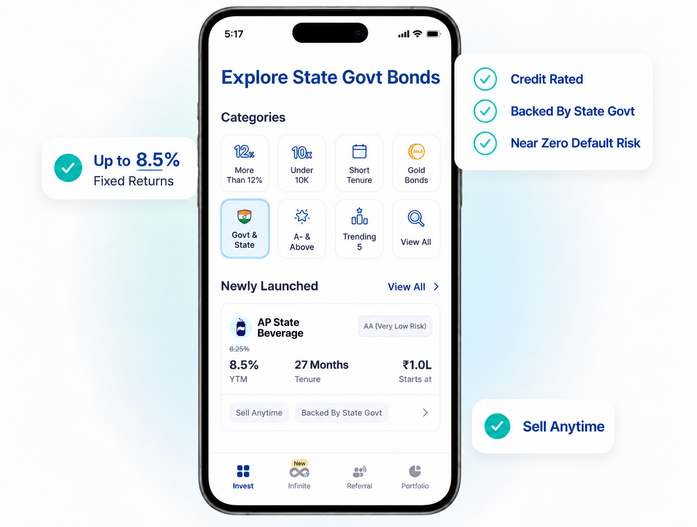
State bonds, also called State Development Loans (SDLs), are debt securities that Indian state governments issue through the RBI to fund infrastructure and development.
State development bonds form nearly 26.5% of the total bond market as of 2025, reflecting rising state borrowing and growing investor confidence in this segment.
Issued by state governments and managed by the RBI, these state government securities carry low default risk whilst providing higher yields than Central Government Securities.
Primary issuance occurs via auctions every Tuesday on the RBI's E-Kuber platform, but bond platforms offer investors a simpler way to access secondary market opportunities.
State government bonds aim to raise low-cost public capital while offering investors dependable, government-linked income.


Plan your State Bond Investments
Estimate your returns from investment in State Government Bonds
Use our bond return calculator to calculate the returns you will receive from your investments in State Government Bonds in India.
- Add your investment amount
- Add the tenure of the bond
- Provide expected YTM and coupon frequency
- See instant returns
Disclaimer: This calculator is for illustration purposes only and does not guarantee or represent actual returns.

REASON AND BENEFITS

Attractive Yields
State bond yields are higher than those of Central Government Securities, while maintaining a comparable sovereign-backed, low-risk profile.

Government-Backed
SDLs are issued and managed through the RBI, resulting in minimal default risk due to support from state tax revenue and RBI-regulated debt servicing.

Portfolio Diversification
Investing in state bonds can help diversify into debt and control the overall risk level of the portfolio.

Predictable Income
Interest is paid out twice a year, giving investors recurring and predictable cash flow until maturity.

Wide Accessibility
Buying state bonds is not restricted to primary market auctions of the RBI. Bond platforms deliver secondary market access, increasing liquidity.

How to Invest?


- Check Issuer's Finances: Review the state's fiscal deficit and debt levels to judge its repayment ability before investing in state bonds.
- Compare Yields: Evaluate state bond yields against those of G-Secs issued for the same tenure to ensure fair pricing.
- Assess Liquidity: Confirm the bond has sufficient trading volume in the secondary market to allow a timely exit before maturity if required.
- Consider Taxation: Interest income is taxed at the slab rate, while LTCG and STCG are taxed at 12.5% (without indexation) and the slab rate, respectively.

OTHER OFFERINGS
Other Secured Fixed-Income Products By Grip Invest

Corporate Bonds
- Securities issued by corporates & NBFCs
- Up to 12.5% pre-tax YTM
- Start investing with Rs 1,000
- Exchange listed and credit rated

InvoiceX
- Loans backed by Invoice Discounting
- Up to 14% pre-tax YTM
- Start investing with Rs 1,00,000
- SEBI/RBI compliant and credit rated

LoanX
- Diverse pool of loans from top NBFCs
- Up to 14% pre-tax
- Start investing with Rs 1,00,000
- SEBI/RBI compliant and credit rated

Baskets
- Theme based investing
- Up to 14% pre-tax YTM
- Start investing with Rs 5,000
- SEBI/RBI compliant and credit rated

Corporate FDs
- High Yield Fixed Deposit Investments
- Up to 10% pre-tax
- Start investing with Rs 1,000
- SEBI/RBI compliant and credit rated
For your knowledge
Some of our partners






Market Insights
Latest Update on State Govt Bonds
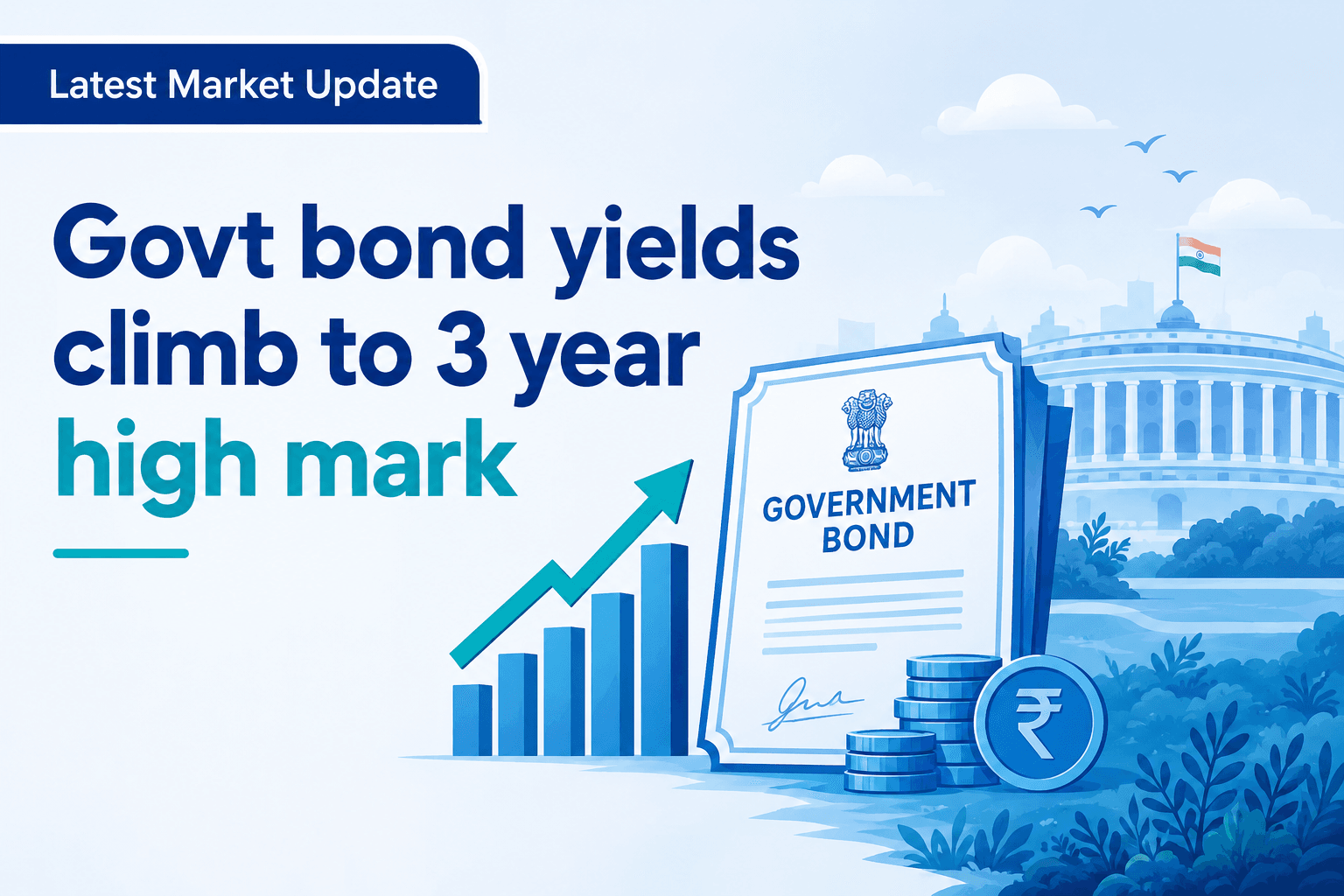
Indian govt bond yields climb to 3 year high mark after RBI hikes repo rate
Following the RBI’s decision to hike the repo rate by 25 basis points on October 7th, Indian government bond yields climbed to their highest level in more than three years. The benchmark 6.94% 2036 government bond yield stood at 7.3886% on 14th October, a day after touching its highest mark of 7.4112% since March 2023. With this recent rate hike decision, India joined the long list of countries who have begun hiking their interest rates, including Japan, USA, UK and Australia, amidst rising energy costs due to geopolitical tensions.
Read MoreInsightful Videos
Watch & Learn More About Fixed Income Investing
What is Yield in Bonds? Bond Yields Explained Simply
Interest Income vs Capital Gains in Bonds | Tax Explained Simply
How to Claim TDS on Bonds: Step-by-Step Guide
To help you
Frequently Asked Questions
Who issues State Government Bonds?
What are State Development Loans?
What is the difference between State Development Loans (SDLs) and State Government Bonds?
How can I invest in SDLs online?


