Top

Corporate Bonds

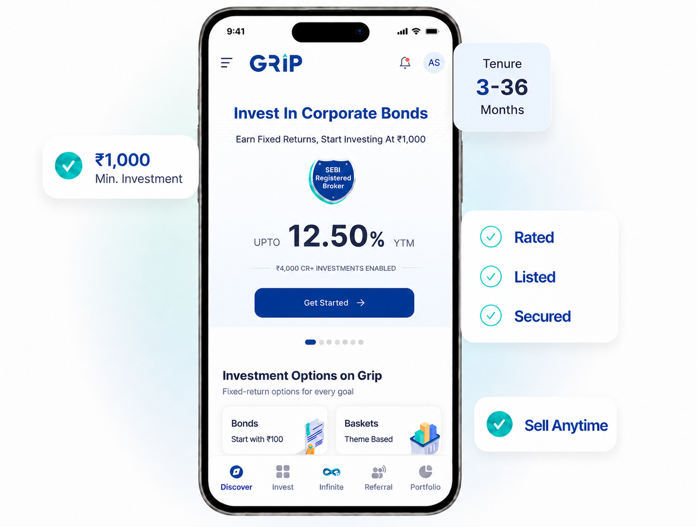
Invest in secured and investment-grade rated corporate bonds issued by India's leading corporates and NBFCs. Earn 9.0-12.5% annual returns with an investment period of 3-36 months.

corporate bonds in India
  • Predictable Returns
  • Earn upto 12.5% Pre-Tax YTM
  • Invest & Sell Anytime
AT A GLANCE
Corporate Bonds
₹ 2,416 Cr+
Investment Enabled
₹ 1,000
Minimum Investment
45,000+
Investors
ABOUT CORPORATE BONDS

What are Corporate Bonds?

  • Corporate bonds are debt securities issued by companies, NBFCs, or corporations referred as issuers. Corporate bonds offer fixed returns within a fixed tenure called yield to maturity (YTM). 

  • Investors provide funds to the issuer, who offers fixed returns through periodic interest and principal payments, made monthly, quarterly, or semi-annually.

  • Independent agencies like CRISIL, ICRA, and CARE assess the issuer's financial health and assign credit ratings between AAA (highest) to D (lowest). A higher rating indicates a lower risk.

  • Corporate bonds offer liquidity through the secondary market, allowing investors to sell bonds before maturity.

gripFDworks
Corporate Bonds
fdWorks
Bank FDs
YTM%
9-12.5%
5-9%
Repayment
Periodic
At Maturity
Risk
Low-Medium
Low
Inflation Protection
Yes
No
Security Cover
Yes
Yes

Plan your investment

Estimate your corporate bond returns in seconds

Use this bond calculator to calculate how much your investment in corporate bonds will grow. Adjust the amount, tenure and yield to view your maturity value instantly — no sign-up needed.

  • Put your investment amount
  • Adjust tenure, expected YTM & coupon frequency
  • See instant maturity value
Bond Return Calculator
24 mo
%
Total returns₹1,20,963
Interest₹20,963

Disclaimer: Please note that these calculators are for illustration only and do not represent actual returns.

REASON AND BENEFITS

Why Invest in Corporate Bonds?

Financials.svg

Consistent Income

Bonds in India provide steady and fixed returns through fixed interest payments, making them a favourable choice for investors looking for a predictable income stream.

AssetQuality.svg

Accessible Investment

You can begin investing in corporate bonds with a minimum of just 1,000, offering a range of options to align with your financial goals and preferences.

CP.svg

Portfolio Diversification

Invest in bonds that are backed by credit ratings, offering a safer investment option that remains insulated from stock market volatility.

grip

Liquidity & Flexibility

Investors can sell their bonds on Grip anytime, leveraging the liquidity of the secondary corporate bond market to exit investments early with ease.

How to Invest?

It’s really simple with Grip

Find Your Deal
Investment Process
Visualize Returns
01.

Explore curated investment opportunities process

Find
your deal

Unique investment opportunities qualified through rigorous due diligence

02.

Complete KYC and investment process

Complete
KYC &
Investment

Seamless digital KYC, e-sign and payment experience

03.

Earn fixed returns with Grip

Returns per
pre-decided
schedule

Track your portfolio seamlessly while earning fixed returns

See if you are okay with this or want to propose something else

Partner Curation and Due Diligence
How To Evaluate Corporate Bonds Investment Opportunities
  • Look for Ratings: Independent agencies like CRISIL, ICRA, and CARE rate bonds based on the issuer’s financial health. Understand the Rating Scale: Ratings range from high (AAA) to low (D). Higher ratings mean lower risk but often lower returns, while lower-rated bonds carry higher risk and potential for higher returns.
  • Secured vs Unsecured Bonds: Secured bonds are backed by assets (collateral) which means, in case of a default, these assets can be used to repay investors. Unsecured bonds don’t have collateral and can be riskier. Check Collateral Value: For secured bonds, it’s good if the collateral value is higher than the loan amount, as it helps protect your investment.
  • Short-Term vs. Long-Term Bonds: Bonds can range from short (12 months) to long-term (24+ months). Short-term bonds generally have lower yields and risk, while long-term bonds can offer higher returns but come with more uncertainty.
  • Check the YTM: This is the total return you can expect if you hold the bond until it matures. It factors in both the coupon payments and any gain or loss if the bond was bought at a discount or premium.
logo

OTHER OFFERINGS

Other Secured Fixed-Income Products By Grip Invest

InvoiceX

InvoiceX

  • Loans backed by Invoice Discounting
  • Up to 14% pre-tax YTM
  • Start investing with Rs 1,00,000
  • SEBI/RBI complaint and credit rated
LoanX

LoanX

  • Diverse pool of loans from top NBFCs
  • Up to 14% pre-tax
  • Start investing with Rs 1,00,000
  • SEBI/RBI complaint and credit rated
Baskets

Baskets

  • Theme based investing
  • Up to 14% pre-tax YTM
  • Start investing with Rs 5,000
  • SEBI/RBI complaint and credit rated

For your knowledge

Risks Involved in Buying Corporate Bonds

  • Corporate Bonds carry investment-grade ratings, the bond issuer might not be able to pay back in extreme circumstances such as bankruptcy. Investors should check the financials of the issuers issuing bonds in India. Please read the information memorandum (IM) before investing.
  • Liquidity Risk: Corporate Bond investments are exchange-listed, they may not be actively traded. Exiting before maturity may require the investor to find an alternate buyer. Grip Invest does not guarantee the ability to find the buyer and a fair exit price.
  • Interest rate risk: Corporate Bonds exhibit an inverse relationship between interest rates and price. Rising interest rates may cause bond prices to decline, potentially resulting in losses if sold before the date of maturity.

Some of our partners

ashika_group
ET Money
HSBC
Insurance dheko
mobikwik
paisa bazaar
stashfin
tata neu

Market Insights

Latest Update on Corporate Bonds
SEBI_plans_corporate_bonds_derivatives
29 June 2026

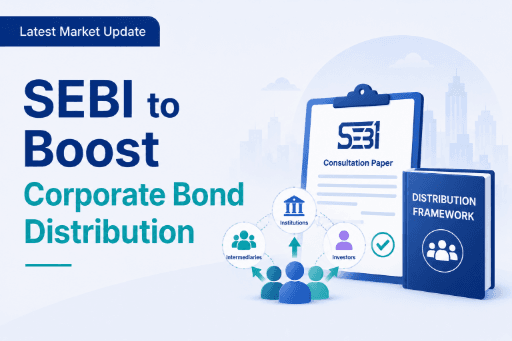
SEBI planning to introduce 'derivatives' to deepen India's corporate bond market

SEBI and RBI are jointly working to launch derivatives on India's corporate bond indices. This step is expected to improve liquidity and make India's corporate bond market more attractive to domestic and foreign investors. The regulators are already developing a market-making framework to support corporate bond trading, with the draft guidelines for corporate bond index derivatives already released in February. After being finalised, stock exchanges are expected to soon launch these products.

Read More

Insightful Blogs

Deepen Your Knowledge On Corporate Bonds

Insightful Videos

Watch & Learn More About Corporate Bonds

What are Bonds? Beginner’s Guide to Understanding Bonds

Where to Buy Corporate Bonds in India?

What Is a Coupon Rate in Bonds? | Fixed Income Explained Simply

To help you

Frequently Asked Questions

Are the returns from corporate bonds guaranteed?

No, returns from bond investments are not guaranteed. Before investing in a corporate bond in India, check for the security, ratings and grade of the bond investment.
As per SEBI guidelines, individuals residing outside India are not allowed to invest in bonds through our platform.
To buy corporate bonds in India, you can explore investment platforms like Grip, which offers a curated selection of corporate bonds investment with clear details on ratings, yields, and tenures, making it easier to choose options that match your financial goals and risk tolerance. Alternatively, you can use brokerage accounts, which typically provide access to corporate bonds through their fixed-income sections, allowing you to filter options by ratings, returns, and maturities. Bonds in India are also listed on exchanges like NSE and BSE, where you can browse available offerings, though these may require a bit more navigation. If you're new to bond investing, a financial advisor can also assist in identifying suitable company bonds based on your investment objectives. Platforms like Grip simplify this process by providing vetted bonds with transparent information, helping you make informed investment choices.


If the issuing company defaults, you may not receive the remaining interest payments or the principal amount. Review the bond's credit rating and issuer's financial health regularly.

Yes, you can sell your Corporate Bonds. All our bond offerings are listed on the exchange, enabling you to sell the securities through the exchange or by contacting your broker. For more details, feel free to reach out at support@gripinvest.in.

When the bond reaches its maturity date, the company returns your invested amount as principal. After maturity, you stop receiving interest from that bond.
Yes. Interest earned on corporate bonds is taxable as per your income tax slab. Capital gains tax may apply if you sell before maturity. For listed bonds, if you sell after 12 months, long-term capital gains tax is applied at 12.5% without indexation; if you sell before 12 months, it is taxed at slab rate.
Yes, TDS of 10% is applicable on interest earned from corporate bonds if the interest exceeds the prescribed threshold for the financial year.

Resident investors whose total interest from corporate bonds is below the prescribed threshold amount can submit Form 121 to avoid TDS deduction. Form 121 is available on Grip Invest; you can access it by clicking here.

Corporate bonds on Grip offer up to 12.5% fixed returns, whereas regular bank FDs offer 6-7% returns annually. Corporate bonds may offer higher returns than FDs but usually carry higher credit risk. The better option depends on your risk appetite and investment goals.
Corporate bonds are available in both short and long tenures, ranging from a few months to over 10 years.
‘AAA’ is the highest credit rating assigned by ratings agencies like CRISIL, ICRA, etc to corporate bonds. ‘AAA’ rating means the bond is issued by a company with a strong ability to repay its debts. It indicates very low risk.
No. While high-rated bonds are relatively safer, all corporate bonds carry some level of credit risk.
No. Corporate bonds pay interest (coupon), not dividends. Dividends are paid on shares, not bonds.
It depends on the bond. Interest may be paid monthly, quarterly, semi-annually, or annually. Read the bond terms before investing to know the payout frequency.
Corporate bond interest rates vary based on the issuer, tenure and credit rating, but generally range from around 7% to 14% per annum.
You can check a corporate bond's credit rating on Grip Invest, where ratings are displayed for listed bonds, or on the websites of agencies such as CRISIL, ICRA, CARE Ratings and India Ratings. The ratings are also available in the issue document on NSE/BSE.
Banks, NBFCs, public sector companies and private companies across sectors issue corporate bonds, subject to regulatory requirements.
The best platforms to buy corporate bonds are regulated platforms like Grip Invest (SEBI registration no: INZ000312836). Grip is an OBPP (Online Bond Platform Provider). You should avoid going to unregulated platforms.

TESTIMONIALS

Wall of Love @ Grip