

Bank Bond Issuance In India 2026: Types, Process And Risks



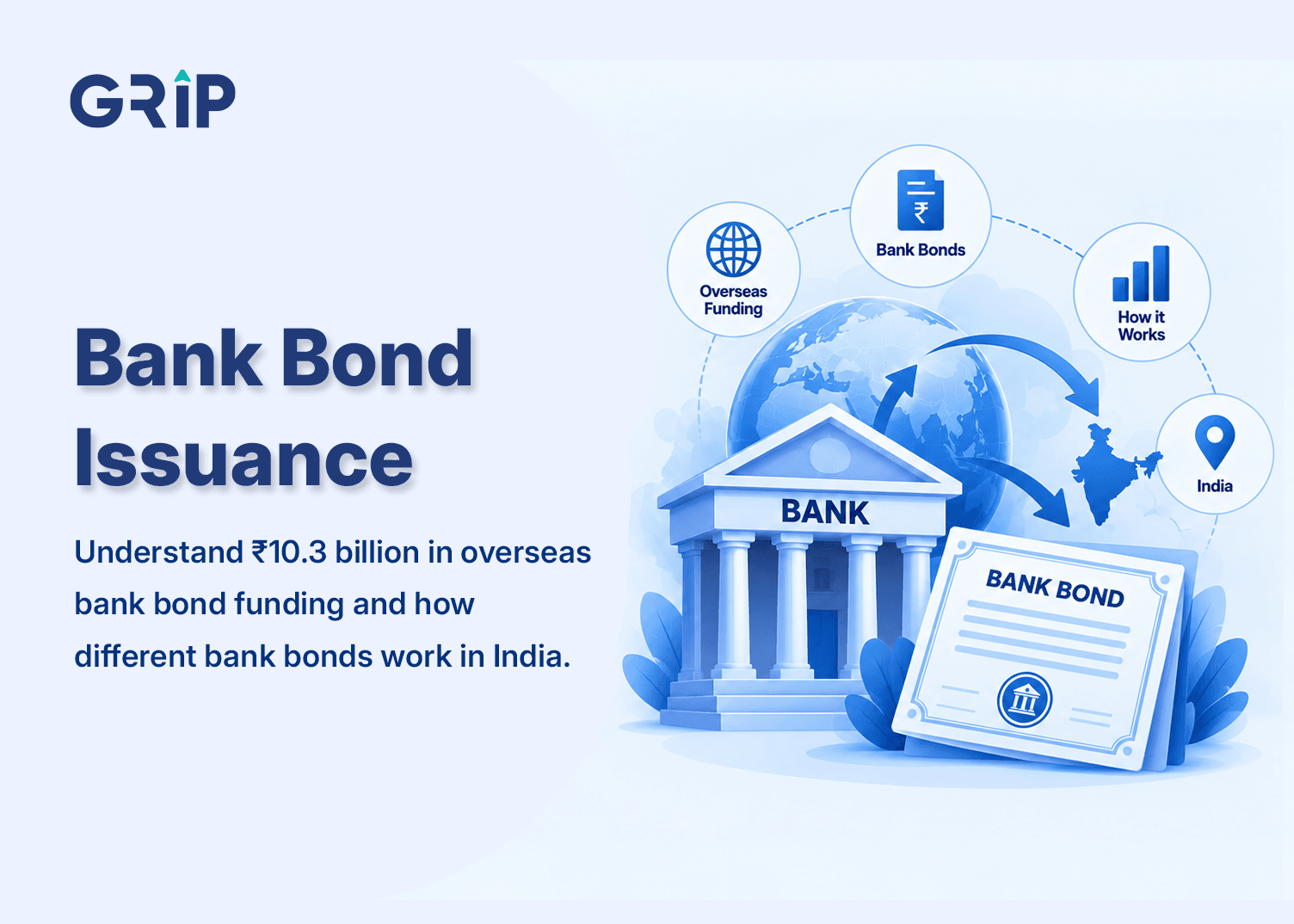
Bank bond issuance in India is the process in which a bank borrows from investors by selling a debt security with specified payment terms. The bank receives money upfront and owes the bondholder the interest and principal set out in the issue document, subject to the bond's conditions. Banks use different bonds for funding and regulatory capital and hence, the instrument's ranking and loss provisions matter as much as the bank's name.
When looking for bank bond issuance in India, you must first identify whether the instrument is ordinary debt, an infrastructure bond or regulatory capital. Deposits remain central to banking, but a bond can raise a substantial amount from capital-market investors for a selected period. Note that the money raised is a liability of the issuing bank. A bondholder does not acquire an ownership stake as a shareholder does.
What Is Bank Bond Issuance in India?
The first step in a bank bond issuance process involves a bank determining the parameters associated with the bond issue which include the amount, tenor, interest rate, payment schedule, and terms of repayment. The proceeds of the bond issue are then used by banks for allowed purposes. A bank bond issuance can either be a source of financing for borrowing or long-term infrastructure finance. Alternatively, the bond could count as regulatory capital and absorb losses under the prescribed conditions.
Assume a bank went ahead and issued bonds worth INR 500 crore with a maturity period of 7 years and an annual coupon of 7.5% on the bonds. Accordingly, assuming the bonds remain outstanding for the whole term as per the bond conditions, the bank will owe INR 37.5 crore annually as coupon payment. However, the cash flows may vary depending on other factors.
Why Do Banks Issue Bonds?
The need for long-term funding is a reason why banks raise capital by way of debt issuance. When banks extend long-term loans, they can utilise long-term infrastructure bonds to align their assets and liabilities. The bond can also diversify the funding options for the bank and replace maturing debt. In addition, Additional Tier 1 instruments and Tier 2 instruments assist banks in satisfying regulatory capital requirements.
In fact, international borrowing became a current example in 2026. Reuters reported on 24 August 2026 that Indian banks had raised more than $10.3 billion in dollar-denominated bonds since 5 June under the RBI's foreign-currency funding window. Note that this figure concerns dollar-denominated funding during a specified interval and not all Indian bank bond issuance in 2026.
Banks compare overseas rates, the cost of swapping dollars into rupees, eligibility and investor demand before issuing. A lower dollar coupon alone cannot tell them the true rupee funding cost.
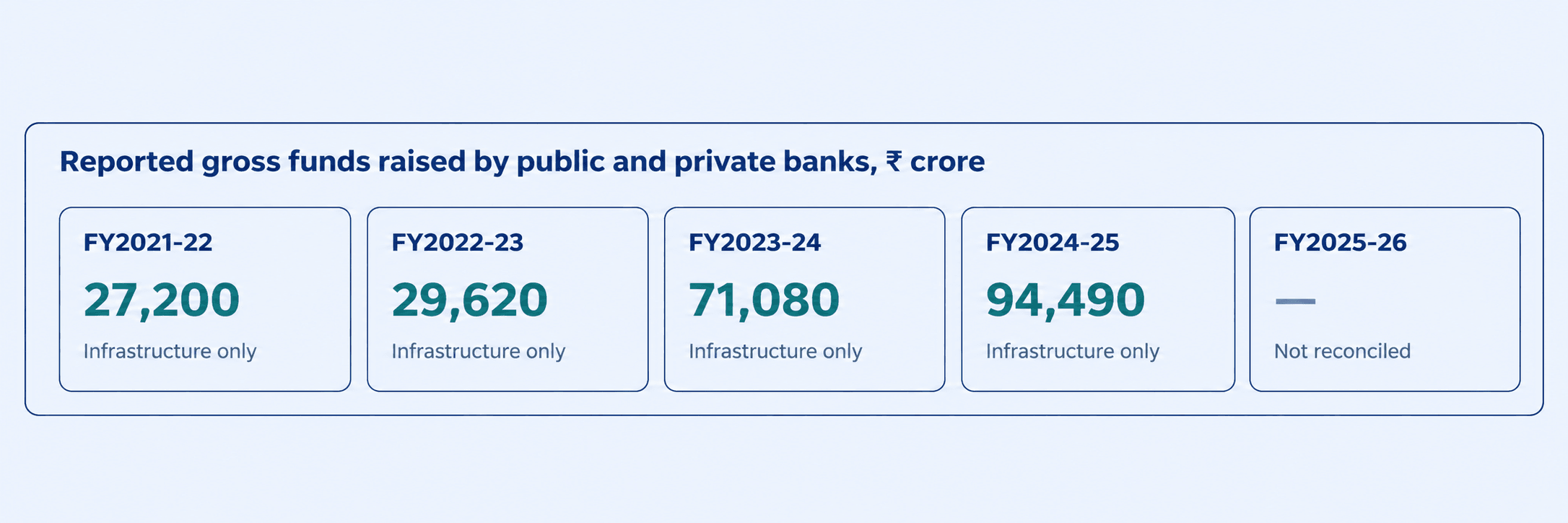
Five-Year Bank Bond Issuance In India
Types Of Bonds Issued By Banks in India
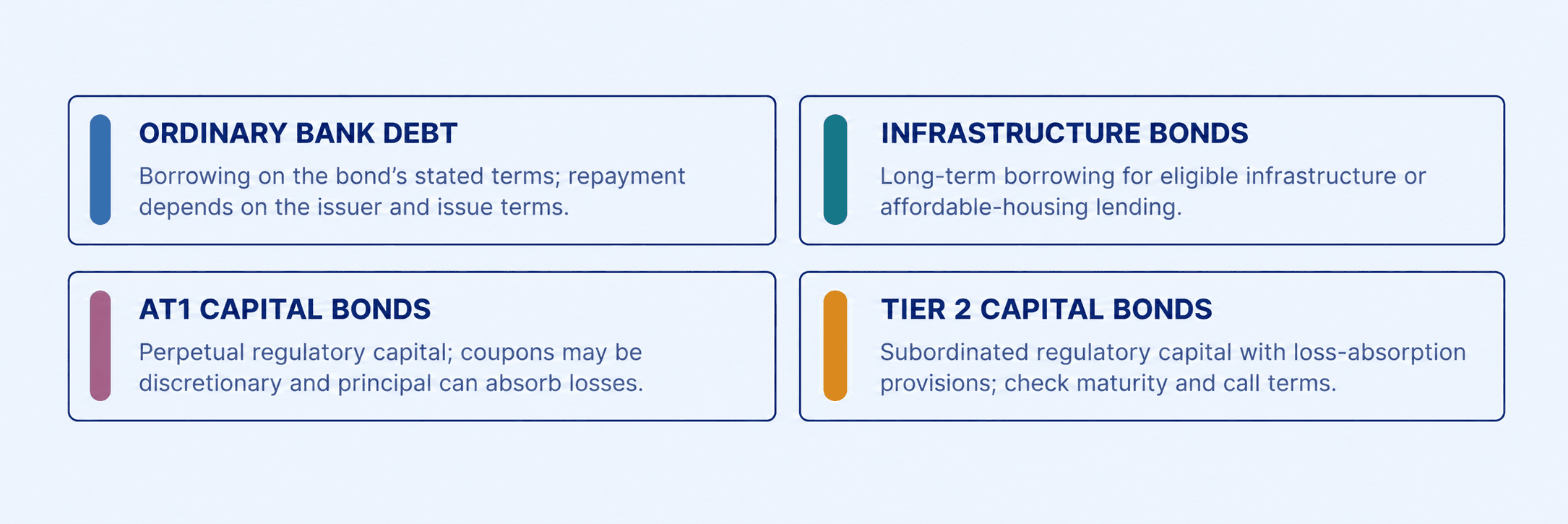
Banks can issue different types of bonds depending on whether they need general funding, long-term funding for eligible projects, or instruments that qualify as regulatory capital. These categories can differ in their repayment terms, ranking, risk and regulatory treatment.
Ordinary and Infrastructure Debt
Banks may use ordinary debt for general funding needs, while infrastructure bonds are intended for eligible long-term lending.
- Ordinary debt raises money for the bank under the specified repayment terms. Such bank bonds in India may differ in seniority, security and maturity. Check whether the issue is senior or subordinated and whether it has security. Neither feature can be assumed from the issuer's identity.
- Bank infrastructure bonds raise longer-term funds for eligible infrastructure or affordable-housing lending, subject to the applicable RBI conditions. Their investor protections depend on the actual issue and not on the word “infrastructure.”
Regulatory Capital Bonds
Unlike ordinary and infrastructure debt, regulatory capital bonds are designed not only to raise funds but also to meet specific capital requirements and absorb losses under defined conditions.
- Tier 2 bonds are subordinated capital instruments with loss-absorption provisions under the RBI framework. They generally have a stated maturity, but a bond's terms may permit write-down or conversion at a specified regulatory trigger.
- AT1 bonds are perpetual regulatory capital instruments. Coupons can be discretionary and non-cumulative and principal can be written down or converted when specified conditions occur. A high AT1 coupon compensates for risks that an ordinary senior bank bond may not carry. Never group all four types into a single bank bond rate comparison. Make sure you understand RBI's Basel III capital framework alongside the issue document.1
How Does Bank Bond Issuance Work?
The initial step taken by a bank is identifying its borrowing requirements in terms of amount and time period. Then it selects the type of borrowing, i.e., project financing, an eligible infrastructure bond or regulatory capital. The bank takes all necessary steps to meet the applicable regulatory and issue requirements.
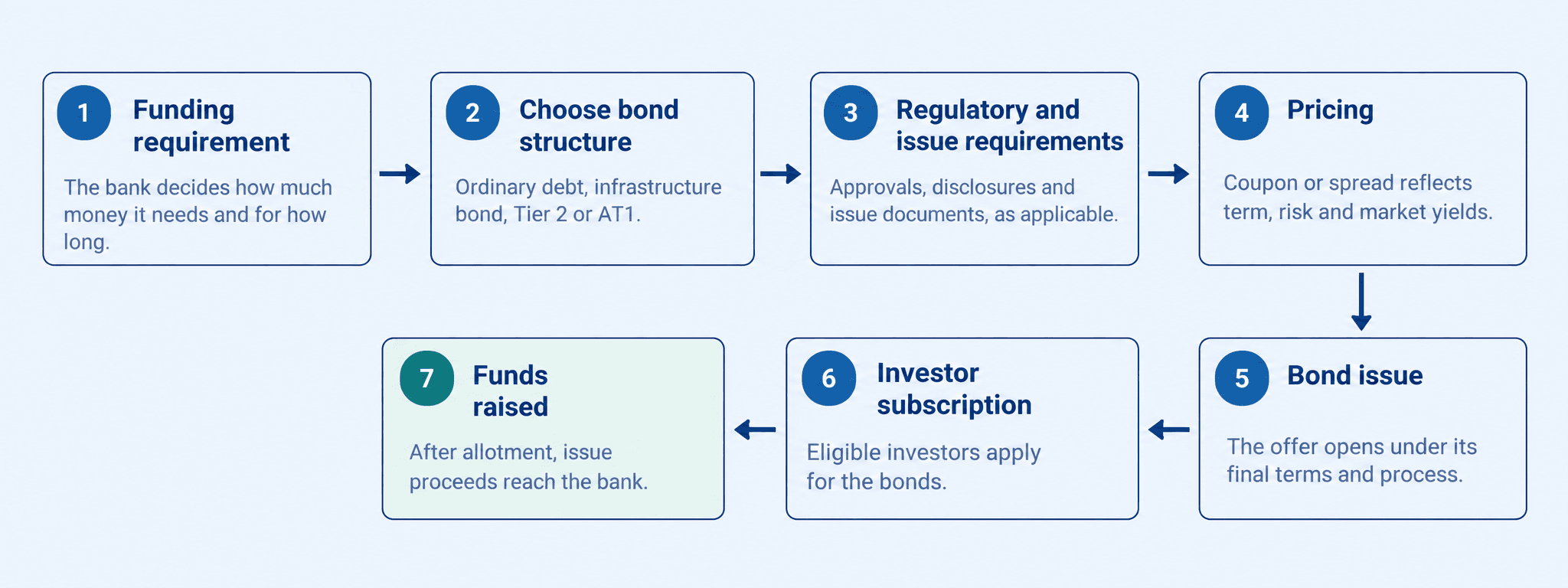
Next, when an arranger or a bidding process places an order for the bonds, the bank assesses investor demand and determines the pricing or final yield. Investors that are eligible subscribe to the securities, which are then allocated to them.
For instance, the bank may issue an infrastructure bond in the amount of INR 1,000 crore for long-term loans. Once investors subscribe to the issue, the bank receives the funds raised under the terms of the issue.
The bank will pay coupons to investors and pay back the principal amount at maturity, subject to the terms of the bond. Depending on whether the bonds are listed or unlisted, investors may have different options for buying or selling them before maturity.
Bank Bonds vs Bank Fixed Deposits
A fixed deposit is a type of deposit that carries a certain rate and period. A bank bond is a kind of security that contains various features such as payment priority, market price, terms and conditions, and the possibility of loss.
| Aspect | Bank Fixed Deposit (FD) | Bank Bond |
| Nature of instrument | Deposit liability of the bank; a savings product. | Debt security issued by the bank; traded or held as a bond. |
| Legal framework | Governed primarily by banking regulations and the bank’s FD terms; covered under DICGC Act for insurance. | Governed by securities laws (e.g., SEBI regulations for listed bonds), trust deed, and bond-specific terms. |
| Return structure | Predetermined interest rate fixed at the time of booking; known cash flows. | Coupon rate fixed, but effective return can vary if sold before maturity due to market price changes. |
| Risk profile | Low credit risk for eligible deposits; protected up to INR 5 lakh per depositor per bank by DICGC (principal + interest). | No deposit insurance; subject to credit risk of the bank and, if traded, interest-rate/market price risk. |
| Insurance cover | Yes: DICGC insurance up to INR 5 lakh per depositor per bank (across savings, FD, RD, current accounts in same right/capacity). | No: Bonds, AT?1 bonds, mutual funds, equities, etc., are explicitly outside DICGC coverage. |
| Liquidity & exit | Premature withdrawal allowed as per bank policy, usually with penalty or reduced interest rate. | Early exit typically requires finding a buyer in the secondary market; sale price may be above or below face value. |
| Market price risk | None if held to maturity; FDs are not traded on exchanges. | Present if sold before maturity: price moves inversely with interest rates and credit spreads. |
| Minimum investment | Often low (e.g., INR 1,000–INR 5,000), varies by bank. | Can be low for retail bonds (e.g., INR 10,000 face value units), but depends on issue. |
| Taxation (interest/coupon) | Interest taxed as “Income from Other Sources” as per slab; TDS may apply. | Coupon taxed as per slab; if listed and held >12 months, capital gains tax rules may apply on sale. |
| Suitability | Conservative savers seeking capital protection and predictable returns within DICGC limit. | Investors comfortable with some credit/market risk, seeking potentially higher yields and tradability. |
What Should Investors Check Before Investing In A Bank Bond?
Begin by looking for the ISIN and issue documents rather than relying on the name of the bank. Alongside this, investors should consider the following aspects and ask regarding:
- Ranking: Is the issue senior, subordinated, Tier 2 or AT1? What is its priority in a loss?
- Credit: What rating applies to this particular instrument, and is it secured?
- Cash flows: When are coupons due? Can they be skipped? Is maturity fixed or perpetual?
- Issuer options: Can the bank call the bond, and under what conditions?
Note that the issuing bank's overall financial position does not by itself determine the risk of a particular bond. The specific instrument's ranking, terms and loss-absorption provisions also matter. Investors should also check the minimum investment amount, listing status and whether there is an active secondary market for the bond.
Next, derive yield to maturity based on the buying price, fees paid and future cash flows. Remember that the coupon is not the same as the effective return if you have paid a premium and sell the bond early. Check the trading volume, the minimum size and the tax consequences of the bond, as well as the payment schedule. These checks can help investors assess whether the bond's potential return, risk and liquidity match their investment needs.
Bank Bond Issuance In India: Domestic Vs Overseas Bonds
Bonds that are floated by banks in India usually have a rupee denomination and are marketed in the Indian debt market, subject to applicable regulations. However, the overseas issuance of bonds enables borrowing foreign funds from the international market, thereby expanding the investor base of the bank.
In this case, the bank ought to make an assessment of the coupon rate on the foreign issue along with any associated hedge costs and compare it with the domestic rupee issue, including the impact of currency and hedging costs.
According to a Reuters news report dated August 24, 2026, the amount borrowed by Indian banks in dollar-denominated bonds since June 5, 2026, stood at over $10.3 billion under the RBI's foreign-currency funding window. This shows how Indian banks can access international debt markets when foreign-currency funding conditions are favourable.
FAQs
References:
1. RBI, accessed from: https://www.rbi.org.in/Scripts/BS_ViewMasterCirculars.aspx?Id=12815

Want to stay at the top of your finances?
Join the community of 22 lakh+ investors and learn more about Grip Invest, the latest financial knick-knacks, and shenanigans in the world of investing.
Happy Investing!
Disclaimer - Investments in debt securities/municipal debt securities/securitised debt instruments are subject to risks including delay and/ or default in payment. Read all the offer related documents carefully. The investor is requested to take into consideration all the risk factors before the commencement of trading.
This communication is prepared by Grip Broking Private Limited (bearing SEBI Registration No. INZ000312836 and NSE ID 90319) and/or its affiliate/ group company(ies) (together referred to as “Grip”) and the contents of this disclaimer are applicable to this document and any and all written or oral communication(s) made by Grip or its directors, employees, associates, representatives and agents. This communication does not constitute advice relating to investing or otherwise dealing in securities and is not an offer or solicitation for the purchase or sale of any securities. Grip does not guarantee or assure any return on investments and accepts no liability for consequences of any actions taken based on the information provided. For more details, please visit www.gripinvest.in
Registered Address - 106, II F, New Asiatic Building, H Block, Connaught Place, New Delhi 110001


