

Credit Card Vs Debit Card: Which One Should You Swipe In 2026?


As India approaches a cashless future, how you pay for your purchase is as important as the item you are buying. Beginning from flight tickets to weekly or daily groceries, your choice in debit card vs credit card will determine and shape how you manage, spend, and grow your money.
India circulates over 100 million credit cards and 1 billion debit cards today1. Learning the benefits and understanding when to use which card has become a crucial goal. Although both cards look identical, they differ significantly in how funds are drawn, the impact on credit scores, offers, benefits, and rewards.
In this article, we will discuss the importance of both cards depending on the situation at hand. Read through and understand the difference between a credit card and a debit card, and the advantages and disadvantages of both.
Credit Vs Debit Card — What Is The Difference?
Before diving into which is better, let us first understand the primary functions and funding sources of debit cards vs credit cards.
How They Function
Debit Card: Using a debit card gives you direct access to your funds in your savings or current account. In other words, you are directly spending from your registered/ personal account. The moment you swipe your debit card for a purchase, the amount gets deducted from your account, resulting in an immediate transfer of funds.
Credit Card: On the other hand, when you are using a credit card, you are actually borrowing funds from the issuer, the bank with which the card is registered. This card runs on a “spend forest, repay later" policy. So you are allowed to spend the funds up to a limit and later repay them, usually within 30 to 45 days of the billing cycle.
What Is The Source Of Funds
Debit Card: The funds for a debit card are your own money, present in your registered/ personal account. This allows you to spend only what you have.
Credit Card: Whereas for a credit card, your purchases are made on borrowed funds. You can use as much as your card allows and repay it later within the designated time frame.
Also Read: How To Generate PNB Debit Card Pin?
Interest and Repayment Policies
Debit Card: There is no repayment system when using a debit card. Whatever funds you are using are your own. So there are no options for interests.
Credit Card: On the other hand, when you are using a credit card, you are actually borrowing funds from the issuer, the bank with which the card is registered. This means you are paying your dues over a fixed time frame. If this repayment is delayed, you might have to pay a high interest rate, typically 35% to 40% annually.
Credit Score
Debit Card: Using a debit card does not affect your credit score. This is because the funds you use are from what is present in your account.
Credit Card: Paying your dues is crucial. By doing this, you can completely avoid interest and maintain a good credit score.
Advantages And Disadvantages Of Credit Cards
Credit cards can be considered a powerful financial tool if used wisely. It comes with convenience and rewards. Below are some advantages and disadvantages of the same.
Advantages
1. Regular use of a credit card improves your credit score, making you eligible for future loans or mortgages.
2. Some banks offer customers points or credit card cash back offers for large purchases, flight tickets, or hotel bookings.
3. Help you make payments even when you do not have physical money in your account.
4. You can make international and local purchases in stores or during travel.
Disadvantages
1. Using a credit card can sometimes conceal hidden fees. These include foreign transaction charges or late payment fees.
2. There is a risk of overspending with a credit card. The pay later option can encourage impulsive purchases.
3. Skipping dues or late payments can lead to high interest rates.
Also Read: Credit Score Vs CIBIL Score: Key Differences Every Borrower Must Know
Advantages and Disadvantages of Debit Cards
Debit cards are better suited for customers who want to spend within their limits. In a way, they promote discipline, as the funds used are directly from the customer’s account.
Advantages
1. Using a debit card allows you to control your purchases. Since the amount is deducted from your account immediately, you can avoid impulsive purchases.
2. There are no interest charges as the funds used are not taken on credit and do not have to be repaid.
3. Debit cards are a convenient way to withdraw cash from your account.
4. Compared to credit cards, debit cards have lower annual fees.
Disadvantages
1. Using a debit card in India has almost no rewards. This makes it less rewarding for regular users.
2. There are daily transaction limits on a debit card in India. This restricts customers from making high-value purchases.
3. Since payments are instant, there is no scope for paying later. This becomes a problem when there is an emergency and a shortage of funds.
Also Read: Effective Ways To Manage Your Personal Finances
Debit Card Vs Credit Card: Quick Comparison
Feature | Credit Card | Debit Card |
Source | Borrowed funds | Own funds |
Payments | Has a monthly bill cycle | Funds deducted immediately |
Rewards | Offers rewards like cash back, miles, or points | Less rewards |
Impact on Credit Score | Improves credit score if used properly | Not associated with a credit score |
Fees | Has an annual fee with interest | Has almost no fee |
Risks | Has risks of debt accumulation | Risks of a low account balance |
Use | Travel, emergency, or large purchases | For everyday expenses |
Credit Card Vs Debit Card- Average Transaction Value In India 2026.
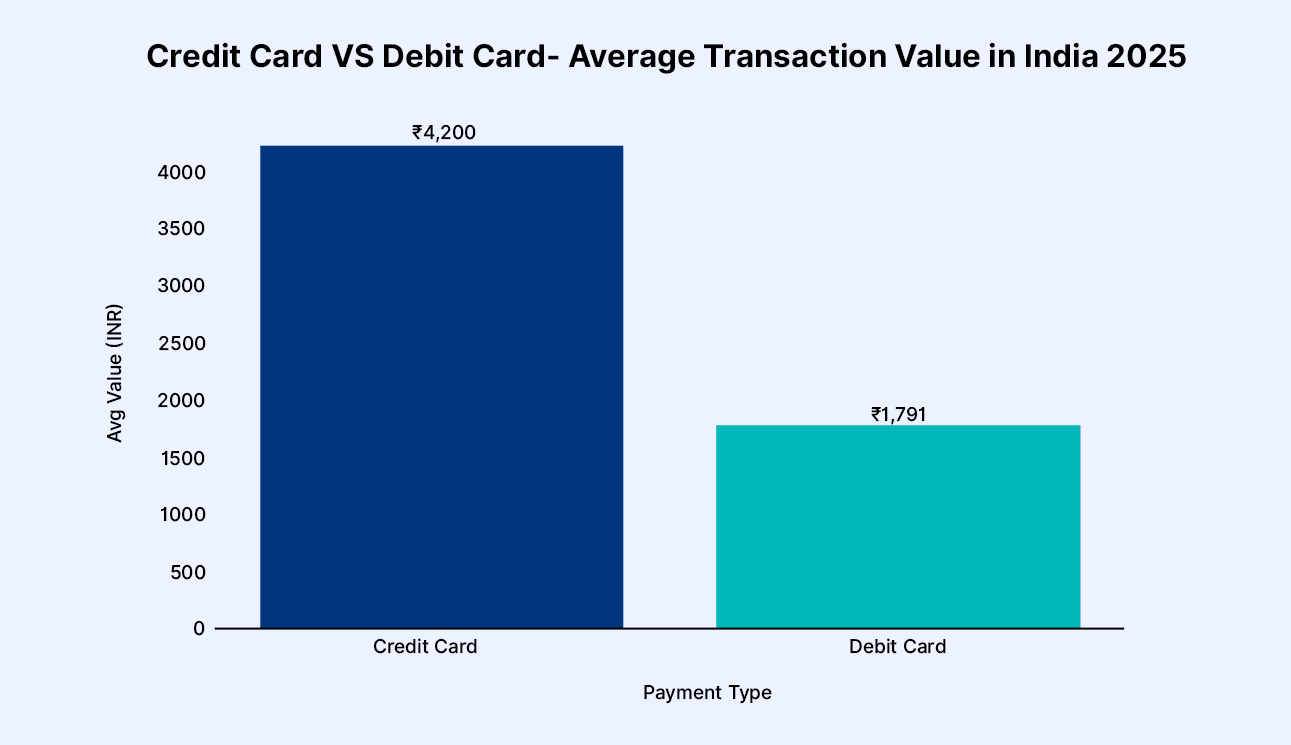
Source: RBI
Which One Should You Use When: Credit Cards Vs Debit Cards?
Choosing the ideal payment method between a credit card and a debit card depends on various factors. Read on to understand the same.
When to Use a Credit Card
You can use a credit card in the following scenarios.
- For travels and bookings. Credit cards offer discounts when you book flights or hotel rooms.
- For emergency purchases such as medical bills or vehicle-related emergencies.
- It is better to use a credit card when making large purchases, such as buying electronics or other appliances.
When to Use a Debit Card
You can use a debit card in the following scenarios.
- Use a debit card for daily expenses such as groceries, utility bills, or local travel. This ensures that you are spending within a limit.
- For budget control. Using a debit card for daily use helps avoid overspending or impulsive purchases.
- It is better to use a debit card for small purchases or withdrawing cash.
Pairing card use with investing discipline
Using a credit card brings a handful of rewards. When you earn cashback rewards, you can redirect that amount into trusted investment platforms like Grip Invest. This will help you grow funds rather than spend them.
Choosing A Card Based On Your Financial Goals And Spending Habits
Selecting between a credit card and a debit card depends largely on your financial behavior and objectives.
1. Students and Young Professionals: Debit cards offer spending discipline and help manage budgets easily by restricting expenditures to the available balance. However, credit cards can build credit history, an advantage for future loans.
2. Salaried Individuals: Those seeking rewards, cashback, and travel perks can benefit from credit cards, provided they repay dues timely to avoid interest. Debit cards serve well for daily expenses and bill payments.
3. Seniors and Retirees: Debit cards are preferred for controlled spending and reduced risk of debt, while credit cards can provide emergency funds and benefits if used cautiously.
4. Small Business Owners: Often rely on credit cards for working capital and business expenses, benefiting from credit limits and cashback offers.
Understanding your spending habits and financial goals will help choose the right card for timely purchases, reward optimization, and financial health.
Conclusion
The idea is not to choose between credit cards vs debit cards but to use both for financial benefits. While debit card rewards in India are limited, credit cards offer significant advantages.
Use a balanced approach to earn rewards and control overspending. Using both cards will help you gain strategic financial goals. This will help you spend smartly and make fixed-income investments on platforms like Grip Invest. To make smart investment choices, invest with Grip. They offer a curated list of fixed-income investment opportunities.
For a great investment experience, explore Grip’s investment platform. Happy investing!
FAQs On Credit vs Debit Card
1. Which is safer: a credit card or a debit card?
Both cards are safe to use, provided you use them properly. Credit cards offer liability and fund protection, while debit cards offer instant transactions and OTP verifications.
2. Does using a credit card improve a credit score?
It does improve your credit score, provided you pay your dues on time. This will also help you with future loans.
3. Can debit cards offer cashback like credit cards?
Debit cards do not offer the same extensive rewards as credit cards. Some banks do provide rewards, but they are limited.
References:
1. RBI, accessed from: https://www.rbi.org.in/
Want to stay at the top of your finances?
Join the community of 4 lakh+ investors and learn more about Grip Invest, the latest financial knick-knacks, and shenanigans in the world of investing.
Happy Investing!
Disclaimer - Investments in debt securities/municipal debt securities/securitised debt instruments are subject to risks including delay and/ or default in payment. Read all the offer related documents carefully. The investor is requested to take into consideration all the risk factors before the commencement of trading.
This communication is prepared by Grip Broking Private Limited (bearing SEBI Registration No. INZ000312836 and NSE ID 90319) and/or its affiliate/ group company(ies) (together referred to as “Grip”) and the contents of this disclaimer are applicable to this document and any and all written or oral communication(s) made by Grip or its directors, employees, associates, representatives and agents. This communication does not constitute advice relating to investing or otherwise dealing in securities and is not an offer or solicitation for the purchase or sale of any securities. Grip does not guarantee or assure any return on investments and accepts no liability for consequences of any actions taken based on the information provided. For more details, please visit www.gripinvest.in
Registered Address - 106, II F, New Asiatic Building, H Block, Connaught Place, New Delhi 110001


