

Difference Between Interim Budget And Union Budget: Meaning, Purpose And Key Changes


Indian citizens are glued to their televisions every year on February 1, as the government announces its union budget. But this was not always the case. During the British Raj, the budget was presented on the last working day of February, about 5 PM1. Over the years, the approach changed, and now everyone recognises February 1 as the ‘Budget Day’.
However, during the scheduled general election years, the existing government presents an interim budget. This budget is different from the union budget as it typically only covers a few months. The main goal of having two types of budgets in India is to ensure uninterrupted government policies during the transition period.
What Is The Union Budget?
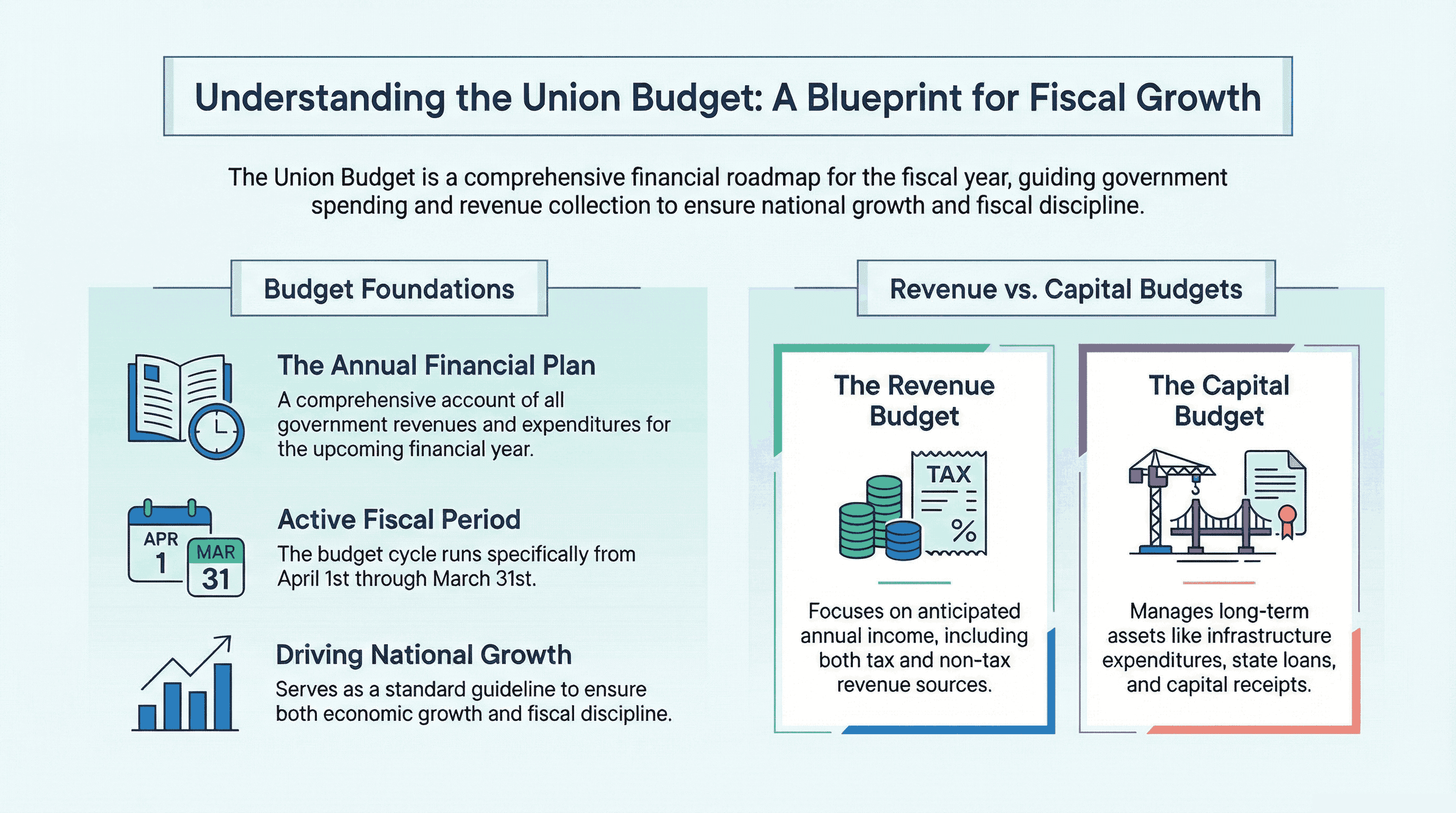
The Union Budget is a comprehensive financial plan set by the government for the upcoming financial year (April 1- March 31). This budget highlights the financial aspects that determine the government's financial position for the respective year. All revenues and expenditures of the government are accounted for in this budget.
The Union Budget is broadly categorised into: the Revenue Budget and the Capital Budget. The former covers all revenues anticipated to be received by the government for the year, including tax and non-tax revenue. Whereas, the latter includes receipts and expenditures of the capital kind, such as infrastructure-related expenditures, state loans, etc.
A union budget serves as the standard guidelines that help the government ensure growth and fiscal discipline in the financial year.
What Is An Interim Budget?
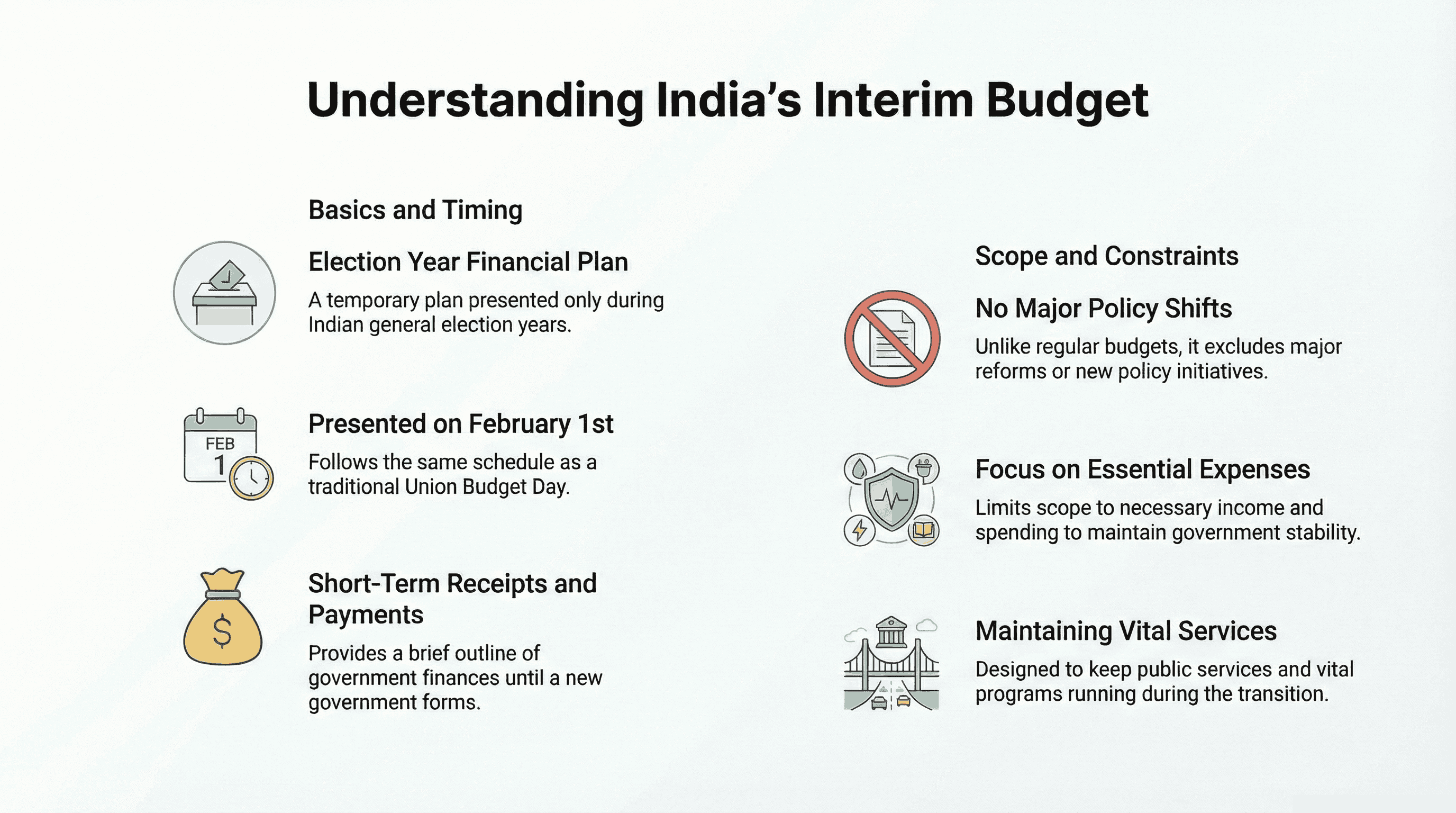
Unlike a regular union budget, an interim budget is presented only in the years of a general election in India. Similar to the Union Budget Day, the Interim Budget is also presented on February 1 of the particular year. This budget acts as a temporary financial plan to cover a few months during the elections, until a new government takes control. An interim budget covers only a short-term outline of receipts and payments of the government until a new government is formed.
While the purpose of an interim budget is comparable to the union budget, its scope is incontestably limited. The interim budget does not include any major policy shifts or reforms, as it is uncertain what the new government’s priorities are. Therefore, it only covers essential income and expenses. The goal remains to maintain stability in vital programs and public services.
Key Differences Between Interim And Union Budget
Both the interim and the union budget are focused on planning the financial budget for the upcoming year. Yet, certain differences between the interim and the full budget in India must be highlighted:
| Factor | Interim Budget | Union Budget |
| Goal | Short-term updates on upcoming expenditure and receipts | Long-term annual update on upcoming expenditure and receipts |
| Policy Announcements | Does not announce major new policies or initiatives | Introduces new policies and long-term reforms |
| Tax Decisions | Usually avoids any updates to tax slabs | Includes any updates on tax slabs |
| Expenditure Decisions | Allows spending only for essential government needs. | Allows spending only for essential government needs. |
Why Interim Budgets Matter for Investors And Markets
Interim Budgets play a subtle but important role for investors and financial markets. Although they avoid major policy changes, they provide insight into the government’s fiscal discipline, revenue estimates, and spending priorities during a transition period. For markets, this acts as a signal of economic stability and continuity.
Investors closely watch deficit numbers, borrowing plans, and any hints about future policy direction, as these affect interest rates and liquidity. Unlike a Union Budget, an Interim Budget usually does not trigger sharp market reactions, unless there is an unexpected move in taxation or expenditure. Its real value lies in setting expectations—helping businesses, lenders, and investors assess whether the next full budget is likely to focus on growth, control inflation, or support specific sectors.
Conclusion
India published the last interim budget in February 2024. This was followed by the union budget in July, published by the same government after it won the general elections again. The major differences between an interim vs union budget lie in their purpose, scope, decision-making abilities, and coverage. Any announcements on the budget could impact the stock market volatility. Details related to fiscal budgets and upcoming reforms can trigger positive or negative sentiments in the stock market, often resulting in price movements.
FAQs
1. What is the difference between the interim and union budget?
An interim budget differs from a union budget in terms of purpose, scope, decisions, and coverage. Primarily, a union budget provides a full-fledged account of financial planning for the upcoming fiscal year. An interim budget discusses short-term financial planning in an election year until the new government is formed. This is because the existing government may not be aware of the financial priorities of the upcoming government. Thus, unlike the union budget, the interim budget limits its scope to discuss any major reforms or initiatives.
2. Can tax changes be announced in the interim budget?
An interim budget does not announce tax changes as it covers the financial plan only for a few months, and not a full fiscal year.
3. Why is the interim budget presented?
The government announces an interim budget as a brief financial statement until the new government is formed in an election year. This is to ensure that the transition period observed during the switch in government does not impact existing financial programmes and reforms for its citizens.
References:
1. India TV, accessed from: https://www.indiatvnews.com/business/budget/why-is-the-union-budget-presented-on-february-1-every-year-key-things-to-know-2026-02-01-1028375
Want to stay at the top of your finances?
Join the community of 4 lakh+ investors and learn more about Grip Invest, the latest financial knick-knacks, and shenanigans in the world of investing.
Happy Investing!
Disclaimer - Investments in debt securities/municipal debt securities/securitised debt instruments are subject to risks including delay and/ or default in payment. Read all the offer related documents carefully. The investor is requested to take into consideration all the risk factors before the commencement of trading.
This communication is prepared by Grip Broking Private Limited (bearing SEBI Registration No. INZ000312836 and NSE ID 90319) and/or its affiliate/ group company(ies) (together referred to as “Grip”) and the contents of this disclaimer are applicable to this document and any and all written or oral communication(s) made by Grip or its directors, employees, associates, representatives and agents. This communication does not constitute advice relating to investing or otherwise dealing in securities and is not an offer or solicitation for the purchase or sale of any securities. Grip does not guarantee or assure any return on investments and accepts no liability for consequences of any actions taken based on the information provided. For more details, please visit www.gripinvest.in
Registered Address - 106, II F, New Asiatic Building, H Block, Connaught Place, New Delhi 110001


