

GST 2.0 Explained: Impact On Your Portfolio And Sectors To Watch In 2025


On 1 July 2017, the Goods and Services Tax (GST) made an entry into the Indian economy and polity1. What followed was a series of steps to create synergy between the GST and Indian economy. Changes to this tax regime are made by the GST Council, which is the apex authority and decision-maker for the GST law and related policy. Recently, in September 2025, one of the biggest GST Council decisions was made in the GST 2.0 council meeting.
Following the announcement by Prime Minister Narendra Modi on the Next-Generation GST reforms during his Independence Day speech, Finance Minister Nirmala Sitharaman approved the Next-Gen GST reforms, calling it a Diwali gift to fellow Indians 56th meeting of the GST Council2.
The Next-Gen Reforms of the GST 2.0 council meeting is gearing up to revolutionise the indirect tax code by not only simplifying the tax structure and reducing the tax burden, but also by boosting revenue generation and digitisation.
Continue reading as we decode everything you must know about the GST Council meeting 2025 and its impact.
Understanding Sectoral And Market Trends Pre And Post GST Reform India 2025
Evaluating the impact of the GST 2.0 council meeting requires us to compare the results and announcements with market expectations before the decisions make headlines.
This section discusses the GST 2.0 impact on the stock market and various key sectors.
1. Stock Market
The Indian equity markets were cautiously optimistic before the budget announcement, anticipating major tax cuts3. The reforms in GST and Nifty or Sensex are significant4. Post the announcements, the S&P BSE Sensex increased by approximately 600 points. The following day at 9.19 AM (5 September 2025), the market continued its positive response, with BSE Sensex at 81,007.03, up by 0.36%5.
Moreover, NSE Nifty50 surpassed 25,900. In one week, it gained returns to the tune of 1.09%, when the one-month return stands at 0.18%6. The following day, NSE too continued its positive trajectory, recording 24,826.05, up by 0.37%7.
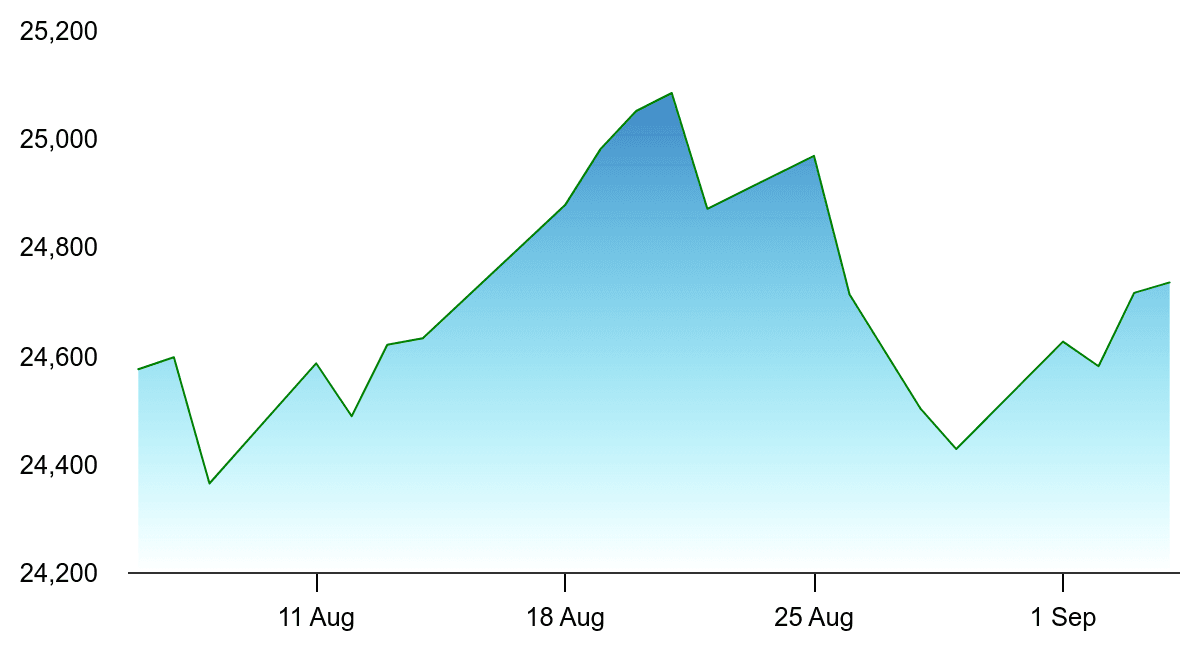
The rally was led by sectors like FMCG, cement, auto, consumer durables and insurance because they reaped significant benefits of tax cuts8.
Let us explore the GST tax reform impact on sectors.
2. GST 2.0 Sectors to Watch
The revised rates will come into effect on 22 September 2025. The table below shows the key tax cuts across some key sectors and products.
Daily Essentials (FMCG)
| Item: GST 2.0 Winners and Losers | From | To |
| Hair Oil, Shampoo, Toothpaste, Soap, Tooth Brush, Shaving Cream | 18% | 5% |
| Butter, Cheese, Ghee and Dairy Spreads | 12% | 5% |
| Utensils | 12% | 5% |
Healthcare Sector
| Health and life insurance (individual) | 18% | Nil |
| Thermometer | 18% | 5% |
| Oxygen (Medical Grade) | 12% | 5% |
Automobile
| Small cars, two-wheelers less than or equal to 350cc | 28% |
Tax cuts on many more products and other major advancements are made by the GST 2.0 council meeting. Let us take a brief look at them.
Why GST 2.0 Could Reshape Market Playbooks
According to the Government, there are seven pillars of the GST 2.0 council meeting reforms that aid in its success. Let us discuss the key takeaways from them.
1. Tax Rationalisation: Initially, there were four slabs under GST (5%, 12%, 18% and 28%). Now, it is turned into a two-slab system (5% or 18%), ensuring an easy tax structure and fast refund processing. However, Luxury and sin goods like cigarettes are to be taxed at 40%. This aims to prioritise consumers by making essentials and healthy products cheap9.
| GST Slabs (two slab structure) | 5% and 18% | GST Slabs (two slab structure) |
| Tax on luxury and sin goods | 40% | Tax on luxury and sin goods |
| Effective from | 22 September 2025 | Effective from |
The table below also shows the impact on some key sectors, primarily the anticipated advantages and risks.
| Sector | Benefits | Concerns |
| FMCG | Daily-use items like soan, toothpaste, and namkeen benefit from the GST reduction. | Sin goods like cigarettes and fizzy drinks witness a higher tax of 40% |
| Automobile | Small cars, trucks, buses, three-wheelers and all auto parts witness tax cuts. | Luxury and Big Cars are taxed at a high rate (40%), but it is lower than what it was before, i.e. 50%. |
| Logistics | GST homogeneity and simplified compliance reduce logistical costs and enhance interstate travel. | Limited direct tax relief. |
| IT | Not only through tax cuts, but also through the digital focus of the GST 2.0, the IT sector is anticipating boosts. | Limited direct tax relief. |
| Infrastructure | Tax on cement is reduced from 28% to 18%. | Not all building materials might be impacted. |
2. Digital Compliance Push: The GST 2.0 council meeting has also aimed to push digitisation. Small and low-risk businesses can enjoy easy registration. Exporters can enjoy 90% upfront refunds. The government has also talked about AI-driven risk detection. Therefore, this as a whole gives a significant push to the IT and digital ecosystem.
3. Revenue and Fiscal Impact: When policy changes impact government revenue, Public Sector Undertakings (PSUs) are affected as well. For instance, if government revenue increases, the PSUs enjoy positive market sentiment as they expect greater liquidity and higher dividend payouts. According to government estimates, GST rationalisation can cause an impact of INR 48,000 crore on an annualised basis. Moreover, according to SBI, a minimal revenue loss of INR 3,700 crore is anticipated. This can impact PSU stocks in the short term. However, short-term downtrends can ease over time and historical records are a testimony to it.
Lessons From GST 1.0: What Happened In Past GST Announcements?
After the introduction of GST in 2017, the market remained optimistic10. The technical chart of NSE NIFTY 50 shows a consistent growth too, from 2017 to March 2020.
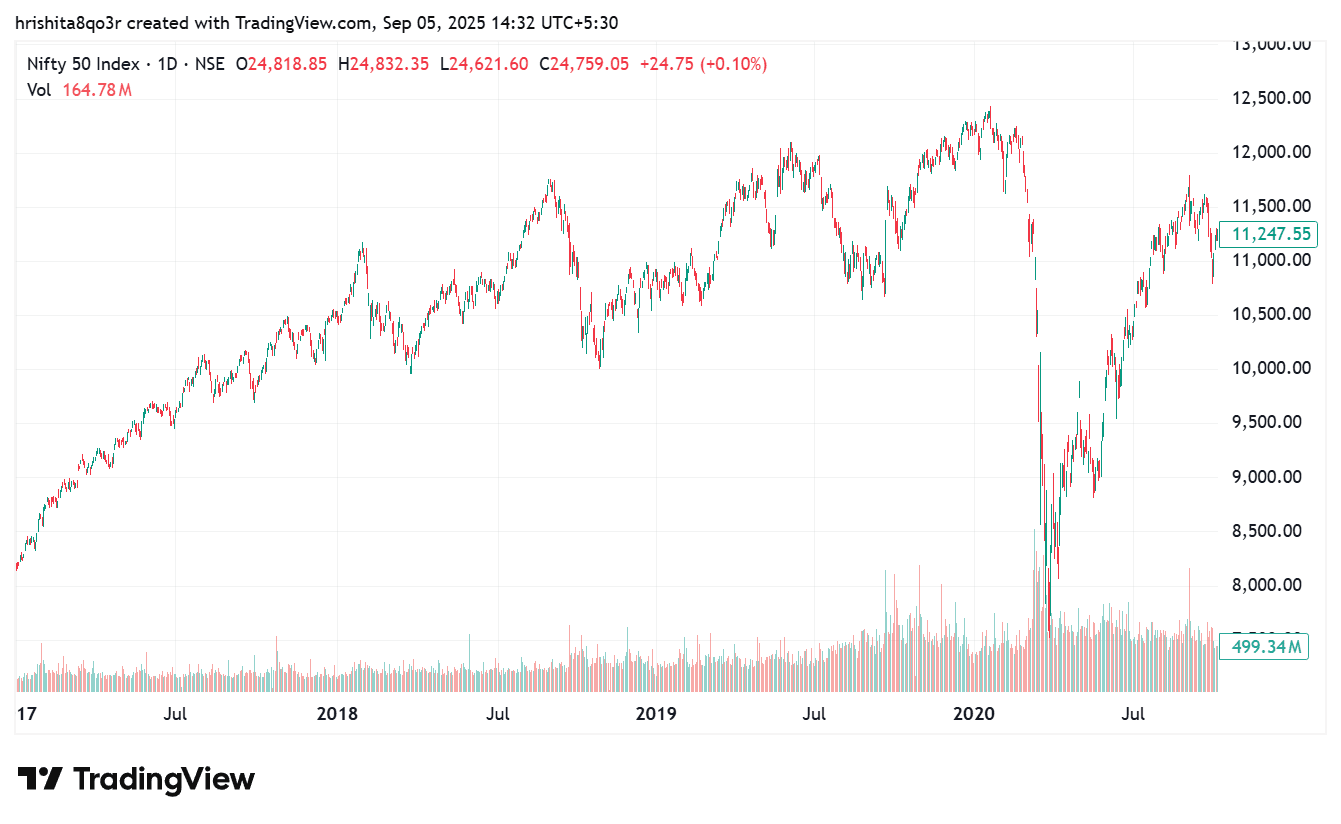
However, key fiscal decisions of the government often create short-term downtrends that ease over time11. For instance, after demonetisation, the BSE Sensex crashed about 1,689 points, while the Nifty took a plunge of more than 541 points. Subsequently, the market has recovered, recording multiple highs.
Therefore, in light of this fact, let us explore the key learnings retail investors can take, amidst the GST 2.0 council meeting.
GST And Retail Investors India: Key Learnings
Discussed below are the major takeaways that can not only help you make the best of the GST Council decisions but also from every future development.
- Policy changes create top sectoral winners and losers. Identifying them can help investors make optimal fiscal decisions.
- Volatility is natural to the market. However, market forces help it to return to equilibrium as volatility eases over time and the market recovers.
- Diversification across asset categories is key to protection against volatility.
Conclusion
From corporate bonds to high-yield fixed deposits and securitised debt instruments, Grip Invest has a range of assets that can aid in diversification and income optimisation. Whether your goal is stability, regular cash flow, or long-term growth, Grip makes it easier to explore and access opportunities that go beyond traditional investments.
Login to Grip Invest today and start building a smarter, well-balanced portfolio.
References:
1. World Bank, accessed from: https://documents1.worldbank.org/curated/en/918831542619297197/pdf/GST-final-IDU.pdf
2. Press Information Bureau, accessed from: https://www.pib.gov.in/PressNoteDetails.aspx?NoteId=155151&ModuleId=3
3. Money Control, accessed from: https://www.moneycontrol.com/news/business/markets/sensex-nifty-extend-rally-as-gst-2-0-sparks-buying-momentum-auto-stocks-in-fast-lane-13523454.html
4. India Today, accessed from: https://www.indiatoday.in/business/story/stock-market-sensex-nifty-rally-what-should-investors-do-top-stocks-2781710-2025-09-04
5. Times Of India, accessed from: https://timesofindia.indiatimes.com/business/india-business/stock-market-today-nifty50-bse-sensex-september-05-2025-gst-rate-cut-donald-trump-tariffs-indian-equities-global-markets/articleshow/123710765.cms
6. NSE India, accessed from: https://www.nseindia.com/index-tracker/NIFTY%2050
7. Times Of India, accessed from: https://timesofindia.indiatimes.com/business/india-business/stock-market-today-nifty50-bse-sensex-september-05-2025-gst-rate-cut-donald-trump-tariffs-indian-equities-global-markets/articleshow/123710765.cms
8. The Economic Times, accessed from: https://economictimes.indiatimes.com/markets/stocks/news/gst-2-0-trigger-throws-up-over-90-stock-ideas-as-rate-cuts-may-spark-new-market-cycle-full-list/articleshow/123693013.cms
9. Press Information Bureau, accessed from: https://www.pib.gov.in/PressNoteDetails.aspx?NoteId=155151&ModuleId=3
10. The Economic Times, accessed from: https://economictimes.indiatimes.com/markets/stocks/news/top-10-events-that-affected-the-stock-market-in-2016-17/gst-bill-passage/slideshow/58822549.cms
11. The Economic Times, accessed from: https://economictimes.indiatimes.com/markets/stocks/news/top-10-events-that-affected-the-stock-market-in-2016-17/demonetisation/slideshow/58822598.cms
Want to stay at the top of your finances?
Join the community of 4 lakh+ investors and learn more about Grip Invest, the latest financial knick-knacks, and shenanigans in the world of investing.
Happy Investing!
Disclaimer - Investments in debt securities/municipal debt securities/securitised debt instruments are subject to risks, including delay and/ or default in payment. Read all the offer-related documents carefully. The investor is requested to take into consideration all the risk factors before the commencement of trading.
This communication is prepared by Grip Broking Private Limited (bearing SEBI Registration No. INZ000312836 and NSE ID 90319) and/or its affiliate/ group company(ies) (together referred to as “Grip”) and the contents of this disclaimer are applicable to this document and any and all written or oral communication(s) made by Grip or its directors, employees, associates, representatives and agents. This communication does not constitute advice relating to investing or otherwise dealing in securities and is not an offer or solicitation for the purchase or sale of any securities. Grip does not guarantee or assure any return on investments and accepts no liability for the consequences of any actions taken based on the information provided. For more details, please visit www.gripinvest.in
Registered Address - 106, II F, New Asiatic Building, H Block, Connaught Place, New Delhi 110001


