

Mutual Fund Risk Explained: How Safe Is Your SIP Really? (2025 Update)


A young saver named Priya took her first step into investing with a Systematic Investment Plan (SIP) in a top-performing equity mutual fund. Like millions of Indian investors, she was drawn by inspiring success stories, the magic of compounding, and the promise of disciplined wealth creation. Mutual funds appeared to be the perfect blend of safety and smart strategy—regulated, diversified, and professionally managed.
In fact, this optimism is reflected across the country, with record SIP inflows touching INR 29,361 crore in September 20251. For many, investing through mutual funds has become more than just a financial choice—it is a national habit built on trust and aspiration.
To uncover this deeper layer of awareness, it is required to understand the both terms- Mutual funds have transformed investment journeys across India, offering ordinary savers a professional way to build wealth and achieve their financial goals and SIP (Systematic Investment Plan) stands out as the most popular and effective strategy today.
SIPs let investors commit a fixed amount at regular intervals (usually monthly), which is automatically invested in a chosen mutual fund scheme. Yet, beneath this comfort lies a vital truth—no investment, not even mutual funds, is entirely free of risk.
While SIPs instill consistency and shield investors from market timing errors, they cannot eliminate volatility, downturns, or sectoral shocks. Every investor, whether seasoned or beginner, must realize that understanding risk is the first step toward mastering returns. Because when you know what can go wrong, you invest with clarity, not fear.
Let us move to the next crucial step—understanding the types of mutual fund risks that quietly influence every investor’s journey.
Understanding The Types Of Mutual Fund Risks
To truly invest with clarity, Priya—and every investor like her—must look beyond surface-level returns and understand the risks that shape every mutual fund’s performance.
Some of the top mutual funds in India for 2025, based on consistent performance, asset size, and returns, include:
- HDFC Focused 30 Fund (Direct Growth)
- Bandhan Small Cap Fund (Direct Growth)
- ICICI Prudential Bluechip Fund
- Nippon India Large Cap Fund
- DSP Nifty 50 Equal Weight Index Fund
- Motilal Oswal Large & Midcap Fund
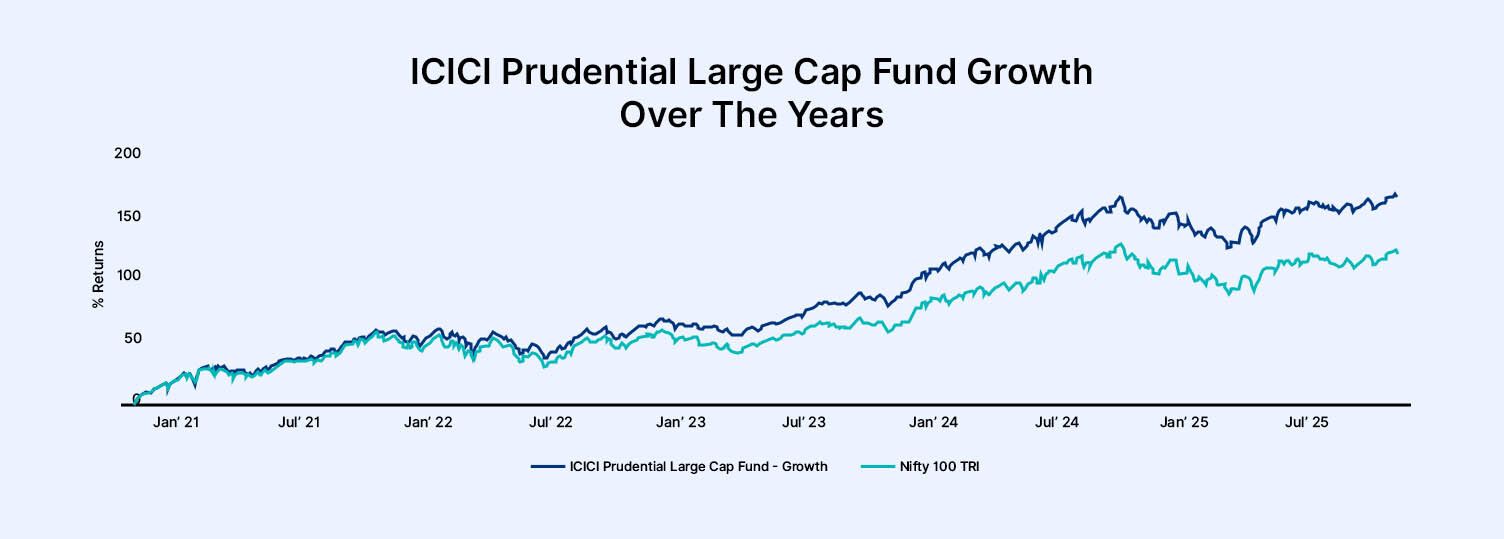
Source: MoneyControl2
The risk chest of mutual funds is not empty; each fund category carries its own exposure, reacting differently to market and economic conditions.
| Aspect | Details |
| Mutual Fund Risk Types | Market Risk, Credit Risk, Interest Rate Risk, Liquidity Risk, Inflation Risk, Concentration Risk, Currency Risk, Rebalancing Risk |
| Market Risk | Risk of losses due to market-wide downturns, e.g., Nifty 50 drop of 30% in March 2020 |
| Credit Risk | Risk of bond issuers defaulting; vital for debt funds as seen in DHFL default 2019 |
| Interest Rate Risk | Bond price falls when RBI hikes rates, impacting debt funds |
| Liquidity Risk | Difficulty in selling securities quickly without loss during market stress |
| Risk Assessment Measures | Standard Deviation (Equity 12–16%, Liquid 2%), Beta (volatility vs market), Sharpe Ratio (>1.5 good for equity funds) |
| SIP Safety | SIPs provide rupee cost averaging and discipline, reduce timing risk but do not eliminate market risk |
| SIP Popularity 2025 | SIP inflows Rs 29,361 crore in Sept 2025, 60% of new mutual fund investments |
| SIP Stoppage Ratio | 76% of SIPs stopped in Sept 2025 possibly due to market jitters |
| Average SIP Returns (2020-25) | Equity 10–14%, Debt 6–8%, Hybrid 8–10% annualized returns |
| Example SIP Performance | Rs 10,000/month SIP in Nifty 50 from Jan 2020 grew to Rs 9.1 lakh by Sept 2025, CAGR ~11% |
| Key Strategies for Safety | Diversify portfolio (equity, debt, hybrid); stick to SIP discipline; periodic review; avoid panic selling |
Source: Business Today3
Market Risk: This is the most visible type, arising when broader markets fall. The Covid crash of March 2020 saw the Nifty 50 plummet over 30% within weeks, and equity funds bore the brunt—annual returns swung between +18% in 2021 and -8% in 2022.
Credit Risk: Debt funds face this when bond issuers fail to repay their dues. The DHFL default in 2019 reminded investors that “fixed income” does not always mean “risk-free4.”
Interest Rate Risk: Bond prices and interest rates move like a seesaw. When the RBI hikes rates, existing bonds lose appeal, pushing their prices down and affecting returns of debt-oriented mutual funds.
Liquidity Risk: In times of panic or sudden market moves, it may become difficult or expensive for fund managers to sell holdings—especially in funds dealing with complex or lower-rated securities.
These risks never completely disappear; they exist in varying degrees across all fund types. That is why understanding your fund’s risk profile—whether aggressive, balanced, or conservative—is essential before investing. Only then can investors match their comfort level with the reality of market fluctuations.
As we grasp these risk layers, the next question becomes crucial—how safe are SIPs within this framework, and can disciplined investing truly shield one from losses?
How To Assess Risk Before Investing
As Priya’s investment journey progressed, she realized that understanding risk was not just about reading fund names like “balanced” or “equity.” The real insight came from learning how to measure those risks before committing her hard-earned money.
Every investor today, with the help of digital tools and mutual fund fact sheets, can quantify risks using specific indicators that reveal how stable—or volatile—a fund truly is.
- Standard Deviation: This measure captures how much a fund’s returns fluctuate around its average. In simple terms, it shows how bumpy your investment ride can be. Equity mutual funds often have a standard deviation between 12–16%, reflecting their higher exposure to market swings. Debt or liquid funds, on the other hand, generally stay around 2–4%, making them steadier but with lower returns.
- Beta: This statistic compares a fund’s movement to the overall market. A beta of 1 means the fund moves in lockstep with the benchmark index. Funds with a beta above 1 indicate higher sensitivity—when markets rise, they may outperform, but they also fall faster during downturns. Conservative investors usually prefer lower-beta funds for stability.
- Sharpe Ratio: While volatility measures risk alone, the Sharpe ratio tells you how well a fund rewards you for taking that risk. It compares returns to the risk-free rate, showing efficiency. A higher Sharpe ratio (typically above 1.5 for good equity funds) indicates better risk-adjusted performance—essentially, more return for every unit of risk taken.
Most fund houses include these metrics in their fact sheets, giving investors a clear picture before investing or starting an SIP. By comparing these numbers and matching them with one’s personal tolerance—low, moderate, or high—investors can align expectations with reality. It also helps prevent emotional panic during market corrections, as you already understand the risk you’ve signed up for.
Still, knowing risk is only half the journey. The real art of investing lies in balancing it—through diversification, asset allocation, and consistent SIP discipline.
Let us explore how these strategies help build stability in the next section.
Balancing Risk Through Diversification And SIP Strategy
Understanding how to measure risk gave Priya newfound confidence—but her advisor reminded her of one timeless truth: “Numbers guide you, but balance protects you.” Assessing risk is useful, but managing it through strategy is what keeps long-term investors afloat during market turbulence.
This is where diversification and SIP discipline come together as the core pillars of smart investing.
1. Diversification: The old saying about not putting all your eggs in one basket still holds the strongest lesson in finance. When you spread investments across equity, debt, and hybrid funds, you automatically cushion your portfolio from sharp shocks. A steep market drop in equity can often be softened by stable debt fund returns or hybrid fund rebalancing.
For instance, while small-cap equity funds may face double-digit downturns during a correction, short-duration debt funds can continue generating modest positive returns, stabilizing your overall portfolio.
2. SIPs and Rupee Cost Averaging: Priya’s monthly SIP did not just build discipline—it turned volatility into an ally. Systematic Investment Plans ensure you buy more fund units when prices fall and fewer when they rise, smoothing out the cost over time. This approach, called rupee cost averaging, gradually reduces the impact of timing risk.
Even during wild market swings, SIP investors benefit from averaging effects that lump-sum investors often miss out on4.
3. The Magic of Staying Invested: The real power of SIPs unfolds with time. Investors who stuck through the rollercoaster of 2020–2025—the pandemic crash, inflation spike, and recovery—clocked average returns of 10–14% in equity funds and 6–8% in large-cap debt funds.
Long-term consistency turned volatility into compounding gains, while impulsive selling often led to missed opportunities and lower reinvestment outcomes.
Industry trends confirm this resilience. Diversified SIP portfolios show lower volatility, smoother returns, and stronger downside protection compared to lump-sum investments in equities. A careful blend of assets doesn’t just manage risk—it transforms it into long-term growth momentum.
But while these strategies sound reassuring, how do they hold up in the real world? Are SIPs still as safe and steady in today’s market conditions as many believe? Let us find out in our next section.
Real-World Data: How Safe Is Your SIP In 2025?
In 2025, SIPs continue to dominate India’s mutual fund landscape, accounting for more than 60 percent of all new investments—a clear reflection of investor confidence in disciplined, goal-based investing. Despite this strong momentum, the industry also witnessed a 76 percent SIP stoppage ratio in September 2025, suggesting that some investors paused contributions amid short-term market volatility.
Monthly SIP inflows touched a record Rs 29,361 crore in September, underscoring the growing popularity of systematic investing even during fluctuating market phases. Equity mutual funds displayed relatively high volatility, with annual standard deviation ranging between 12–16 percent, while debt funds remained stable at 3–6 percent.
Yet, patient investors were rewarded handsomely. Between 2020 and 2025, annualized SIP returns averaged 10–14 percent for equity funds, 6–8 percent for debt funds, and 8–10 percent for hybrid funds.
While debt funds have occasionally faced credit-related events, fund managers and regulators have strengthened credit assessment processes to reduce potential shocks. For instance, an investor putting Rs 10,000 per month in a Nifty 50 index fund since January 2020 would have built a corpus of around Rs 9.1 lakh by September 2025—delivering an impressive 11 percent CAGR despite two major market corrections.
Conclusion
Mutual funds and SIPs may not offer a risk-free path, but they remain one of the most effective tools for long-term wealth creation. Success in investing comes from understanding risks, staying invested through market ups and downs, and letting discipline shape your financial journey.
To further strengthen your portfolio, explore Grip Invest—a trusted platform offering curated fixed-income opportunities for stable, consistent returns.
FAQs On Mutual Funds Risks
1. What are the main types of risks involved in mutual funds?
Mutual funds carry several types of risks, including market risk, credit risk, interest rate risk, liquidity risk, inflation risk, concentration risk, and currency risk. Each impacts fund performance differently depending on the fund’s asset allocation and investment strategy.
2. How safe are SIPs in mutual fund investing?
While SIPs reduce timing risk through rupee cost averaging and promote disciplined investing, they cannot eliminate all market risks like volatility or economic downturns. SIPs are best suited for long-term investors able to stay invested through market cycles.
3. How can I assess the risk level of a mutual fund before investing?
Risk can be assessed using metrics like standard deviation (which measures return volatility), beta (market sensitivity), and Sharpe ratio (risk-adjusted returns). SEBI’s Riskometer tool shown on mutual fund fact sheets is also helpful to match funds with your risk appetite.
4. What strategies help balance mutual fund investment risk?
Diversifying across equity, debt, and hybrid funds reduces portfolio risk by spreading exposure. Maintaining SIP discipline, regular portfolio review, and avoiding panic selling during market corrections also contribute to mitigating risk and enhancing returns.
References:
1. Economic times, accessed from: https://economictimes.indiatimes.com/mf/analysis/mutual-fund-sip-stoppage-ratio-rises-to-76-in-september-even-as-contributions-hit-record-rs-29361-crore/articleshow/124470348.cms
2. Money Control, accessed from: https://www.moneycontrol.com/mutual-funds/nav/icici-prudential-large-cap-fund/MPI392
3. Business Today, accessed from: https://www.businesstoday.in/mutual-funds/story/high-returns-higher-risks-why-specialised-investment-funds-are-making-noise-in-2025-500237-2025-10-30
Bajaj4. Finance, accessed from: https://www.bajajfinserv.in/investments/mutual-funds-risk
Want to stay at the top of your finances?
Join the community of 4 lakh+ investors and learn more about Grip Invest, the latest financial knick-knacks, and shenanigans in the world of investing.
Happy Investing!
Disclaimer - Investments in debt securities/municipal debt securities/securitised debt instruments are subject to risks including delay and/ or default in payment. Read all the offer related documents carefully. The investor is requested to take into consideration all the risk factors before the commencement of trading.
This communication is prepared by Grip Broking Private Limited (bearing SEBI Registration No. INZ000312836 and NSE ID 90319) and/or its affiliate/ group company(ies) (together referred to as “Grip”) and the contents of this disclaimer are applicable to this document and any and all written or oral communication(s) made by Grip or its directors, employees, associates, representatives and agents. This communication does not constitute advice relating to investing or otherwise dealing in securities and is not an offer or solicitation for the purchase or sale of any securities. Grip does not guarantee or assure any return on investments and accepts no liability for consequences of any actions taken based on the information provided. For more details, please visit www.gripinvest.in
Registered Address - 106, II F, New Asiatic Building, H Block, Connaught Place, New Delhi 110001


