

Why PM Modi Asked Indians To Delay Gold Purchases: The $72 Billion Forex Logic


At a rally in Hyderabad, the Prime Minister suggested a few measures to help cope with the challenges posed by the recent West Asia crisis. Despite the ongoing Iran US crisis, oil and other essential commodity prices have not skyrocketed in India. However, as the war continues, its impact will soon reach household budgets.
Urging the people to be more proactive, the Prime Minister suggested measures such as avoiding unnecessary foreign travel, preferring WFH (Work From Home), and delaying gold purchases for a year. Besides the political reactions, there was a sharp stock-market impact noticed after the PM's rally.
The PM Modi Gold Appeal was not an attack on gold ownership or refraining Indians from buying gold, it was rather about highlighting the macroeconomic impact of large-scale gold imports at a time when India is simultaneously dealing with expensive energy imports and a weakening rupee.
The Geopolitical Catalyst: The US-Iran War And $100+ Oil
India’s Energy Vulnerability
Despite being one of the world's most fertile agricultural countries and with most regions mineral-rich, the country faces critical challenges in meeting its energy requirements, particularly for petroleum products.
India is the largest importer of crude oil, with 86-88% of its total demand met by imports.
Hence, any disruptions, such as the one in the Strait of Hormuz during the ongoing conflict, can easily affect fuel availability.1 Whereas some neighbouring countries have steeply increased the prices of petroleum products, India has managed to keep them under control.
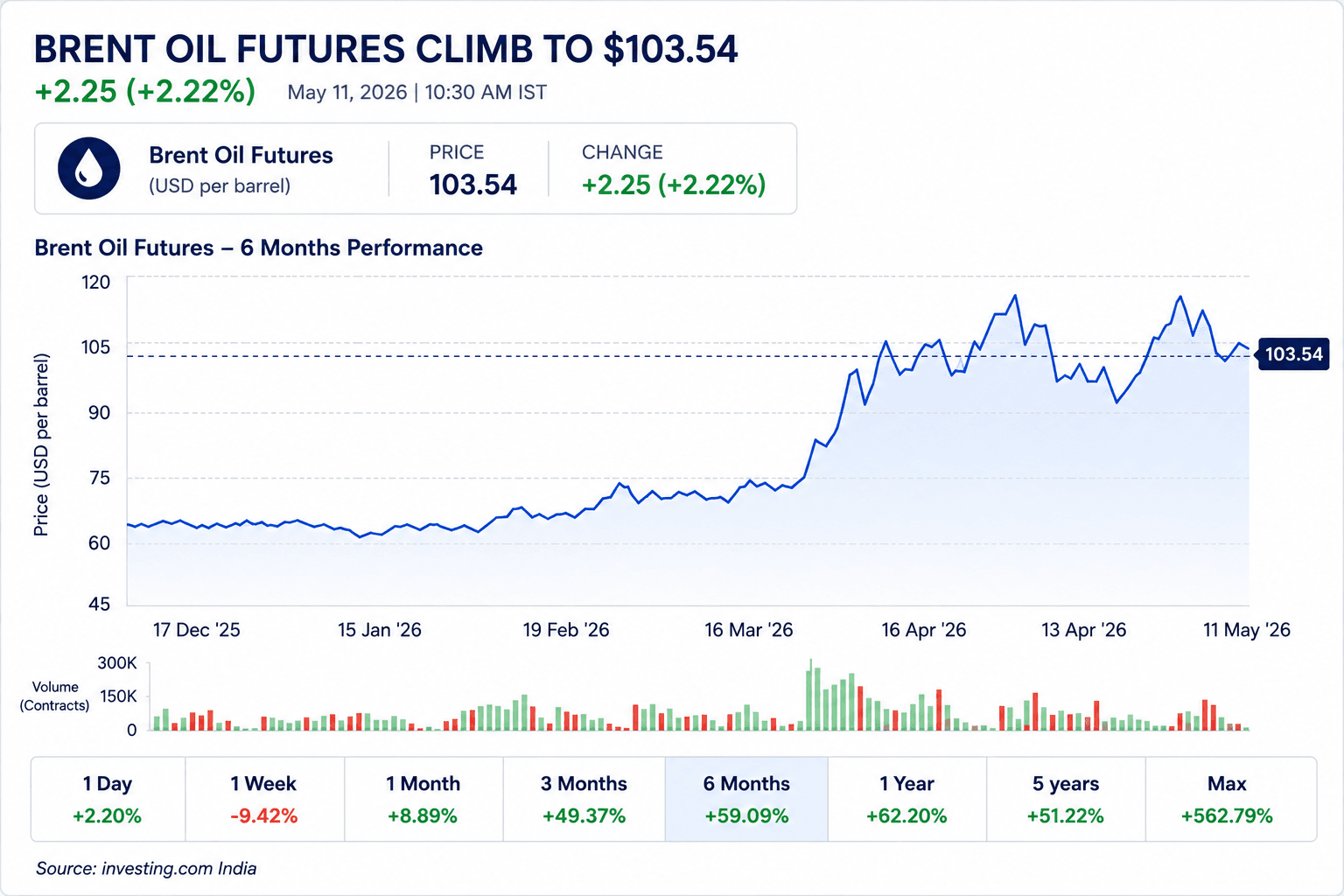
The prices of crude oil have risen by close to 60% in the past six months and have surpassed the $100 mark (currently around ~$103 per barrel):
Oil Price Shock And Import Bill Pressure
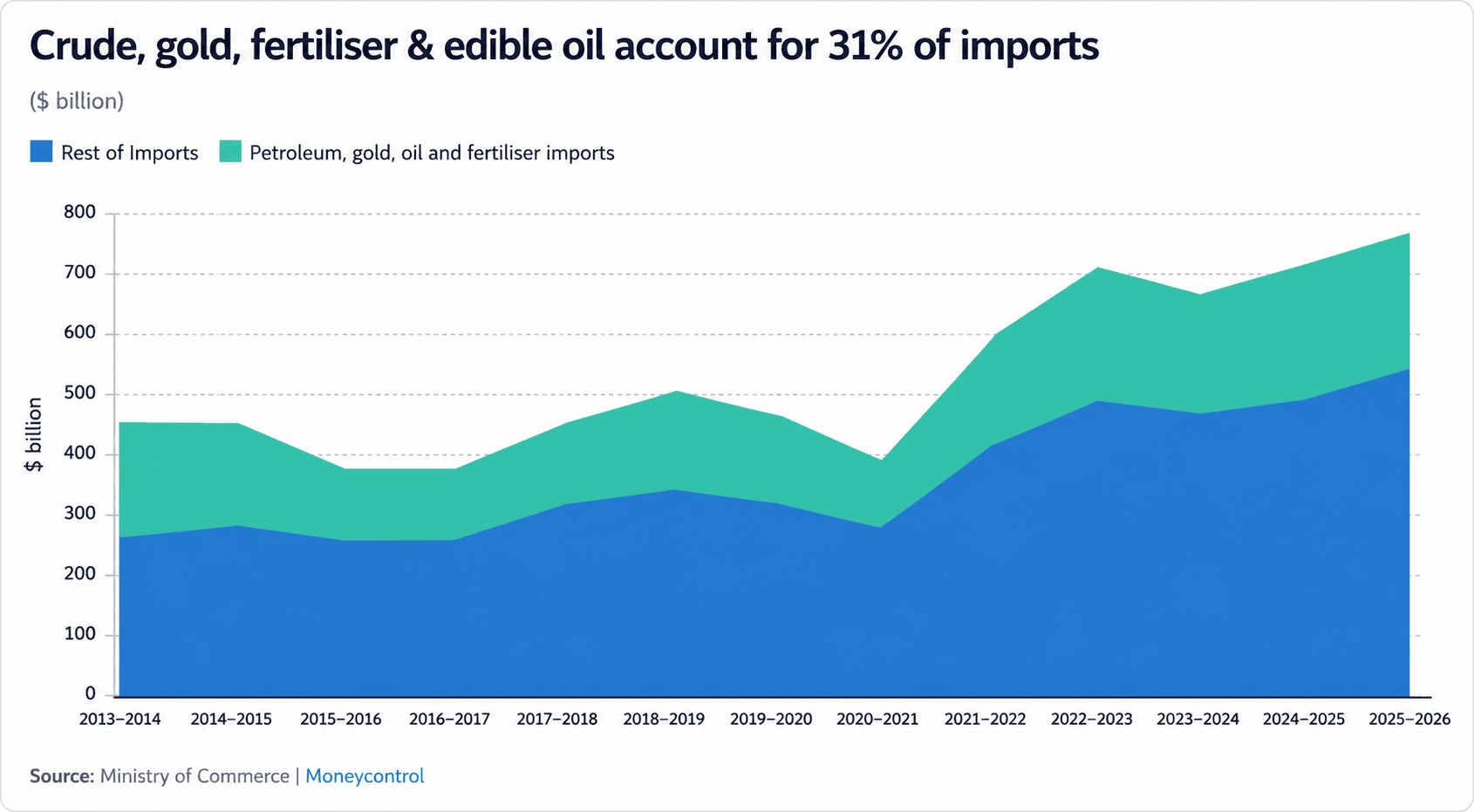
Besides gold, the PM talked about crude oil, fertiliser, and edible oil. It is important to evaluate why he included the four critical commodities among other products consumed. It is estimated that the country spent around $240 billion on importing these four commodities in FY26.2 Gold, crude oil, edible oil, and fertilisers account for around 31% of the country's total import bill.
Along with reducing gold purchases, the Prime Minister encouraged fuel conservation, carpooling, public transport use and work from home practices to reduce energy consumption. Out of the four commodities mentioned, Gold imports were $72 billion, let us discuss them in detail.
The $72 Billion Math: Why Gold Matters To The Rupee?
India’s Gold Import Dependency
India is the second largest consumer of gold (after China), with the yellow metal used in jewellery and bullion for cultural, religious, and gold investment purposes. A significant portion of the demand for gold is met through imports.
As suggested before, the total import bill for gold in FY 26 was close to $72 billion.3 This increased sharply from the previous year. Gold’s imports were almost 10% of the total imports in the financial year. Unlike domestically produced assets, imported gold must be paid for in U.S. dollars, creating sustained pressure on India’s forex reserves.
Why Gold Imports Hurt Forex Reserves?
Gold imports hurt forex reserves because each ounce imported reduces the foreign exchange reserve. As crude oil prices are already high, this could further strain forex reserves, which are critical for coping with current disruptions.
A weaker rupee also makes future imports more expensive. For example, even if international gold prices remain unchanged, depreciation in the rupee increases the effective cost of gold in India. All these factors, combined, can result in a Current Account Deficit (CAD). If it widens significantly, the currency volatility will rise, and policymakers might need to take some corrective measures.
The Potential Savings Scenario
If there were a hypothetical 50% reduction in gold imports, the country would save $36 billion in import bills, thereby strengthening its forex reserves. That amount would meaningfully offset pressure on the Current Account Deficit and help stabilise the rupee during periods of global stress.
It is difficult to imagine that the cultural and religious demand for gold will disappear completely, but any moderation in purchases will only strengthen the situation and, on a temporary basis, reduce import pressure.
Market Impact: Why Jewellery Stocks “Lost Their Shine”?
Immediate Market Reaction
The PM’s push to reduce gold consumption had an expected impact on gold companies' stock prices. There was a jewellery stock fall, including Titan, Senco Gold, and Kalyan Jewellers, plummeting between 6% and 9% on Monday.4
Besides the PM’s speech, some analysts fear that the cuts in gold duties (introduced in 2024) could be reversed soon (no such announcement was made). The reaction reflected investor concerns that lower consumer demand could impact revenues during the upcoming festive and wedding seasons.
Why Investors Became Nervous?
The jewellery sector in the country depends heavily on the demand during the festive and wedding season. The markets expected a softer discretionary consumption post the speech. However, analysts also noted that India’s cultural affinity toward gold remains structurally strong, limiting the likelihood of a long-term collapse in demand.
Shifting From Physical To Financial Gold
1. Gold ETFs And Sovereign Options
The first option for investors looking to benefit from gold investment is to consider ETFs and sovereign gold options as gold alternatives. These alternatives have a serious advantage over holding physical gold, including no carrying or storage costs and easy trading on digital platforms. SGBs even offer a guaranteed coupon, increasing the likelihood of a passive income stream.
2. Digital Diversification Trends
Digital gold platforms, mutual funds, and diversified investment portfolios have become more common, especially during periods of currency volatility and uncertain global markets.
3. Gold Backed Bonds On Grip Invest
For investors who want gold exposure without buying physical bullion, gold-backed bonds and asset-backed fixed-income products are an increasingly popular alternative. Grip Invest offers such instruments, enabling investors to diversify their portfolio with commodity-linked returns, combining the stability of fixed income with the growth potential of gold as an asset class.
Conclusion
PM Modi’s appeal to postpone gold purchases for a year is largely framed to protect India’s foreign exchange reserves amid rising oil prices and geopolitical uncertainty.
While physical gold continues to hold deep cultural and financial significance in India, the broader message highlighted how consumer choices can influence macroeconomic stability during external shocks. For investors, the discussion also reflects a larger shift toward financial alternatives, diversified portfolios, and greater awareness of how global events impact domestic markets.
Grip offers corporate bonds and other fixed-income investment options with yields up to 12.5% and institutional-grade security features. Visit Grip Today!
 |
Author: Grip Invest Editorial Team The Grip Invest Editorial Team is a group of Chartered Accountants, MBA (Finance) graduates, and Qualified Research Analysts dedicated to helping you invest smarter. We dive deep into India's fixed income landscape to deliver content that is accurate, up-to-date, and easy to understand. Whether you're exploring bonds, fixed deposits, or other fixed income opportunities, our guides cut through the noise and give you the clarity to make better financial decisions. |
Want to stay at the top of your finances?
Join the community of 4 lakh+ investors and learn more about Grip Invest, the latest financial knick-knacks, and shenanigans in the world of investing.
Happy Investing!
Disclaimer - Investments in debt securities/municipal debt securities/securitised debt instruments are subject to risks including delay and/ or default in payment. Read all the offer related documents carefully. The investor is requested to take into consideration all the risk factors before the commencement of trading.
This communication is prepared by Grip Broking Private Limited (bearing SEBI Registration No. INZ000312836 and NSE ID 90319) and/or its affiliate/ group company(ies) (together referred to as “Grip”) and the contents of this disclaimer are applicable to this document and any and all written or oral communication(s) made by Grip or its directors, employees, associates, representatives and agents. This communication does not constitute advice relating to investing or otherwise dealing in securities and is not an offer or solicitation for the purchase or sale of any securities. Grip does not guarantee or assure any return on investments and accepts no liability for consequences of any actions taken based on the information provided. For more details, please visit www.gripinvest.in
Registered Address - 106, II F, New Asiatic Building, H Block, Connaught Place, New Delhi 110001


