

Silver Coin Vs Silver ETF: Best Silver Investment For Indian Investors In 2026?


Confused whether you should invest in silver coins or silver ETFs? You’re in the right place. In this blog, we will discuss the basics of both and compare them so that you can make an informed choice. As silver demand continues to rise in India, investing in it is a smart choice.
Silver has gained increased popularity in recent times due to its demand in the industry. It is now being used in EV batteries, solar panels, electronics, and healthcare. Since historic times, silver has also remained a valuable metal for investment. However, the question remains: Should you buy physical silver coins or invest in silver ETFs? Let us discuss the factors that determine this.
Silver Coins: Meaning, Pros And Cons
Silver coins are physical silver purchased from jewellers, banks, or mints. They are known to be tangible investment products that come in denominations of 1 kg to 10 kg. However, they have their share of pros and cons as discussed below.
Pros
1. Tangible asset appeal: Silver coins are tangible assets that allow you to have possession of the physical metal that you can store, gift, or use for cultural purposes. Silver coins are a popular choice among many Indians for occasions such as festivals and weddings.
2. Hedge Against Market Volatility: Prices of silver coins are independent of equity. This provides a hedge against and king of currency depreciation or market inflation.
Cons
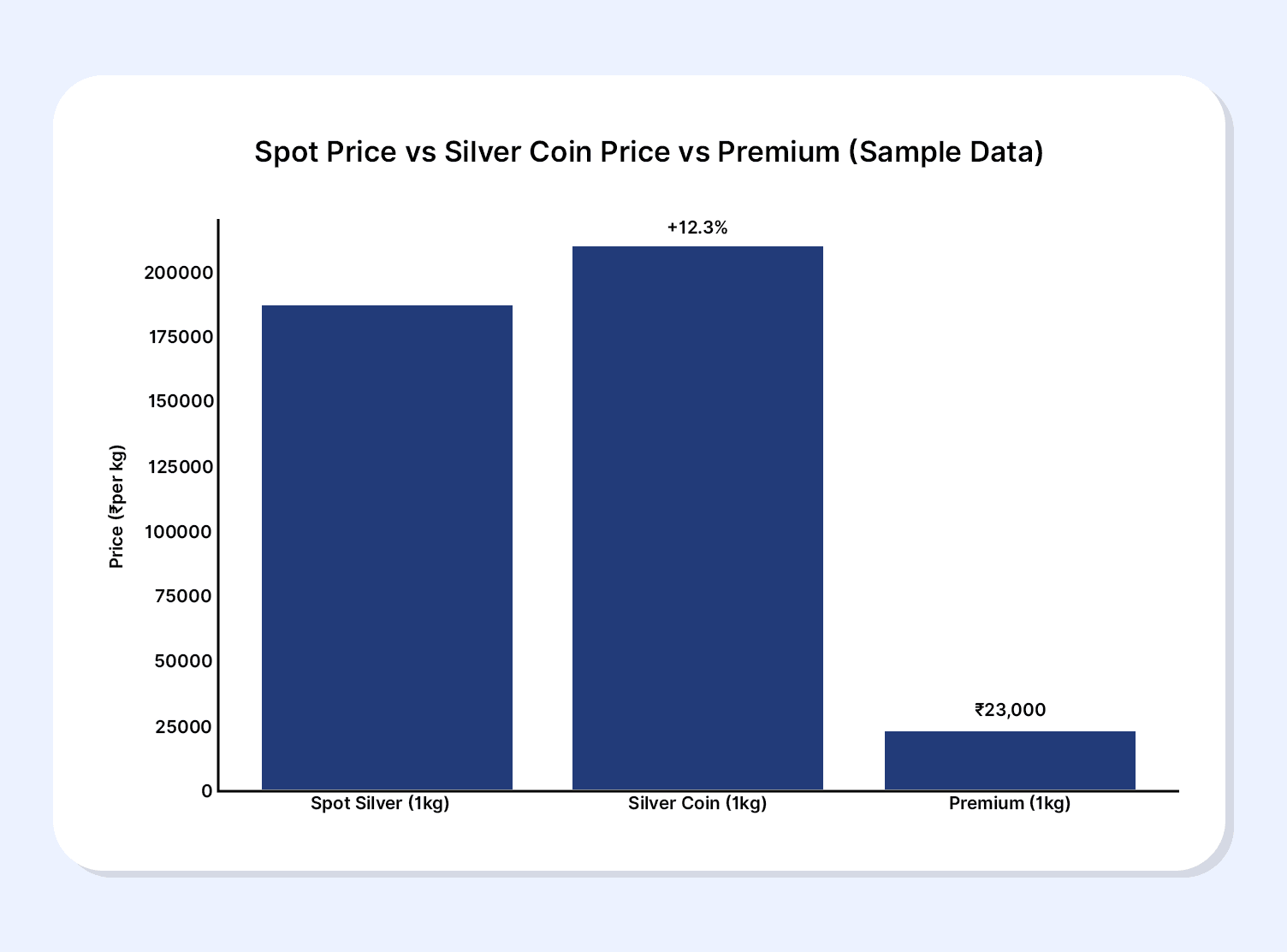
1. Making charges & purity challenges: Possession of the physical metal comes with challenges such as purity concerns and making charges. These silver coins usually include 5 to 15% of making charges or minting charges. Purity of the mind might also differ depending on the vendor. These facts affect the resale values.
2. Storage & insurance requirements: Storing physical silver coins is a major concern, as it involves security and maintenance of the metal. Storing them is safe in lockers, or insurance adds extra costs and reduces net value.
3. Liquidity concerns: Selling silver immediately might be difficult due to purity and quality concerns. Reselling silver usually results in a value deduction.
Cost comparison chart — coin price vs spot price vs total premium
Also Read: Silver Investment in India 2026 – Pros, Risks & Best Options
Silver ETFs: Meaning, Pros, And Cons
Silver ETF allows you to invest without possessing the physical metal. They are backed by physical silver stores owned by SEBI-verified custodians that track domestic silver prices.
Below are some pros and cons of silver ETFs:
Pros
1. Tradeable on exchanges: With silver EFTs, you can purchase or sell units according to your requirements. This can be done through the stock exchange via a demat account. Due to this, silver ETFs have higher liquidity compared to physical silver.
2. Lower markups than jewelry/coins: Unlike silver coins, silver ETFs do not have concerns like making charges or purity issues. This enhances return on investment over longer periods.
3. No storage risk: Unlike physical silver, ETFS do not need to be stored or maintained. Investors do not need to worry about storing in lockers or have concerns about quality.
Con
1. Slight tracking error due to expenses: There is a slight difference in expense ratios compared to silver spot prices. Sometimes there may also be operational costs.
Also Read: Loan Against Silver: The New Way To Unlock Value From Your Bullion
Taxation Difference: Coins Vs Silver ETF
A major factor that significantly impacts return is tax treatment. Tax parameters have different effects depending on whether the investment was made in a silver ETF or a silver coin.
The table below shows some differences between silver ETFs and Silver coins.
Tax Parameter | Silver Coin | Silver ETF |
Capital Gains | Long-term (20% with indexation after 3 years), Short term (taxed per slab) | Same tax rule as physical silver |
GST | 3% on purchase | No GST |
Making Charges | Extra 5-15% | No making charges |
Resale Pricing | Lower than the purchase price due to purity cuts | Exchange pricings are transparent. |
Liquidity | Resale is difficult, depending on the purity and storage conditions | Highly liquid with potential gains. |
Investor Checklist: Coins Or ETFs?
Choosing properly between silver coins and silver ETFs is necessary and should be made depending on your financial goals. This table shows the different factors you should consider before choosing:
Factors | Silver coins | Silver ETF |
Investment Horizon | Long-term holding | Both long and short-term holdings |
Storage | Requires safekeeping and insurance | No storage required |
Cost Sensitivity | Cost increases due to premiums and GST | Lower ownership costs |
Liquidity Needs | Resale needs time | Quick buying and selling of units |
Portfolio Use | Small allocations | Exposure to silver prices. |
Objective of purchase | May be used for gifting or cultural use | Pure investment objective |
Also Read: Gold vs Silver Investments 2026: Top Strategies For Portfolio Growth
Conclusion
The metal remains valuable as an asset for diversification due to its industrial demand. Its relevance in clean energy and other areas of the industry makes it a promising investment. However, investors should know how and what to invest in. Silver coins are apt for emotional and cultural significance, but when it comes to asset and long-term investments, silver ETFs are the better option.
Building a balanced and diversified portfolio helps create a financial foundation and achieve the investor’s goals. For this purpose, silver ETFs are a more practical and cost-effective method for investors in 2026.
It is recommended that investors use silver ETFs as an addition to their portfolios rather than relying solely on one. Complementing this with other income-generating options will guarantee better returns. You can explore platforms like Grip Invest that offer fixed-income options to their users. They provide instruments with complete transparency and aim to strengthen long-term wealth.
To gain access to a curated list of instruments, invest with Grip today!
FAQs On Silver Coin Vs Silver ETF
Q1. Are silver ETFs safe?
Silver ETFs are safe as they mitigate the risk of theft or purity issues. This is possible because they are a regulated market instrument that is backed by physical silver.
Q2. How is a silver ETF taxed?
Since Silver ETFs are treated as non-equity assets, holding them for more than three years attracts 20% long-term capital return tax with indentation.
Q3. Do silver coins hold long-term value?
Yes, silver coins retain their long-term value as the metal is a globally demanded industrial product. However, the pricing of the metal in possession is dependent on the purity, making charges, and resale deductions. These factors affect long-term returns.
Want to stay at the top of your finances?
Join the community of 4 lakh+ investors and learn more about Grip Invest, the latest financial knick-knacks, and shenanigans in the world of investing.
Happy Investing!
Disclaimer - Investments in debt securities/municipal debt securities/securitised debt instruments are subject to risks including delay and/ or default in payment. Read all the offer related documents carefully. The investor is requested to take into consideration all the risk factors before the commencement of trading.
This communication is prepared by Grip Broking Private Limited (bearing SEBI Registration No. INZ000312836 and NSE ID 90319) and/or its affiliate/ group company(ies) (together referred to as “Grip”) and the contents of this disclaimer are applicable to this document and any and all written or oral communication(s) made by Grip or its directors, employees, associates, representatives and agents. This communication does not constitute advice relating to investing or otherwise dealing in securities and is not an offer or solicitation for the purchase or sale of any securities. Grip does not guarantee or assure any return on investments and accepts no liability for consequences of any actions taken based on the information provided. For more details, please visit www.gripinvest.in
Registered Address - 106, II F, New Asiatic Building, H Block, Connaught Place, New Delhi 110001


