

Supply Chain Disruptions: Why They Happen And How They Affect Your Investments


Spanning across a decade, businesses are estimated to lose approximately 45% of their annual profit, owing to supply chain disruptions1. Moreover, such disruptions that persist over a month tend to occur every 3.7 years on average.
The network that transfers goods from raw material source to final consumers is called a supply chain. When global crises, such as wars, geopolitical tensions, or natural calamities, interrupt the normal flow of goods at any stage of the supply chain, it is referred to as a supply chain disruption.
For instance, the Russia-Ukraine War saw escalations in the Red Sea Region, resulting in port closures and shipping delays. Similarly, the COVID-19 pandemic recorded supply chain labour shortages and more. Such disruptions impact businesses and thus the investor portfolio. Therefore, understanding the causes of supply chain disruption and strategies to hedge against them is key.
Major Causes Of Supply Chain Disruptions
The Global Supply Chain Stress Index (GSCSI) and Shanghai Containerised Freight Index (SCFI) help analyse the global shipping and supply chain health2. A rise in GSCSI and SCFI indicates an increase in supply chain disruption and freight costs, respectively.
While stable trends were recorded by both indices before 2020, a sharp rise occurred at the onset of the pandemic, followed by a post-COVID correction.
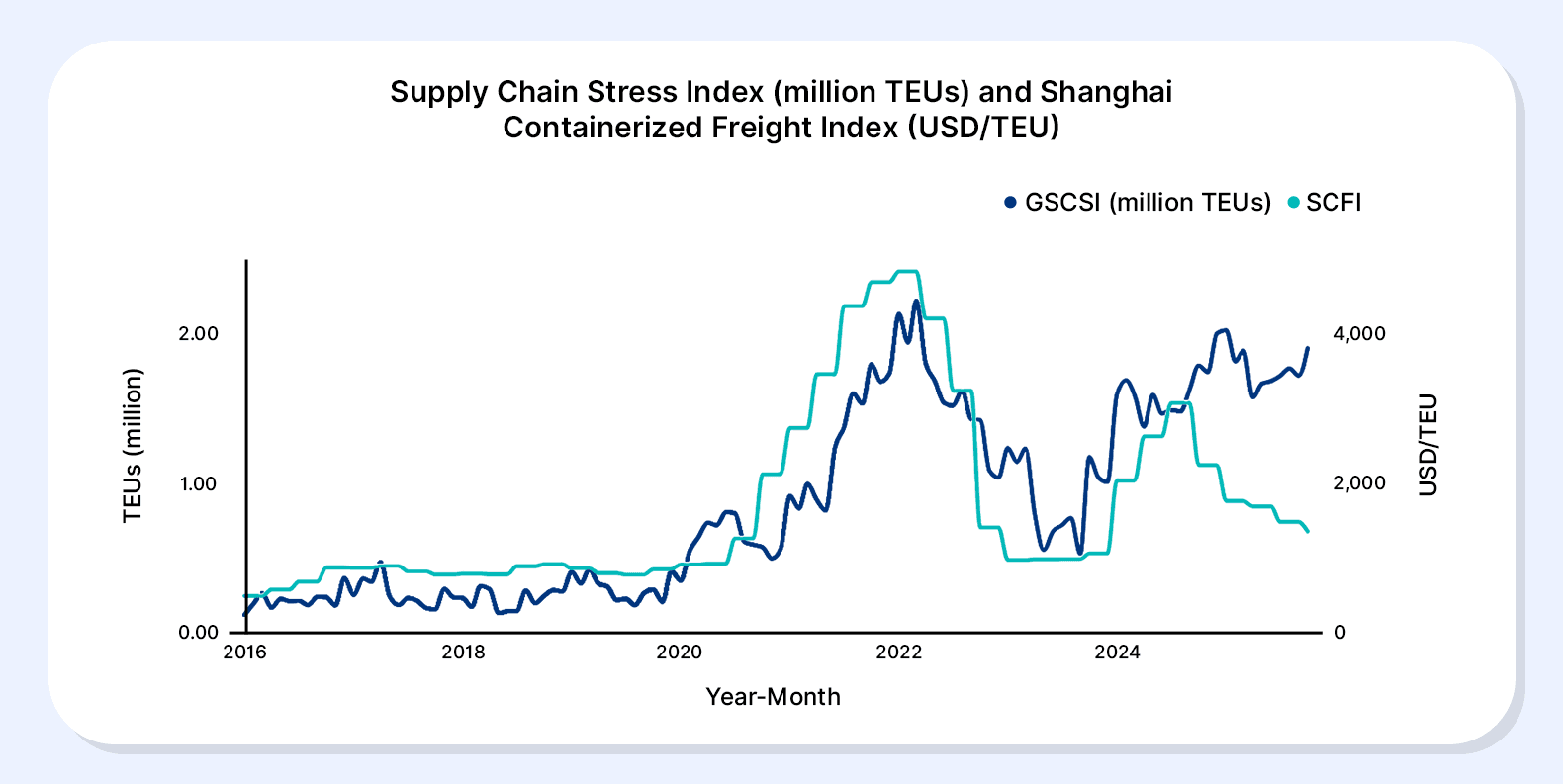
A global supply chain crisis occurs in key tension scenarios, like the pandemic. Discussed below are some other causes of geopolitical supply chain disruptions.
1. Geopolitical Tensions, Logistical Bottlenecks and Others
Ongoing geopolitical conflicts, like sanctions, tariffs, wars, etc., cause supply chain delays in the form of labour or raw material shortages, transit problems, and more. Let us analyse the food supply chain disruption amidst the Russia-Ukraine War to understand this better.
Approximately one-third of the global wheat and a quarter of barley are produced in Ukraine and Russia3. Therefore, the Russian attack on Ukrainian agricultural infrastructure, along with the grain shipment hijacks in the Azov Sea and Black Sea region, disrupted food production and logistics.
As several ports shut down, shipping costs rose, resulting in a 60% approximate rise in prices of essentials like food grains4. Inflation rates rose significantly across the globe, except in Russia, amidst the war.
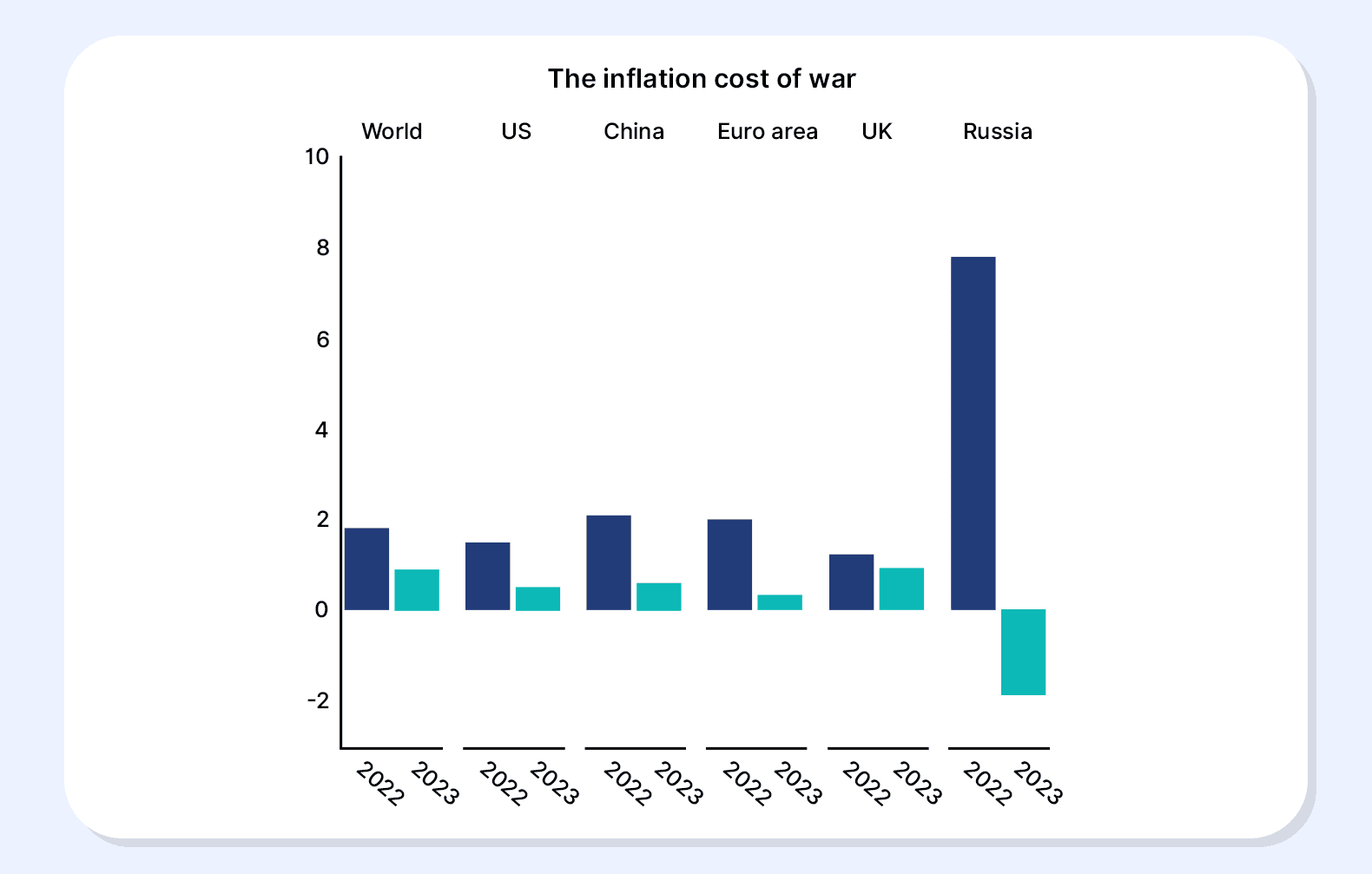
Similarly, the Trump Tariffs have resulted in acute Supply Chain Risks 2025 signals through slowed shipments and financial strains5.
2. Natural Disasters, Pandemics, and Raw Material Shortages
In case of natural calamities like droughts or floods, the raw material supply can be diminished. Imagine if the price of cotton increases due to its scant supply, the cost of cotton clothes would increase. Similarly, pandemics and epidemics can cause labour or logistical bottlenecks, hindering supply.
The COVID-19 pandemic pushed everyone indoors and made remote work the norm. Therefore, while on one hand, the demand for laptops and electronic gadgets rose, on the other hand, semiconductor chip manufacturing sites were either shut or operated at minimal capacity due to restrictions. This simultaneous increase in electronic demand and supply shortage of chips, a key component of almost every electronic device, resulted in a more than three-year raw material shortage6.
The causes and economic impact of supply chain disruption are two sides of the same coin. Understanding one without the other will result in an incomplete analysis.
Impact On The Indian Economy And Inflation
During a supply chain disruption, when the raw material or transportation costs increase, the price of the final product also increases. An overall rise over a prolonged period can result in inflation and cause a severe economic impact.
For instance, the illustration below aims to explain it.
Particular | New Price (INR) | Old Price (INR) |
Potatoes (accrued to each packet) | 3 | 9 |
Transportation (accrued to each packet) | 4 | 8 |
Chips (per packet) | 10 | 20 |
Profit (per packet) | 3 | 3 |
Even when the profit remains equal at INR 3, the final price of chips rises due to a rise in input and logistical costs. | ||
Supply chain disruption impact on India and other countries is visible in key industries that depend on imports or raw materials available in specific locations.
1. Automobile: Semiconductor chips and other such components required in the automobile industry faced disruption during the pandemic and geopolitical tensions with China7.
2. Pharmaceuticals: The Pharma sector across countries depends significantly on imports of drugs, active pharmaceutical ingredients (APIs), etc. Logistical conflicts or raw material shortages can impact the supply chain significantly.
3. Electronics: Inputs like semiconductor chips, rare earth, etc., play a key role in this segment. These items have geographic concentration and are thus susceptible to supply chain disruptions.
Supply chain disruptions have a significant impact on investor portfolios as they shake the business ecosystem. Therefore, to hedge against the Global Trade Disruptions 2025, investors must understand their implications on portfolios.
Investment Implications
Investors must aim for supply chain resilience strategies to build a portfolio that can preserve capital during market instability caused by trade disruptions. Some guiding parameters are discussed below.
- Diversification across industries can help investors reduce their dependency on any specific sector. This can aid in mitigating losses during instability.
- Asset allocation in non-market-linked securities can aid in portfolio stability during volatile conditions caused by supply chain disruptions. Assets like fixed deposits, corporate bonds, and debt funds by Grip can offer up to 14% post-tax returns.
Parameter | |||
Return | 8-10% | 9-14% | 7-12% |
Risk | Investment Grade | Low-Medium | Low-Medium |
Different businesses and industries are taking collective actions to hedge against supply chain disruptions and bring in protective guardrails.
Long-Term Solutions And Tech Innovation
Discussed below are some developing measures that industries are now adopting to minimise the impact of supply chain disruptions.
- AI-Driven Logistics: Companies use AI-based software to analyse inventory consumption and past trends. Based on historic precedent, they can anticipate problems and provide customised solutions.
- Local Manufacturing: Self-reliance in domestic manufacturing reduces dependence on imports. This reduces the scope of inflation caused by increased logistical costs.
- Diversifying Sourcing: Establishing diversified raw material sources from different locations, standards, etc., can reduce the vulnerability of concentration in the hands of limited suppliers.
Conclusion
Supply chain disruptions, whether triggered by global crises, geopolitical tensions, or sector-specific shocks can quickly increase the cost of goods, fuel inflation, and create unpredictable market movements. These ripple effects often flow directly into individual portfolios, especially those heavily exposed to equity-linked products.
A diversified investment approach becomes essential in such environments. Balancing growth-focused instruments with stable, non-market-linked options can help preserve capital and smoothen returns during volatile periods.
To explore transparent, stable, and low-volatility investment options, visit Grip Invest today.
FAQs On Supply Chain Disruptions
1. What causes global supply chain disruptions?
Global supply chain disruptions are caused by events like war, natural calamities, trade wars, pandemics, etc. Such scenarios limit raw material, logistical and production avenues, thereby increasing price levels.
2. Which sectors are most affected?
Sectors like automobile, electronics and pharmaceuticals often experience the acute impact of supply chain disruptions because they rely heavily on geographically concentrated raw materials and global interdependence.
3. How can investors protect themselves during disruptions?
Diversification across assets of different industries and non-market-linked securities like bonds and FDs can aid in capital protection during supply chain disruption. Grip offers up to 14% post-tax returns and a range of fixed-income securities.
References:
1. We forum, accessed from: https://www.weforum.org/stories/2025/01/supply-chain-disruption-digital-winners-losers/
2. World bank, accessed from: https://www.worldbank.org/en/data/interactive/2025/04/08/global-supply-chain-stress-index
3. GEP, accessed from: https://www.gep.com/blog/mind/russia-ukraine-war-logistics-impact#:~:text=The%20Russia%2DUkraine%20conflict%20has,97%25%20during%20the%20same%20period
3. Economic observatory, accessed from: https://tinyurl.com/4jtrpr3j
4. European sting, acedded from: https://europeansting.com/2022/07/06/how-is-the-war-in-ukraine-impacting-the-global-supply-chain/
5. Economic times, accessed from: https://economictimes.indiatimes.com/small-biz/trade/exports/insights/one-month-of-trumps-50-tariffs-exports-slow-supply-chains-disrupted-financial-strain-mounts/articleshow/124226783.cms?from=mdr
6. Forbes, accessed from: https://www.forbes.com/sites/heatherwishartsmith/2024/07/19/the-semiconductor-crisis-addressing-chip-shortages-and-security/
7. PCM, accessed from: https://pmc.ncbi.nlm.nih.gov/articles/PMC9363154/
8. Reuters, accessed from: https://www.reuters.com/business/autos-transportation/nissan-mercedes-sound-alarm-over-chip-supply-crisis-2025-10-29/
Want to stay at the top of your finances?
Join the community of 4 lakh+ investors and learn more about Grip Invest, the latest financial knick-knacks, and shenanigans in the world of investing.
Happy Investing!
Disclaimer - Investments in debt securities/municipal debt securities/securitised debt instruments are subject to risks including delay and/ or default in payment. Read all the offer related documents carefully. The investor is requested to take into consideration all the risk factors before the commencement of trading.
This communication is prepared by Grip Broking Private Limited (bearing SEBI Registration No. INZ000312836 and NSE ID 90319) and/or its affiliate/ group company(ies) (together referred to as “Grip”) and the contents of this disclaimer are applicable to this document and any and all written or oral communication(s) made by Grip or its directors, employees, associates, representatives and agents. This communication does not constitute advice relating to investing or otherwise dealing in securities and is not an offer or solicitation for the purchase or sale of any securities. Grip does not guarantee or assure any return on investments and accepts no liability for consequences of any actions taken based on the information provided. For more details, please visit www.gripinvest.in
Registered Address - 106, II F, New Asiatic Building, H Block, Connaught Place, New Delhi 110001


