

What Happens If India Stops Buying Gold For A Year? Economic Impact Explained


India And Gold: A Nation’s Obsession
India is ranked the world’s second largest gold consumer, second only to China. Gold’s demand in the Indian economy is driven by deep rooted cultural and religious significance, families pass gold across generations and buy gold for gifting purposes during weddings and other celebrations.
Apart from cultural factors, gold is also viewed as a safe haven investment during times of economic downturn. Traditionally, rural areas of India lacked access to banking services, leading to an inflow of investment in physical assets like gold. Today, investors buy gold as a hedge against inflation and to diversify their portfolios. In this article, we’ll understand how the PM’s appeal to stop buying gold, will impact the Indian imports and economy, and how it will bring about change to a nation obsessed with gold.
India’s Gold Imports
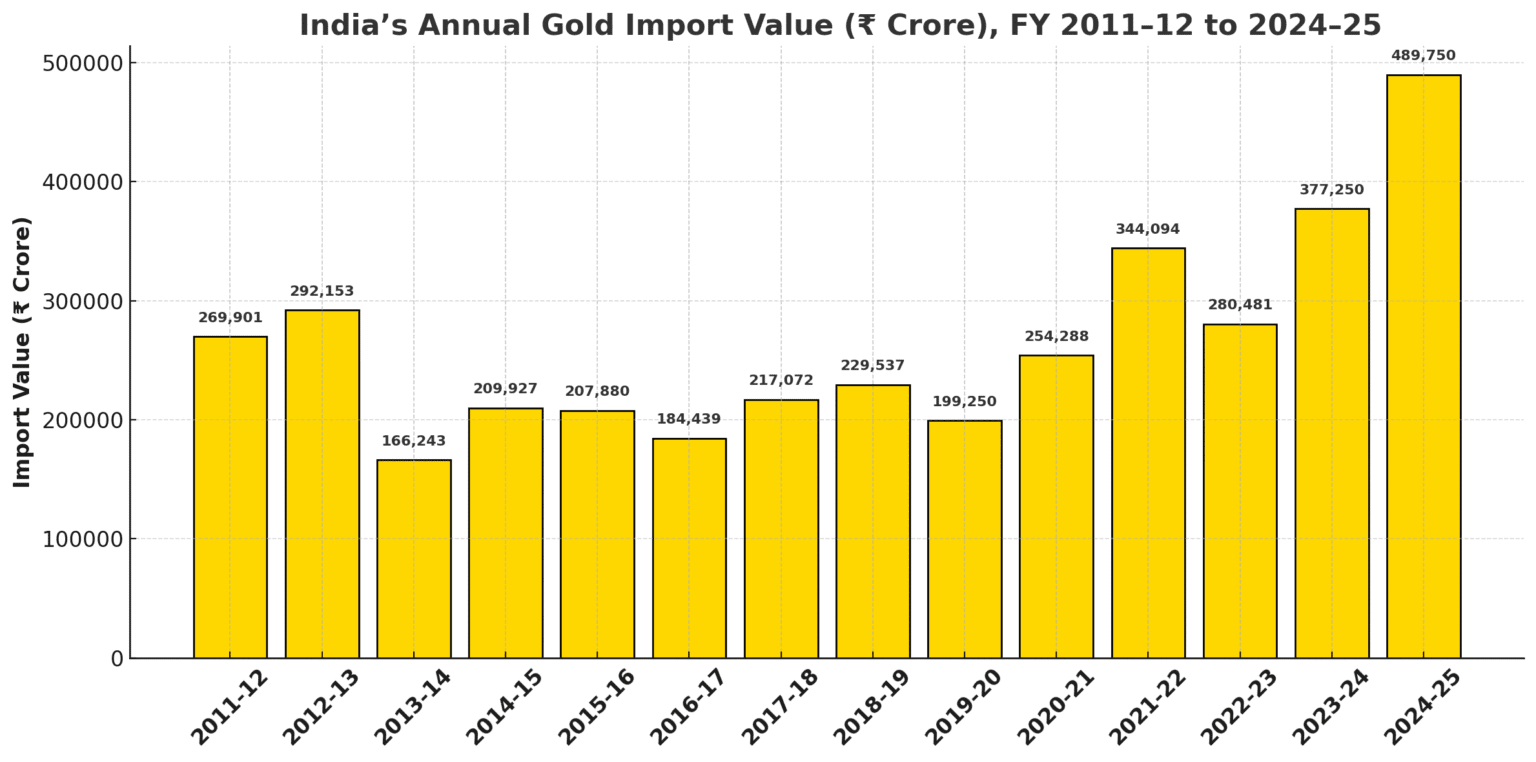
India's gold imports hit a record $71.98 billion in 2025–26, a sharp increase of 24% from $58 billion worth of imports in 2024-25. India sources most of its gold from Switzerland, UAE and South Africa. Despite being one of the world’s largest gold consumers, domestic production averages 1.5-1.6 tonnes per year, with Karnataka contributing to 90% of total production. In contrast, India imports over 600-700 tonnes of gold per year to satisfy its demand.
PM Modi's Appeal: What Triggered The Conversation
Prime Minister Narendra Modi has recently appealed to citizens to reduce non essential gold purchases, especially for celebrations, for at least one year. His objective is to reduce pressure on India’s foreign exchange reserves during a time of geopolitical uncertainty. Now the question arises, what will actually happen if India stops buying gold for a year?
Impacts on the Indian Economy
1. Impact on India's Current Account Deficit (CAD)
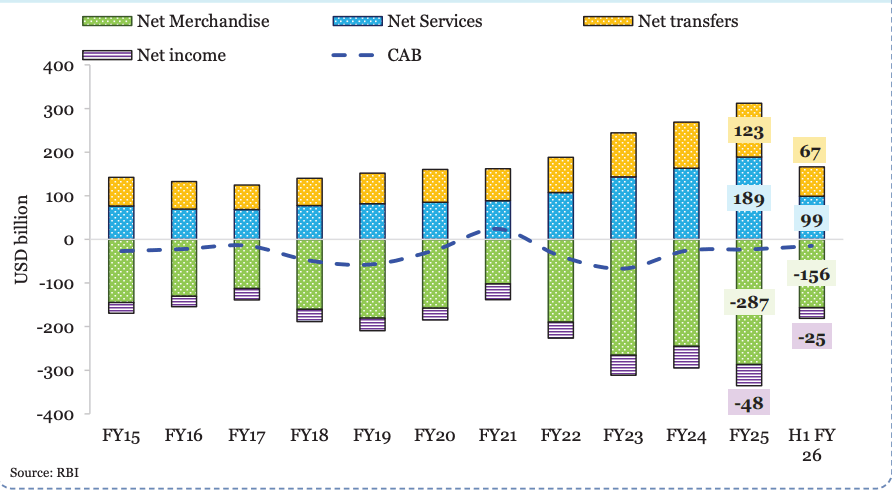
Gold imports are a key driver of India's current account deficit (CAD), which stood at $30.1 billion for the first three quarters of 2025–26 alone, with the full-year deficit expected to widen further. A trade deficit occurs when a country imports more than it exports. Since India imports most of the gold it consumes, rising gold demand leads to massive outflows of foreign exchange, especially US dollars.
India imported almost $72 billion of gold, if it successfully reduces 50% of gold imports, the economy could save up to $36 billion, nearly half of the projected CAD.
A lower import bill would reduce the pressure on forex reserves, strengthening India’s overall macroeconomic conditions. It would also reduce India’s dependence on a volatile global commodity market and more capital can be directed towards productive ventures such as building infrastructure and facilitating investment in technology and business.
2. Effect on the Indian Rupee
India imports most of its gold using US dollars, which means higher gold imports lead to large dollar outflows from the economy. When demand for dollars rises, the Indian rupee can weaken against the US dollar. Since India imports hundreds of tonnes of gold annually, sustained gold demand places continuous pressure on the currency.
If gold purchases decline, importers would require fewer dollars to buy gold from overseas markets. Lower dollar demand could help stabilise the rupee. A more stable rupee also helps India manage inflation associated with currency depreciation. Therefore, lower gold imports would be beneficial for the stability of the Indian rupee.
What Happens To Gold Prices In India And Globally?
India’s gold demand is so large that it plays a major role in shaping global bullion markets. As one of the world’s largest gold consumers, any sharp rise or fall in Indian purchases can influence international gold prices. In 2026, gold prices in India surged to record highs, with 24K gold trading above INR 15,000 per gram. Forecasts for 2026 gold prices place 10 grams of gold to go up to INR 1.6 lakh in lieu of continued geopolitical tensions.
If Indian consumers significantly reduce gold purchases, global demand for physical gold could weaken, potentially softening international bullion prices.
The Jewellery Industry And Jobs At Stake
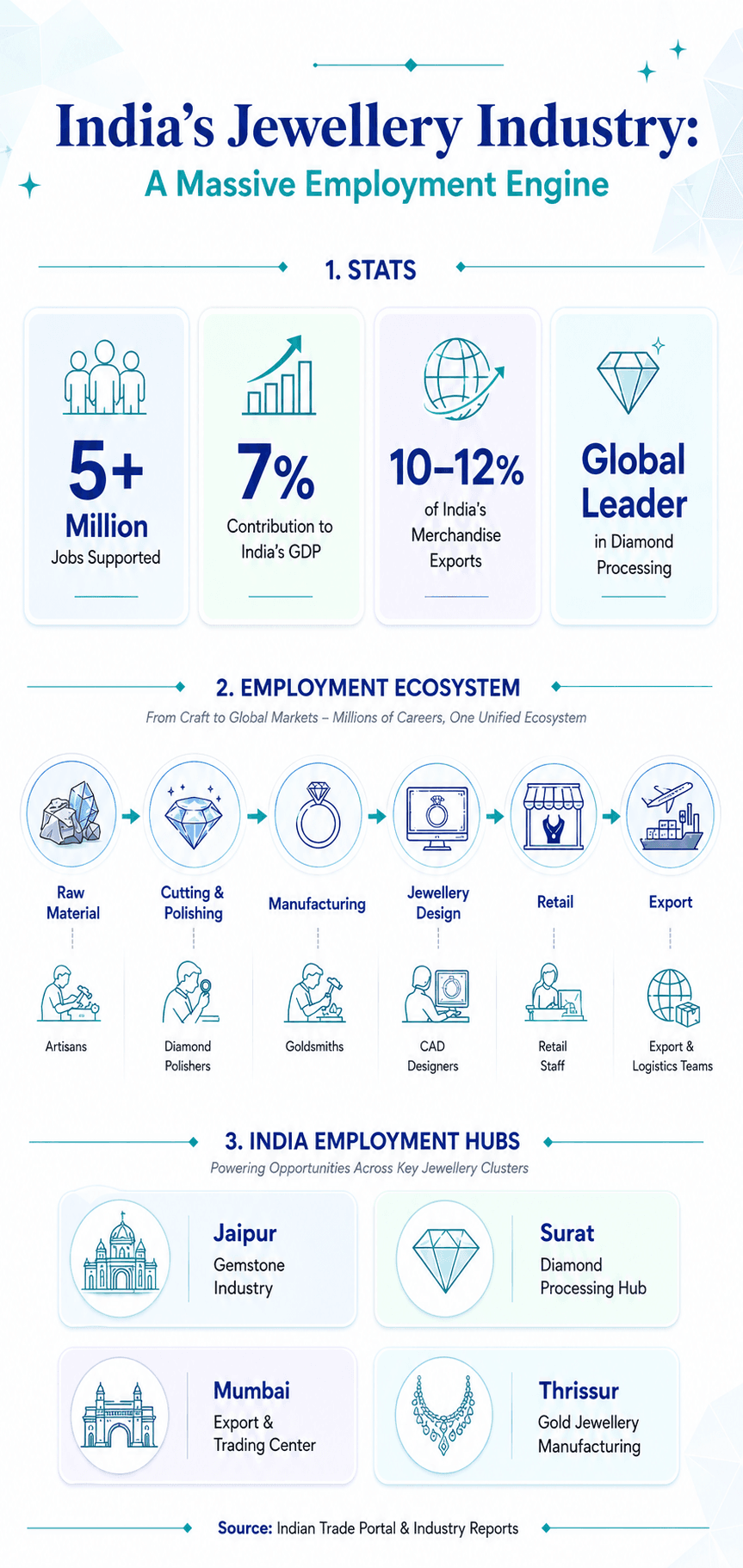
India’s jewellery industry is at risk of a slowdown. It is a massive employment generator, and it supports millions of artisans and small business owners. A lot of the sector depends heavily on seasonal demand during weddings, festivals, and religious celebrations.
If consumers significantly reduce gold purchases for an extended period, small and medium-sized jewellery businesses could face severe financial stress. Cities such as Surat, Rajkot, Jaipur, and Thrissur are particularly vulnerable because they serve as major hubs for jewellery manufacturing and gold trade. A prolonged slowdown in gold demand could reduce incomes, increase unemployment and hurt thousands of enterprises that rely on consumer spending during celebrations.
Gold Loans, Banks And The Financial System
Gold loans market in India is estimated to exceed INR 15 lakh crore by FY2026, with projections of INR18 lakh crore by FY2027. Millions of households, especially in rural areas, pledge gold jewellery as collateral to borrow money for farming, business expenses, education, or emergencies. Gold-backed lending is particularly popular because it provides quick access to credit without requiring extensive paperwork or formal income proof.
However, if gold prices decline significantly, the value of the pledged collateral also falls. This increases the risk for banks and non-banking financial companies (NBFCs), as borrowers may default on loans that are no longer fully backed by the value of the gold. This makes financial institutions hesitant to lend money to such borrowers, making their credit journey difficult.
Conclusion: Where Does Investor Money Go Instead?
There are several alternative gold investment options in India too. Products such as Sovereign Gold Bonds (SGBs), Gold ETFs, and Electronic Gold Receipts (EGRs) have become increasingly popular since these digital instruments provide investors with the returns of gold combined with higher liquidity and lesser storage issues.
Investment platforms like Grip Invest offer various fixed income instruments that generate real, predictable yields, perfect for investors looking for a regular income stream.
FAQs On Gold's Economic Impact
 |
Author: Grip Invest Editorial Team The Grip Invest Editorial Team is a group of Chartered Accountants, MBA (Finance) graduates, and Qualified Research Analysts dedicated to helping you invest smarter. We dive deep into India's fixed income landscape to deliver content that is accurate, up-to-date, and easy to understand. Whether you're exploring bonds, fixed deposits, or other fixed income opportunities, our guides cut through the noise and give you the clarity to make better financial decisions. |
Want to stay at the top of your finances?
Join the community of 4 lakh+ investors and learn more about Grip Invest, the latest financial knick-knacks, and shenanigans in the world of investing.
Happy Investing!
Disclaimer - Investments in debt securities/municipal debt securities/securitised debt instruments are subject to risks including delay and/ or default in payment. Read all the offer related documents carefully. The investor is requested to take into consideration all the risk factors before the commencement of trading.
This communication is prepared by Grip Broking Private Limited (bearing SEBI Registration No. INZ000312836 and NSE ID 90319) and/or its affiliate/ group company(ies) (together referred to as “Grip”) and the contents of this disclaimer are applicable to this document and any and all written or oral communication(s) made by Grip or its directors, employees, associates, representatives and agents. This communication does not constitute advice relating to investing or otherwise dealing in securities and is not an offer or solicitation for the purchase or sale of any securities. Grip does not guarantee or assure any return on investments and accepts no liability for consequences of any actions taken based on the information provided. For more details, please visit www.gripinvest.in
Registered Address - 106, II F, New Asiatic Building, H Block, Connaught Place, New Delhi 110001


