

Cash Flow Management: Strategies, Importance And Best Practices For Individuals


Have you ever wondered why some people earn a good salary but still struggle to make ends meet, while others with a modest income always seem financially secure? The answer often lies in cash flow management.
Managing money isn't just about how much you earn, it's about how effectively you control the money coming in and going out. Whether you're a salaried employee, freelancer, entrepreneur, or retiree, understanding your cash flow is the foundation of financial stability and long-term wealth.
In this blog, we'll explore what cash flow management is, why it matters, practical strategies to improve it, common challenges, and how good cash flow can eventually help you build wealth.
Cash Flow Management: Why It Matters
What is Cash Flow Management?
Cash flow management is the process of tracking, analyzing, and optimizing the movement of money into and out of your finances. It helps ensure that your income is sufficient to cover expenses while leaving room for savings and investments.1
In simple words:
Cash Inflow = Salary, business income, rental income, interest, dividends, etc.
Cash Outflow = Rent, groceries, EMIs, utility bills, insurance, entertainment, investments, and other expenses.
The goal is to maintain a healthy balance where your inflows consistently exceed your outflows.
Positive vs. Negative Cash Flow
Positive Cash Flow | Negative Cash Flow |
Income is higher than expenses | Expenses exceed income |
Allows savings and investments | Leads to debt accumulation |
Improves financial security | Creates financial stress |
Helps achieve long-term goals | Limits financial growth
|
Positive cash flow gives you financial freedom, while negative cash flow can slowly push you into a debt trap.
Why is Cash Flow Management Important?
According to multiple financial studies, one of the leading causes of financial stress is poor money management, not necessarily low income.
Effective cash flow planning helps you:
- Stay prepared for emergencies.
- Avoid unnecessary borrowing.
- Build healthy saving habits.
- Invest consistently
- Improve financial confidence.
- Achieve life goals such as buying a home, funding education, or planning retirement.
Simply put, cash flow is the heartbeat of your financial life.2
How To Manage Cash Flow Effectively?
Improving your personal cash flow doesn't require complicated financial knowledge. Small, consistent habits can make a significant difference.
1. Create a Monthly Budget
A budget tells every rupee where it should go before you spend it.
A popular method is the 50-30-20 rule:
- 50% for essential expenses
- 30% for lifestyle expenses
- 20% for savings and investments
Budgeting helps you identify unnecessary expenses and allocate money toward your financial priorities.3
2. Build an Emergency Fund
Unexpected expenses such as medical emergencies, job loss, or urgent repairs can disrupt your finances overnight.
Aim to save 3-6 months' worth of living expenses in an easily accessible account.
Having an emergency fund prevents you from relying on credit cards or personal loans during difficult times.
3. Track Every Expense
Many people underestimate how much they spend on small daily purchases.
Tracking your expenses helps you answer questions like:
- Where is my money going?
- Which expenses are unnecessary?
- Can I reduce discretionary spending?
Reviewing your spending every week can reveal surprising opportunities to save.
4. Manage Debt Wisely
Not all debt is bad, but unmanaged debt can damage your cash flow planning.
Focus on:
- Paying EMIs on time
- Reducing high-interest credit card debt first
- Avoiding unnecessary loans
- Borrowing only when required
Lower debt means more money available for savings and investments.
Common Cash Flow Challenges
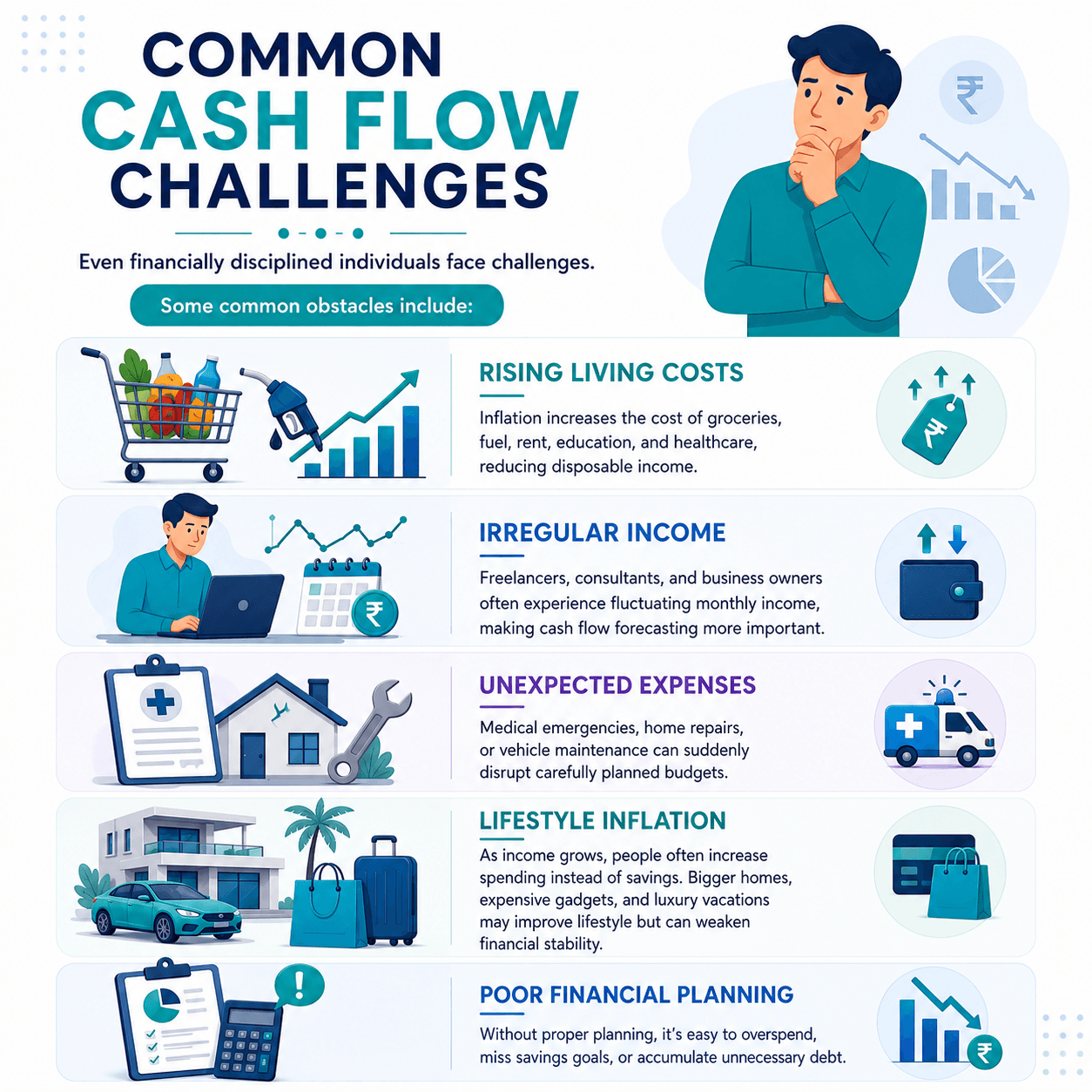
Even financially disciplined individuals face challenges.
Some common obstacles include:
1. Rising Living Costs
Inflation increases the cost of groceries, fuel, rent, education, and healthcare, reducing disposable income.
2. Irregular Income
Freelancers, consultants, and business owners often experience fluctuating monthly income, making cash flow forecasting more important.
3. Unexpected Expenses
Medical emergencies, home repairs, or vehicle maintenance can suddenly disrupt carefully planned budgets.4
4. Lifestyle Inflation
As income grows, people often increase spending instead of savings. Bigger homes, expensive gadgets, and luxury vacations may improve lifestyle but can weaken financial stability.
5. Poor Financial Planning
Without proper planning, it's easy to overspend, miss savings goals, or accumulate unnecessary debt.
Tools And Strategies To Improve Cash Flow
Technology has made money management much easier than ever.
Budgeting Apps
Budgeting apps automatically categorize expenses, monitor spending, and generate reports, helping users make informed financial decisions.
Automate Savings
Set automatic transfers from your salary account to your savings or investment account.
This removes the temptation to spend first and save later.5
Cash Flow Forecasting
Cash flow forecasting involves estimating future income and expenses.
Forecasting helps you prepare for:
- Upcoming EMIs
- Annual insurance premiums
- School fees
- Planned vacations
- Tax payments
It reduces surprises and improves financial discipline.
Investment Planning
Healthy cash flow allows consistent investing, helping your money grow over time.
Rather than leaving excess cash idle, consider diversified investment options that match your financial goals and risk tolerance.
Cash Flow Improvement Strategies
Strategy | Benefit |
Monthly Budget | Controls unnecessary spending |
Expense Tracking | Identifies spending leaks |
Emergency Fund | Handles financial emergencies |
Debt Management | Reduces interest burden |
Automation | Builds disciplined saving habits |
Cash Flow Forecasting | Improves future financial planning |
Regular Investing | Supports long-term wealth creation
|
From Cash Management To Wealth Creation
Managing your cash flow isn't just about paying bills it's about creating opportunities.
When your income consistently exceeds your expenses, you can invest regularly and benefit from the power of compounding.
Along with traditional investment options such as mutual funds, investors may also explore fixed-income investment opportunities like corporate bonds through platforms such as Grip Invest to generate predictable income and diversify their portfolios.
The key is consistency. Even modest monthly investments, supported by healthy cash flow, can grow significantly over time.
Good financial planning transforms everyday savings into long-term wealth.
FAQs On Cash Flow Management
 |
Author: Grip Invest Editorial Team The Grip Invest Editorial Team is a group of Chartered Accountants, MBA (Finance) graduates, and Qualified Research Analysts dedicated to helping you invest smarter. We dive deep into India's fixed income landscape to deliver content that is accurate, up-to-date, and easy to understand. Whether you're exploring bonds, fixed deposits, or other fixed income opportunities, our guides cut through the noise and give you the clarity to make better financial decisions. |
Want to stay at the top of your finances?
Join the community of 4 lakh+ investors and learn more about Grip Invest, the latest financial knick-knacks, and shenanigans in the world of investing.
Happy Investing!
Disclaimer - Investments in debt securities/municipal debt securities/securitised debt instruments are subject to risks including delay and/ or default in payment. Read all the offer related documents carefully. The investor is requested to take into consideration all the risk factors before the commencement of trading.
This communication is prepared by Grip Broking Private Limited (bearing SEBI Registration No. INZ000312836 and NSE ID 90319) and/or its affiliate/ group company(ies) (together referred to as “Grip”) and the contents of this disclaimer are applicable to this document and any and all written or oral communication(s) made by Grip or its directors, employees, associates, representatives and agents. This communication does not constitute advice relating to investing or otherwise dealing in securities and is not an offer or solicitation for the purchase or sale of any securities. Grip does not guarantee or assure any return on investments and accepts no liability for consequences of any actions taken based on the information provided. For more details, please visit www.gripinvest.in
Registered Address - 106, II F, New Asiatic Building, H Block, Connaught Place, New Delhi 110001


