

Covered Bonds Vs Secured Bonds: Key Differences Explained



The security behind a bond may play an important role in evaluating credit risk when investing in bonds, as well as recovery if the issuing company faces financial difficulties. Covered bonds and secured bonds may seem very similar at first.
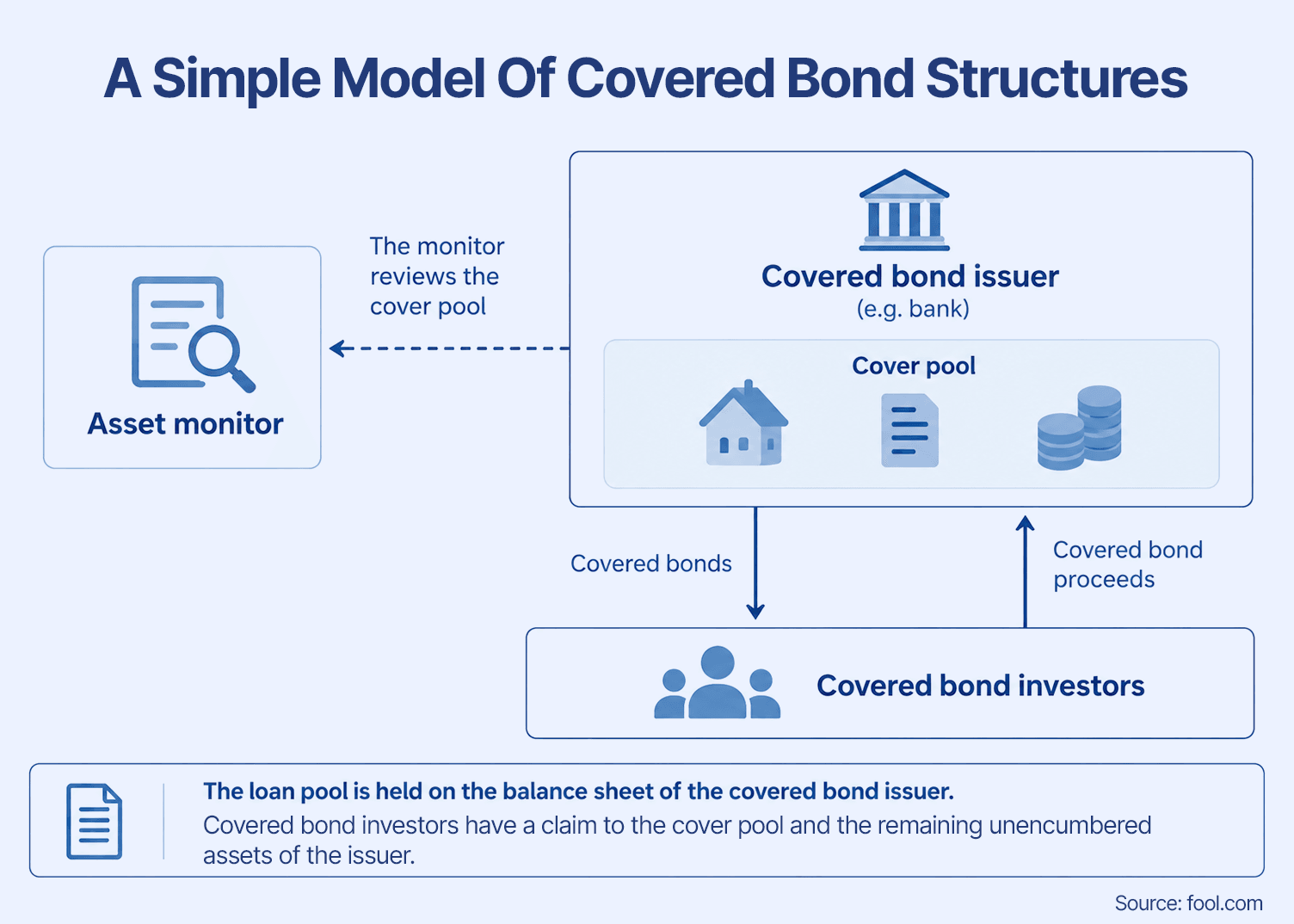
Covered bonds usually consist of the issuer’s ongoing obligation to repay and a cover pool consisting of specific assets.
Thus, the covered bond structure creates dual recourse. Secured bonds are usually backed by specified collateral that secures the issuer's obligations to bondholders.
Understanding these distinctions makes it easier for investors to analyse bond security structure, collateral quality and issuer creditworthiness. Let's look at covered bonds vs. secured bonds in more detail in this blog.
What Are Covered Bonds?
Let’s first break down covered bond meaning. Covered bonds are backed by a designated pool of eligible assets, commonly including mortgage loans or public-sector exposures. Investors generally have a claim against the issuer as well as preferential recourse to the designated cover pool, creating what is known as dual recourse.
Covered bonds are well established in Europe. In India, covered-bond structures have also appeared in the market, although the domestic market remains relatively limited compared with established European markets.
Let us understand this with an example:
Suppose a bank issues INR 100 crore of covered bonds and designates a pool of eligible mortgage loans to support them. The bank remains responsible for paying interest and principal on the bonds, while investors also have preferential recourse to the designated cover pool if the issuer defaults, subject to the applicable legal framework. The composition of the pool may change over time as ineligible or repaid loans are replaced with eligible assets.
What Are Secured Bonds?
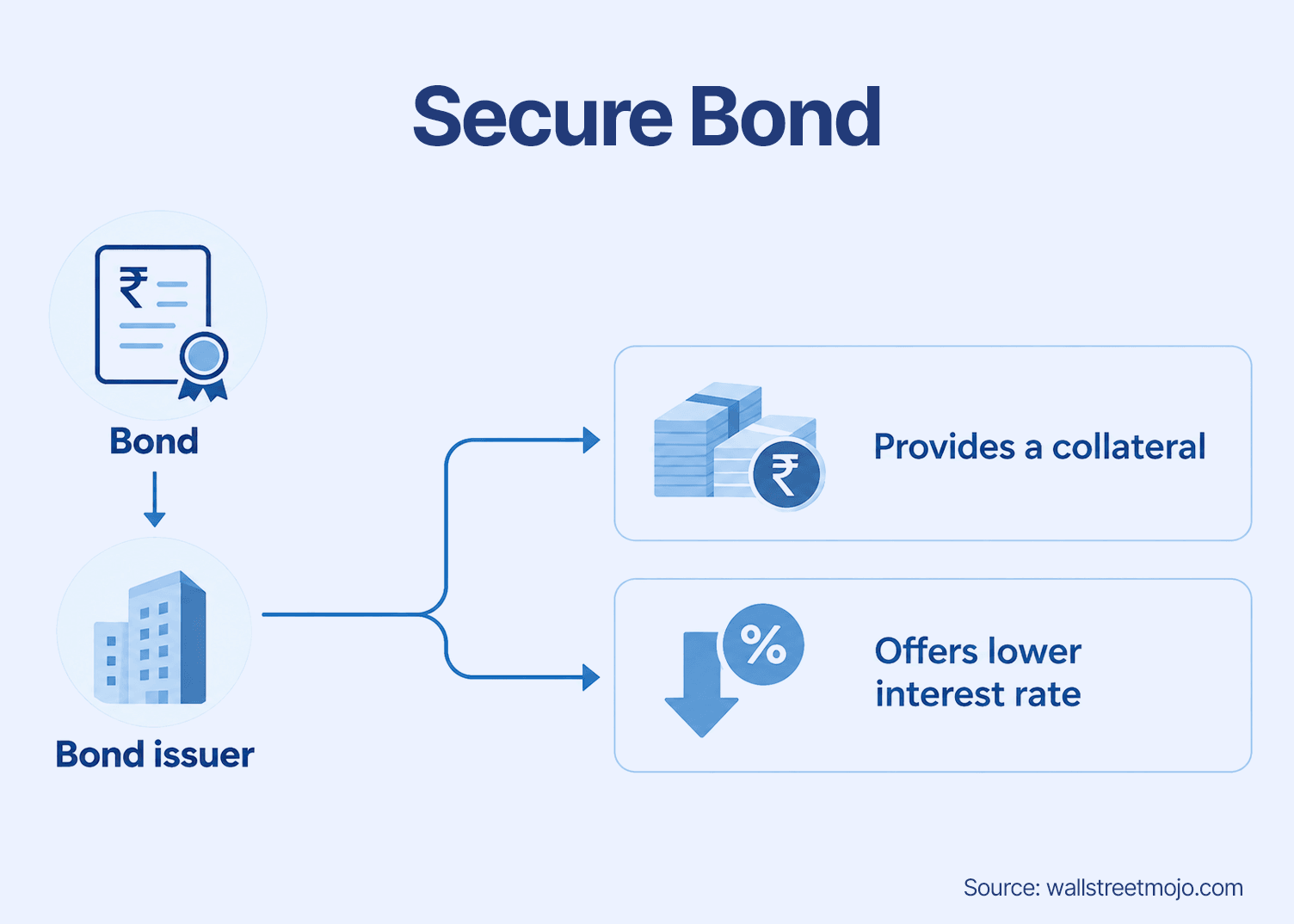
Let’s now understand secured bond meaning. These are bonds backed by specified assets or collateral pledged to secure the issuer’s repayment obligations. The collateral may include assets such as property, equipment, receivables or financial securities owned by the issuer. A dedicated revenue stream may also support certain secured debt structures.
If the issuer defaults, bondholders may have recourse to the pledged collateral, subject to the security documents and applicable law. Mortgage bonds and equipment trust certificates are examples of secured debt instruments.
Hypothetical example
Suppose a company issues INR 50 crore of secured bonds and pledges certain commercial properties as collateral. The company remains responsible for making the scheduled interest and principal payments. If it defaults, the security may be enforced and the pledged assets may be sold to recover amounts due to bondholders, subject to the bond terms and applicable law.
However, collateral does not eliminate investment risk. Recovery may still be affected by factors such as a fall in the collateral’s value, delays in enforcement or difficulty in selling the assets.
Covered Bonds Vs Secured Bonds: Key Differences
Let us understand the key differences between covered bonds vs secured bonds.
Feature | Covered Bonds | Secured Bonds |
Structure | Backed by a designated cover pool | Backed by specified collateral |
Recourse | Typically offers dual recourse: a claim against the issuer and preferential recourse to the cover pool | Recourse to pledged collateral is governed by the security arrangement and applicable law |
Assets | Pool of eligible assets | Specific assets identified as security |
Monitoring | Cover pool is subject to ongoing eligibility and coverage requirements | Depends on the bond terms and security arrangement |
Over-collateralisation | May be required under the applicable framework | May be provided but is not inherent |
Issuer obligation | Issuer remains liable for repayment | Issuer remains liable for repayment |
Default | Cover pool can provide an additional recovery mechanism | Recovery depends on the pledged collateral and enforcement |
Common use | Often used by financial institutions for long-term funding | Used by companies and financial institutions to raise secured debt |
The key distinction is therefore not simply whether collateral exists. It is how the collateral is structured, monitored and linked to the bondholder's rights.
How Does the Cover Pool Work?
The cover pool is central to the covered-bond structure. It generally consists of assets that meet specified eligibility criteria. Depending on the applicable framework, these may include mortgage loans, public-sector exposures or other qualifying assets.
The pool is monitored to ensure that it continues to provide sufficient coverage for outstanding covered bonds. This may involve requirements relating to asset quality, valuation, loan-to-value ratios, maturity mismatches, liquidity and over-collateralisation.
The cover pool may also be dynamic. If certain loans in the pool no longer meet the required criteria, the issuer may need to replace them with eligible loans.
For investors, this means that evaluating a covered bond involves looking beyond the issuer's headline credit rating. The quality, composition and coverage of the pool can also matter.
Covered Bonds Vs Secured Bonds: What Happens If the Issuer Defaults?
The recovery process can differ between covered and secured bonds because the nature of recourse is different. In the event of an issuer default, covered bond investors generally retain a claim against the issuer while also having preferential recourse to the designated cover pool, subject to the applicable legal framework.
In the case of a secured bond, the investor has rights over the particular collateral put up to secure the bond. In the event of default by the issuer, the collateral may be realised as per the terms of the security agreement and applicable insolvency laws.
What Should Investors Check Before Buying Either Bond?
Investors should evaluate both the issuer's credit risk and the security structure rather than relying solely on the presence of collateral.
Key factors include:
1. Issuer credit quality: Review the issuer's financial position, credit rating and repayment record.
2. Collateral quality: Understand what assets secure the bond and their underlying quality.
3. Coverage: Check the collateral value relative to the outstanding bond amount and whether over-collateralisation is maintained.
4. Legal structure: Examine the security interest, trustee arrangements, priority of claims and enforcement mechanism.
5. Liquidity: A secured or covered structure does not guarantee that the bond will be easy to sell before maturity.
6. Interest-rate risk: Bond prices can fluctuate when market interest rates change.
7. Default and recovery terms: Understand what the bond documents say about enforcement and investor recovery.
Investors should also review the information memorandum, credit-rating rationale and applicable regulatory disclosures before investing.
Which Features Matter More for Different Investors?
Different investors may focus on different aspects of a bond's structure.
An investor primarily concerned with credit protection may pay close attention to the issuer's financial strength, collateral quality, coverage levels and recovery structure. An investor seeking liquidity may focus more on trading volumes, market availability and the expected holding period.
Investors comparing covered bonds may evaluate the composition and oversight of the cover pool, whereas investors assessing secured bonds may closely scrutinise the specific collateral involved.
No single feature determines whether a bond structure meets an investor's requirements. The relevant considerations depend on the investor's objectives, risk tolerance, time horizon and understanding of the product.
FAQs

Want to stay at the top of your finances?
Join the community of 22 lakh+ investors and learn more about Grip Invest, the latest financial knick-knacks, and shenanigans in the world of investing.
Happy Investing!
Disclaimer - Investments in debt securities/municipal debt securities/securitised debt instruments are subject to risks including delay and/ or default in payment. Read all the offer related documents carefully. The investor is requested to take into consideration all the risk factors before the commencement of trading.
This communication is prepared by Grip Broking Private Limited (bearing SEBI Registration No. INZ000312836 and NSE ID 90319) and/or its affiliate/ group company(ies) (together referred to as “Grip”) and the contents of this disclaimer are applicable to this document and any and all written or oral communication(s) made by Grip or its directors, employees, associates, representatives and agents. This communication does not constitute advice relating to investing or otherwise dealing in securities and is not an offer or solicitation for the purchase or sale of any securities. Grip does not guarantee or assure any return on investments and accepts no liability for consequences of any actions taken based on the information provided. For more details, please visit www.gripinvest.in
Registered Address - 106, II F, New Asiatic Building, H Block, Connaught Place, New Delhi 110001


