

Dividend Aristocrats in India: Meaning, Examples, Returns And Risks


Investment in the stock market is subject to volatility, and your returns can fluctuate due to a variety of factors, starting with a company’s performance, sectoral trends, and geopolitical situations.
However, with a little research and analysis, you can not only improve the quality of your portfolio but also ensure that you get a fair amount of returns even when the overall market trends are not too favourable.
Dividend Aristocrats is a term used to describe a group of companies that have paid dividends for at least 25 consecutive years. From the perspective of global markets (such as the S&P 500), these companies are those which have increased dividend payouts every year for at least twenty-five years.
These companies have strong fundamentals, financial stability, and a robust commitment to increasing shareholder value.
Dividend Aristocrats are best known for providing consistent returns to the shareholders, irrespective of the market cycles. They are typically large corporations with predictable cash flows and strong balance sheets.
In India, there is a list of companies which have consistently paid dividends to the shareholders and are preferred by risk-averse investors. Let us find out which companies and sectors in India have earned the ‘Dividend Aristocrats’ tag like their Western counterparts.
Examples Of Dividend Aristocrats
Global Companies
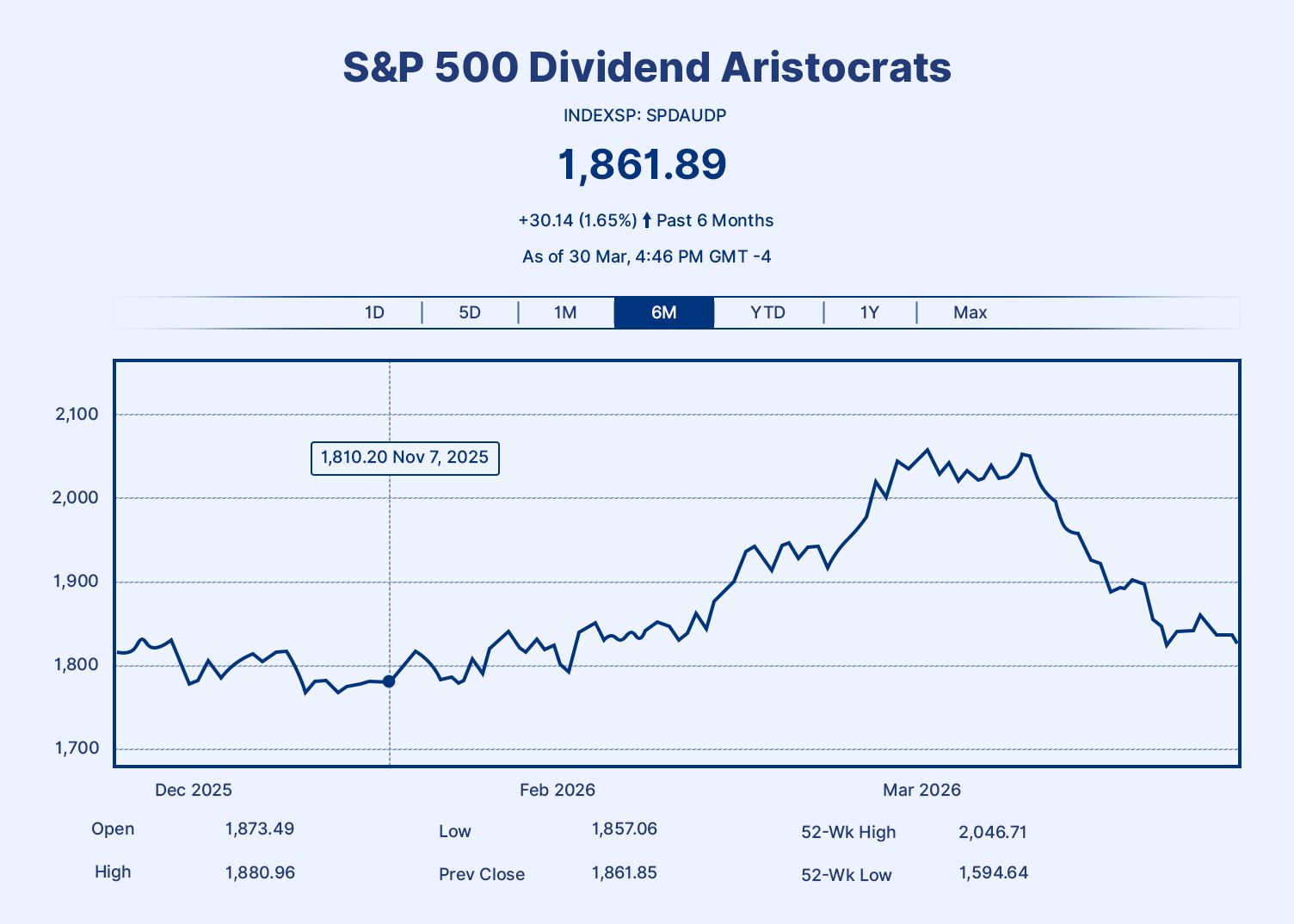
From the perspective of the US stock market, the S&P 500 Dividend Aristocrats is a stock market index which was launched in May 2005. It primarily consists of large-cap companies that have consistently increased dividend payouts in the past 25 years. Some of the well-known names in the index include Coca-Cola Company, Johnson & Johnson, and Procter & Gamble.
The index has moved up slightly over the past six months, given geopolitical issues and other challenges markets have faced globally. The consistent performance of the companies can be attributed to resilient business models with global demand, strong brand equity, and stable earnings, irrespective of economic conditions.
Indian Equivalents (Consistent Dividend Payers)
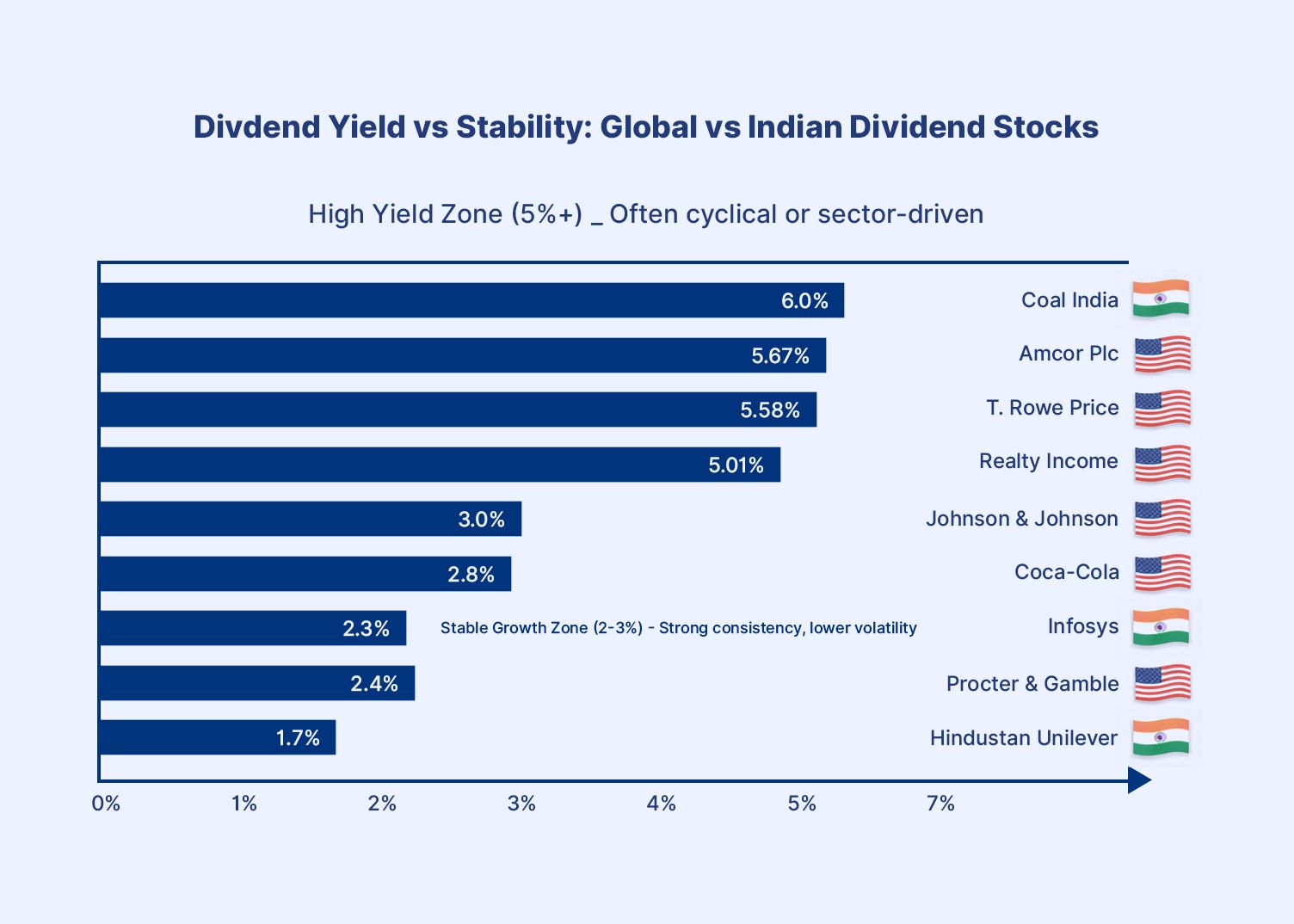
Whereas India does not have a similar market index for high-dividend-yield companies, there are a number of companies that have built a strong reputation for paying consistent dividends over the years. For example, Wipro, Vedanta and Hindustan Unilever are a few of the names that can be considered as dividend aristocrats India. These companies have a strong financial position and have consistently paid dividends to the shareholders.
Indian investors have considered these companies as income-generating equity options, especially in a volatile market condition. Investors who seek a balance between growth and regular cash flow have preferred these stocks to add value to their portfolios.
Why Investors Prefer Dividend Aristocrats
For investors, it is important that portfolios demonstrate consistent growth as investments are made to achieve a specific life goal. Hence, it is wise to seek a balance between regular income and long-term stability.
Having dividend-paying stocks in the portfolio ensures consistent income, and the volatility of these stocks, due to the nature of the companies, is lower than that of usual mid and small-cap stocks.
Stable Income
These stocks have the ability to generate a consistent income, which can be close to the risk-free return of the market, through dividends.
Lower Volatility
Dividend-paying companies, especially established large-cap firms, tend to exhibit lower price volatility compared to growth stocks. Their strong fundamentals, diversified revenue streams, and resilient business models help cushion the impact of market downturns.
Compounding Benefits
Besides capital appreciation, reinvesting dividends in the stock market or in other assets can provide compounding benefits. In the long-term investment horizon, it is particularly helpful in attaining the critical financial milestones. Based on your investment goals, you can look out for the dividend paying stocks list India on different platforms.
Risks Of Dividend Investing
Even though dividend investing can be an excellent investment strategy and preferred by investors seeking a balance between risk and returns, it is critical to understand the risks involved in dividend investing:
Dividend Cuts
Companies are not obligated to pay dividends. These payouts depend on the company’s financial performance, market conditions, and the outlook of the decision-makers.
Low-Growth Trap
Some of the high dividend companies are mature businesses with a low potential for growth. Hence, an investor might receive consistent dividends, but the capital appreciation of such stock would be comparatively lower than that of high-growth stocks.
Sector Concentration
An investor might get stuck in sectors such as FMCG, Utilities, Energy, Financial Services, and Information Technology, as most of the high-yield companies represent these industries.
This can further result in an increased exposure to sector-specific risks. These might be the best dividend stocks for passive income, but can result in a higher sectoral concentration.
Dividend Stocks vs Fixed Income Investments
Even though the purpose of both these investments is to ensure a consistent return for the investor, they are different in terms of risk, return, and predictability.
Risk vs Return Comparison
Irrespective of the sector or company size, dividend stocks remain volatile and subject to market fluctuations. While they offer the potential for capital appreciation along with dividends, they are also exposed to price volatility and business risks. On the other hand, fixed income securities often provide similar (or higher) returns without taking too much risk.
Predictability of Cash Flows
In this context, fixed-income securities are much better suited to investors seeking consistent cash flows. Payment of coupon interest on bonds and fixed-income securities is a legal obligation of a company.
On the other hand, there are no regulations that compel a company to pay dividends each year. Dividend payouts depend on company profits, board decisions, and economic conditions.
The following chart shows a comparison between high dividend stocks India with bond yield:
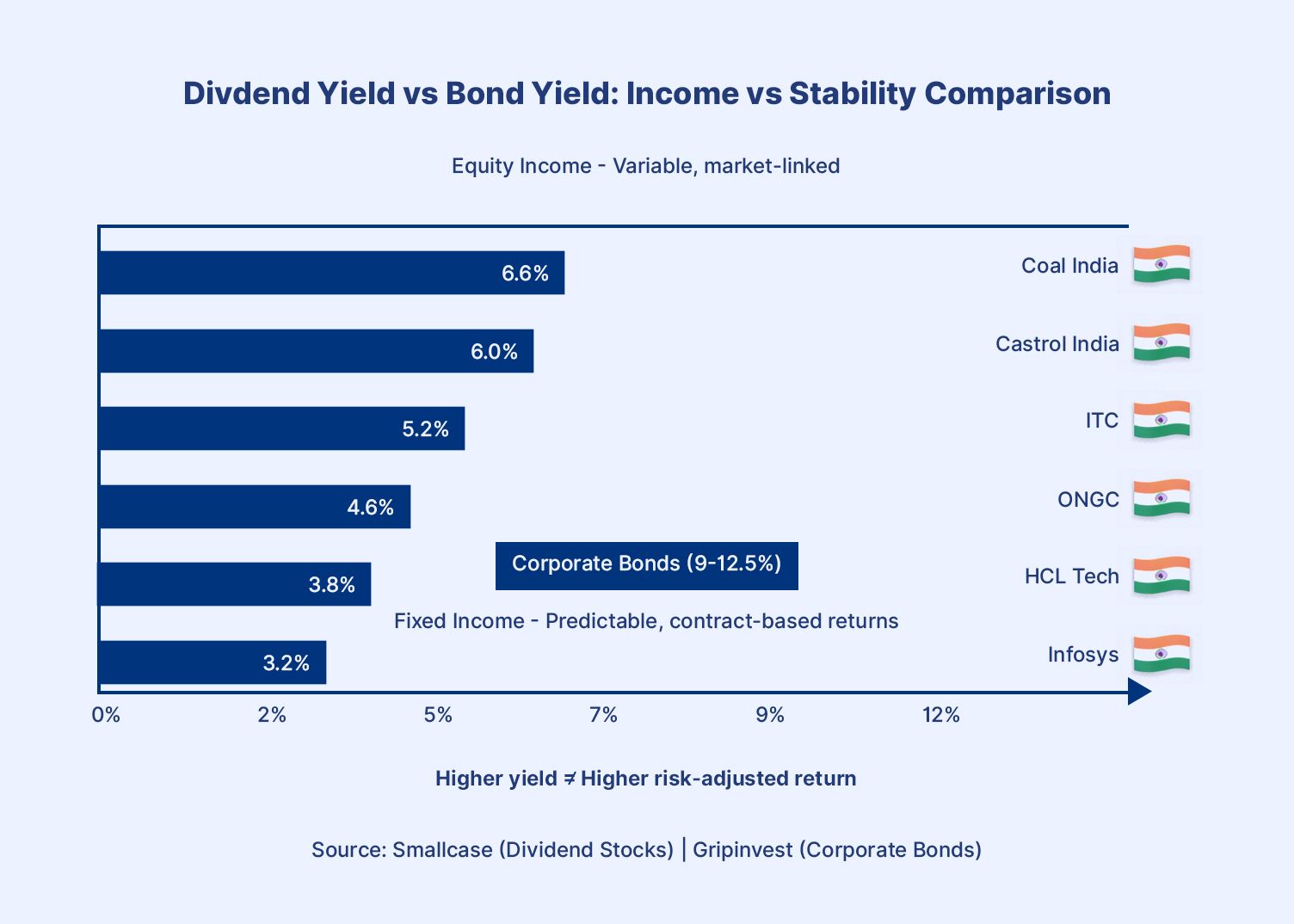
The following chart shows a comparison between high dividend stocks India with bond yield:
For the best and most balanced portfolio management approach, it is suggested that you include fixed-income securities along with equities. You can visit the GripInvest platform to evaluate a wide range of fixed income securities that suit your financial goals and risk tolerance.
Conclusion
Dividend Aristocrats offer a compelling mix of stability, consistent income, and long-term wealth creation. Their ability to deliver regular dividends, even during volatile market phases, makes them a preferred choice for investors seeking relatively predictable equity returns. However, they are not without risks, dividend cuts, slower growth, and sector concentration can impact overall portfolio performance.
This is why relying solely on dividend stocks may not be sufficient. A well-rounded investment strategy should balance equity exposure with more predictable income-generating assets.
For investors looking to complement dividend income with stable and fixed returns, platforms like Grip Invest offer access to curated fixed-income opportunities such as corporate bonds and SDIs, helping build a more resilient and balanced portfolio.
 |
Author: Grip Invest Editorial Team The Grip Invest Editorial Team is a group of Chartered Accountants, MBA (Finance) graduates, and Qualified Research Analysts dedicated to helping you invest smarter. We dive deep into India's fixed income landscape to deliver content that is accurate, up-to-date, and easy to understand. Whether you're exploring bonds, fixed deposits, or other fixed income opportunities, our guides cut through the noise and give you the clarity to make better financial decisions. |
Want to stay at the top of your finances?
Join the community of 4 lakh+ investors and learn more about Grip Invest, the latest financial knick-knacks, and shenanigans in the world of investing.
Happy Investing!
Disclaimer - Investments in debt securities/municipal debt securities/securitised debt instruments are subject to risks including delay and/ or default in payment. Read all the offer related documents carefully. The investor is requested to take into consideration all the risk factors before the commencement of trading.
This communication is prepared by Grip Broking Private Limited (bearing SEBI Registration No. INZ000312836 and NSE ID 90319) and/or its affiliate/ group company(ies) (together referred to as “Grip”) and the contents of this disclaimer are applicable to this document and any and all written or oral communication(s) made by Grip or its directors, employees, associates, representatives and agents. This communication does not constitute advice relating to investing or otherwise dealing in securities and is not an offer or solicitation for the purchase or sale of any securities. Grip does not guarantee or assure any return on investments and accepts no liability for consequences of any actions taken based on the information provided. For more details, please visit www.gripinvest.in
Registered Address - 106, II F, New Asiatic Building, H Block, Connaught Place, New Delhi 110001


