

Why Global Banks Are Pouring Into India: And What It Means For Investors


Introduction: Foreign Investments In India
The financial sector has been attracting investment from foreign entities, especially foreign banks, pushing Nift Bank to record levels. About $6 bn has already been infused into the escort over the past few months. Some of the most prominent investments include Sumitomo Mitsui Financial Group buying a 24.2% stake in Yes Bank and Emirates NBD acquiring a majority stake in RBL Bank1. While foreign investment has boosted investor sentiment, what has been driving the rally? Moreover, is this a short-term move intended for profit-taking or a longer-term trend shift in the sector?
What Is Driving The Surge In Foreign Capital?
With global banks entering India and making heavy investments, the shift in the trajectory of the economy is clear. The major driver of the trend is the anticipation of an uplift in the strict RBI rules foreign banks. The central bank is currently reviewing the relaxation of its 15% shareholding cap. As per the rule, any single foreign investor can invest up to 15% in a non-government-owned lender.
While the Reserve Bank of India has been approving big sales on a case-by-case basis, the possibility of an uplift has considerably boosted foreign investment India 2025. The uplifting mood of the Indian economy, especially the financial sector and debt instruments, has also attracted hefty foreign investments.
Also Read: RBI Cheque Clearing Rules 2025.
Impact On Indian Investors: What This Foreign Capital Wave Means For You
The way the market is reforming amid a flood of foreign investment can be a game-changer for the Indian economy. The surge of foreign investment, both equity and debt, is more than a macro-level economic event. These penetrations from foreign entities, especially global banks, are directly influencing market behaviour. They are strengthening liquidity, altering yield dynamics, and shaping long-term returns for domestic investors. Understanding how this flow transforms asset classes will help the Indian investors to position themselves strategically for the next phase of growth.
1. Early Signs Of A Better Stock Market
The market is showing early signs of a better stock market valuation for banks and financial institutions. Foreign capital is flowing into Indian banks, which is expected to enhance their lending capacity, lower funding stress, and support credit expansion across sectors. This will improve the capital buffers, which will reduce NPAs and strengthen balance sheets. Generally, these translate into long-horizon appreciation, consistent dividends, and a healthier financial system overall, making it a great time to invest.
2. Debt Funds And Corporate Bonds Become More Attractive
Usually, when a country experiences foreign investment in its banking and debt instrument sector, it witnesses an increase in demand for its currency-denominated debt. When foreign investors increase demand for rupee-denominated debt, yields will become more structured.
It will also improve the market's risk perception. With better yield and more risk appetite, instruments like debt mutual funds, target maturity funds, and long-duration government securities become more attractive. This also enables retail investors to benefit from better-regulated, diversified, and more transparent fixed-income instruments.
3. Equity Markets Gain Structural Support And Lower Volatility
The shift in the market is beneficial for the equity investors as well. This is because foreign institutional investors usually invest capital in strategic, long-term cycles rather than short bursts. Such stable inflows enhance market depth, increase institutional ownership, and help moderate sharp price swings. This is great for equity investors as they get to experience smoother market behaviour, improved valuation confidence, and better entry points during corrections.
4. But Dependence On Foreign Money Comes With Risk
While the influx of foreign investment has boosted spirits and set a healthy pace in the Indian economy, especially for the banks and debt instruments, there are certain risks to the trade. There are still factors like global rate hikes, currency swings, or geopolitical shifts at play that can unexpectedly trigger rapid outflows.
While this does not mean that you practice complete abstention, it's crucial to proceed with caution. The key is to diversify your investments across equity, debt, and fixed income, rather than basing your decisions solely on foreign sentiment.
Foreign Investors Are Shaping India’s Debt Market
The Indian debt market has been gradually returning to the map. This is despite the prevailing uncertainty in the global markets. The upward rally in debt instruments is mainly driven by inflation moderating within the RBI’s comfort range, allowing the central bank to loosen its grip a bit. As domestic conditions stabilise, investors have opportunities to lock in deals at rates that may exist during the next cycle.
While many domestic investors are picking up debt securities, a high volume of traffic is being observed from foreign investment, especially from global markets. With more global banks entering India, especially the debt market, factors like liquidity, pricing efficiency, and transparency naturally improve.
Platforms Facilitating Growth
What has facilitated these foreign banks' investment trends is the domestic platforms. Today, there are several domestic platforms that are helping retail investors to access the same bond categories that institutions prefer. This includes corporate bonds, securitised debt, and yield-focused fixed-income.
One strong platform enabling this shift is Grip. By offering curated, high-quality fixed-income investments, Grip has opened access to opportunities that were once limited to institutional players. For retail investors, this level of transparency and diligence is a major advantage—enhancing confidence, improving access, and aligning portfolios with the broader wave of foreign capital entering India.
Conclusion
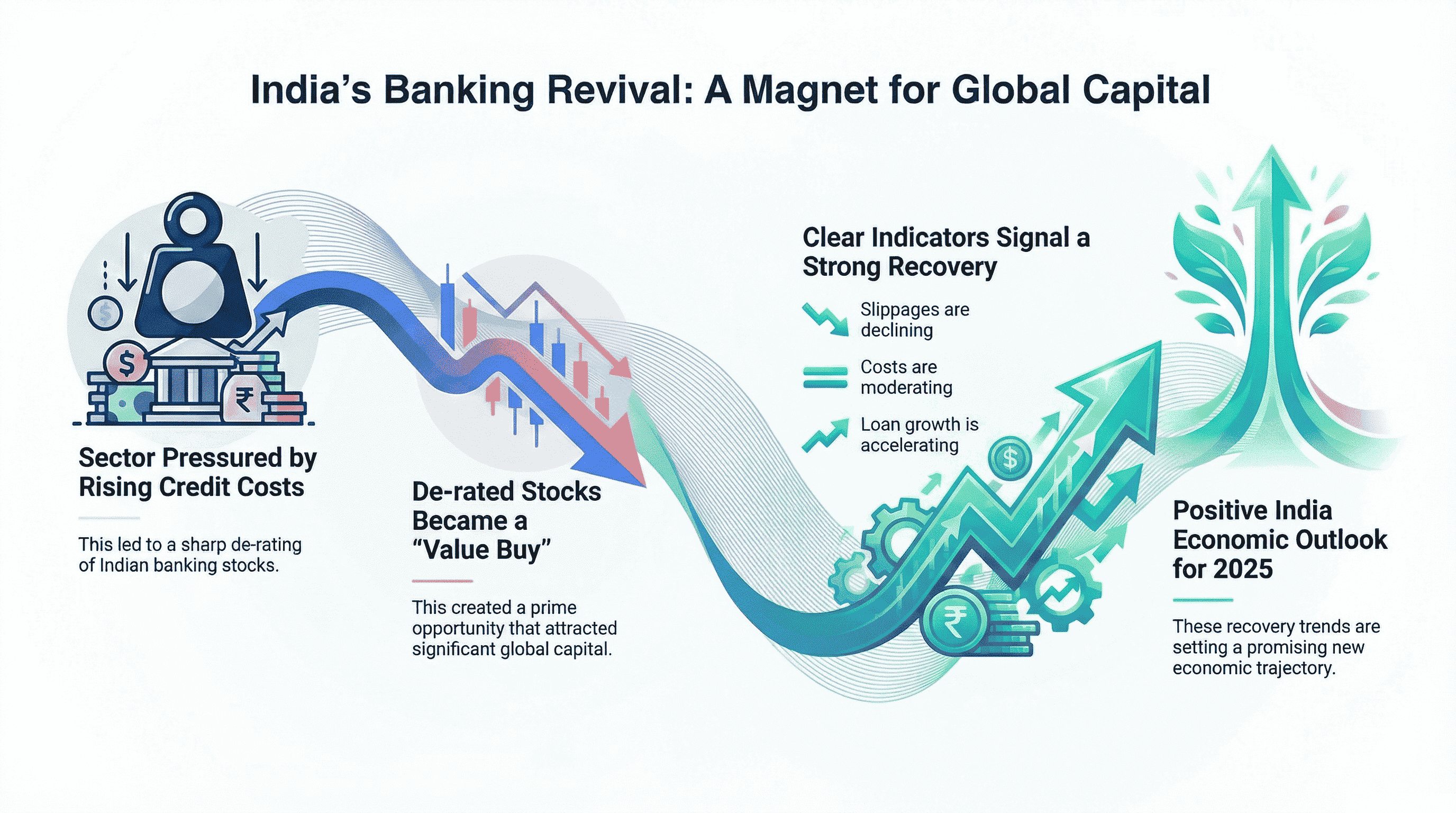
Global banks entering India isn’t just a headline—it’s a structural shift. With foreign institutions buying stakes in Indian lenders, confidence in India’s long-term economic trajectory has strengthened. The banking sector is rebounding with better asset quality, improving credit growth, and stable macro conditions, creating opportunities across equity, debt, and fixed-income segments.
For Indian investors, this foreign capital wave signals a market entering a more robust, liquid, and globally integrated phase. But like any major trend, staying balanced is essential. Diversification—across equities, debt instruments, and alternative assets—is the key to benefiting from the upside while managing volatility.
If you’re looking to access high-quality, yield-focused fixed-income options backed by strong diligence, Grip Invest offers a transparent and seamless way to participate in these evolving opportunities.
FAQ’s On Why Global Banks Are Pouring Into India
1. Is now a good time to invest in Indian banks and financial stocks?
There’s growing interest from global banks, which is usually a sign that long-term confidence is building. With improving credit growth, declining NPAs, and stronger balance sheets, the sector looks healthier than it did a year ago. That said, timing matters. Instead of going all-in, stagger your investments or use SIPs so you can average out market volatility.
2. How does foreign investment affect my fixed-income or debt investments?
Foreign money flowing into the Indian debt market typically increases demand for rupee-denominated bonds. This helps improve liquidity and can stabilize yields. For investors, it means better access to high-quality instruments like corporate bonds, government securities, and target maturity funds. It also creates a clearer pricing environment, which helps retail investors make more informed decisions.
3. Should retail investors worry about sudden foreign capital withdrawal?
Sharp outflows can happen due to global events like interest rate hikes, geopolitical tensions, or currency movements. While this risk exists, the Indian market today is much more resilient and broad-based than before. The best approach is balance: diversify across equity, debt, and alternative assets instead of relying on one market cycle or investor type.
References:
1. Financial Times, accessed from: https://www.ft.com/content/c0fd803d-dd63-43dc-9048-967a7b7eff41
2. Kotak Securities, accessed from: https://www.kotaksecurities.com/news/market-news/6b-fdi-flows-into-indian-banks/
Want to stay at the top of your finances?
Join the community of 4 lakh+ investors and learn more about Grip Invest, the latest financial knick-knacks, and shenanigans in the world of investing.
Happy Investing!
Disclaimer - Investments in debt securities/municipal debt securities/securitised debt instruments are subject to risks including delay and/ or default in payment. Read all the offer related documents carefully. The investor is requested to take into consideration all the risk factors before the commencement of trading.
This communication is prepared by Grip Broking Private Limited (bearing SEBI Registration No. INZ000312836 and NSE ID 90319) and/or its affiliate/ group company(ies) (together referred to as “Grip”) and the contents of this disclaimer are applicable to this document and any and all written or oral communication(s) made by Grip or its directors, employees, associates, representatives and agents. This communication does not constitute advice relating to investing or otherwise dealing in securities and is not an offer or solicitation for the purchase or sale of any securities. Grip does not guarantee or assure any return on investments and accepts no liability for consequences of any actions taken based on the information provided. For more details, please visit www.gripinvest.in
Registered Address - 106, II F, New Asiatic Building, H Block, Connaught Place, New Delhi 110001


