

How To Invest In Copper In India: A Beginner’s Guide


Following the gold and silver rally, buzz is building around copper's future price movements. The metal has long been considered a good investment; however, recently it has become one of the most closely watched commodities in global markets.
Its rising popularity stems from the boom in electric vehicles, clean energy systems, and expanding infrastructure. In the Indian context, as the nation continues to industrialise and modernise, the impact is evident in the investment market, with investors' queries about how to invest in copper increasing.
Why Is Copper Called “Dr Copper”?
Copper is a strong indicator of the overall economy and its health, earning it the nickname “Dr Copper”. Usually, copper consumption rises with core industries like real estate, manufacturing, and technology, and slows as they take a hit. As these industries are core to the economy, and copper mirrors their movements, a rise in copper's price often signals growth.
In a way, this has become a compass to investors, offering valuable insight into market cycles and potential long-term opportunities.
Best Ways To Invest In Copper In India 2026
As one of the best indicators of the economy's health, how to invest in copper is a question investors often ask. The good news is that there are several ways for investors to invest in copper in India. It can be done both directly and indirectly. In fact, if you are a beginner, you can select from commodity derivatives, global funds, or mining-related equities based on risk appetite and investment strategy.
1. Commodity Trading (MCX)
The most common way to make a copper investment in India is through MCX copper trading. Here, you can buy or sell copper futures contracts. The benefit of investing through MCX is that you can profit from metal prices without actually holding the metal. It is usually a good approach for people who want to deal with short-term volatility and leveraged products.
2. Copper ETFs/global funds
Another popular way of copper commodity investing in India is through Copper ETFs or Global Funds. As India does not yet offer domestic copper ETFs, investors can access international copper ETFs through global investing platforms or mutual funds that track commodities. What makes it a good option is that global ETFs offer diversified exposure to copper prices and are a practical choice for investors who want long-term copper allocation without trading futures.
3. Mining stocks
Another option is copper mining stocks, such as Hindustan Copper. An investor can buy stock in a copper mining company, thereby establishing an indirect interest in the metal. There are several domestic options, such as Hindustan Copper stock, as well as international companies. As the company's stock usually tracks the real metal, it is a great option for investing in copper in India.
Factors Affecting Copper Prices
While copper mostly moves with core industries, several other factors also impact its price. This usually includes a mix of global forces, and understanding them is crucial for anyone learning to invest in copper strategically.
1. Global Demand
The first and most important factor influencing copper prices is global demand. It is because copper is used in everything, from EVs to power grids, creating global demand. Currently, the adoption of renewable technologies and industrial expansion is driving an upward trend in global demand.
2. China’s Influence
Another major factor influencing copper's price globally is China's influence over the metal. China is the world’s largest consumer of copper. Therefore, China’s policies regarding construction, manufacturing, and infrastructure directly affect global copper movements. Whenever China’s economy slows or accelerates, copper prices are immediately affected, making it a key market to track.
3. Infrastructure Growth
One of the lesser-tracked factors influencing copper prices is infrastructure spending in developing markets. While most investors track China and the broader global market, they often overlook developing economies. However, a major portion of metal is consumed in such economies, as they undergo significant urbanisation and infrastructure projects.
Risks Of Investing In Copper
While investors globally are asking how to invest in copper, why to invest in copper is also a good question, not because copper is not a good metal to hold, but because, just like all other investment options, it also has its own risks, which investors should know before making any decision.
I. Volatility
One of the biggest considerations while making a metal investing India is that the metal is highly volatile. In fact, copper is usually more volatile than other precious metals as its demand is highly industry-dependent. What this means is that if industries like EVs and infrastructure take a hit, the price of copper tanks with them.
II. Currency Risk
Another factor is currency risk, especially if the question is copper vs gold investment, is that copper is largely traded in USD. So, as soon as there is a Rupee-Dollar fluctuation, the profit margins of Indian investors also move.
Portfolio Allocation Strategy
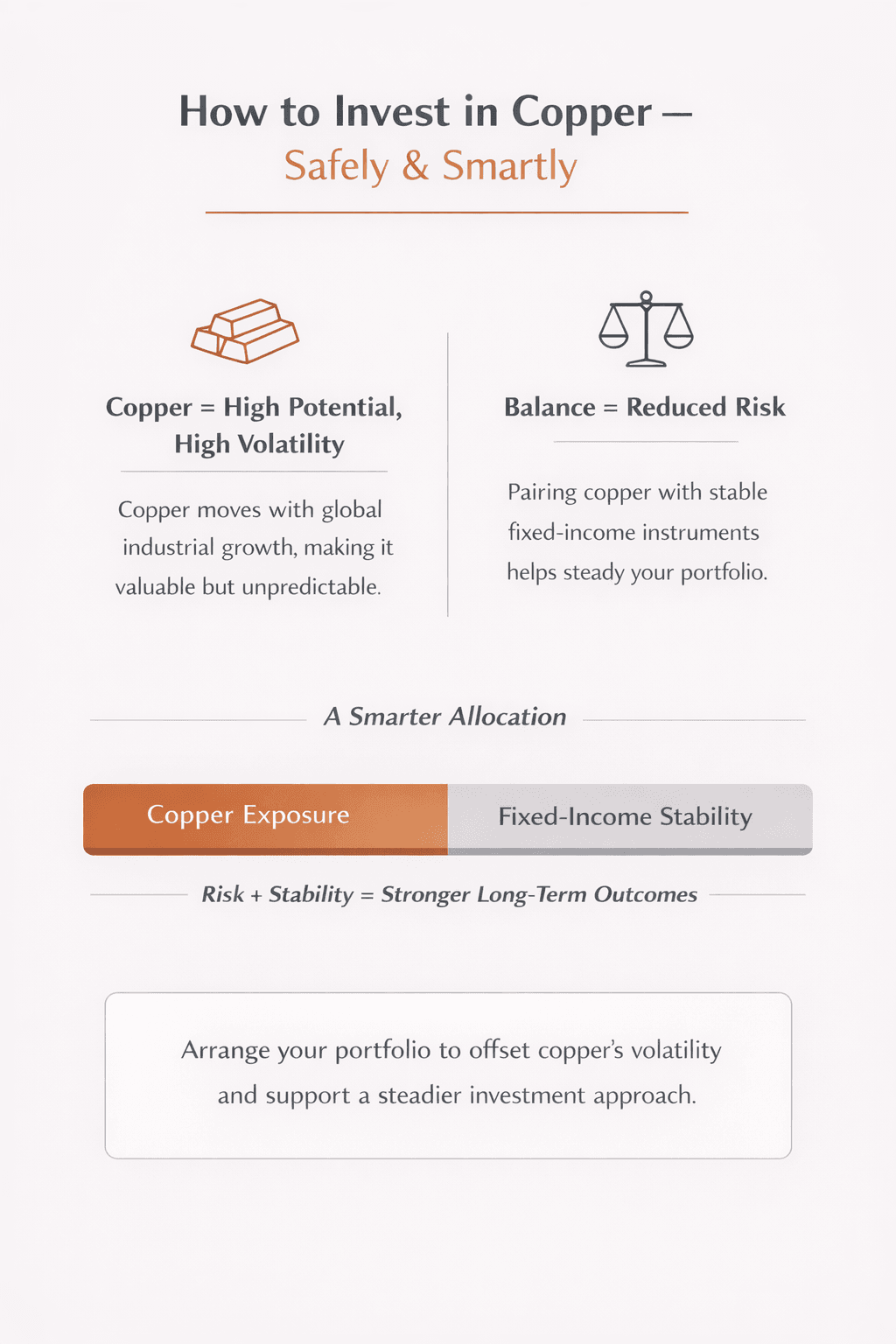
Despite its risks and volatility, copper remains a valuable investment option, especially as a diversifier. It adds significant value to your portfolio, ensuring it gains and improves as the economy's core industries do. However, it is crucial to adopt a balanced approach. If you are also wondering how to invest in copper without exposing yourself to undue risk, one great way is to pair it with more stable, fixed-income instruments. Today, platforms like Grip Invest offer structured fixed-income options that help balance the unpredictability of assets like copper, creating a more stable, risk-adjusted investment strategy.
FAQs on Copper Investment In India
 |
Author: Grip Invest Editorial Team The Grip Invest Editorial Team is a group of Chartered Accountants, MBA (Finance) graduates, and Qualified Research Analysts dedicated to helping you invest smarter. We dive deep into India's fixed income landscape to deliver content that is accurate, up-to-date, and easy to understand. Whether you're exploring bonds, fixed deposits, or other fixed income opportunities, our guides cut through the noise and give you the clarity to make better financial decisions. |
Want to stay at the top of your finances?
Join the community of 4 lakh+ investors and learn more about Grip Invest, the latest financial knick-knacks, and shenanigans in the world of investing.
Happy Investing!
Disclaimer - Investments in debt securities/municipal debt securities/securitised debt instruments are subject to risks including delay and/ or default in payment. Read all the offer related documents carefully. The investor is requested to take into consideration all the risk factors before the commencement of trading.
This communication is prepared by Grip Broking Private Limited (bearing SEBI Registration No. INZ000312836 and NSE ID 90319) and/or its affiliate/ group company(ies) (together referred to as “Grip”) and the contents of this disclaimer are applicable to this document and any and all written or oral communication(s) made by Grip or its directors, employees, associates, representatives and agents. This communication does not constitute advice relating to investing or otherwise dealing in securities and is not an offer or solicitation for the purchase or sale of any securities. Grip does not guarantee or assure any return on investments and accepts no liability for consequences of any actions taken based on the information provided. For more details, please visit www.gripinvest.in
Registered Address - 106, II F, New Asiatic Building, H Block, Connaught Place, New Delhi 110001


