

Copper Price Prediction 2026: What Global Trends Mean For Future Prices


Copper is one of the most critical metals used in different sectors and industries. It is often termed as Dr Copper because of its long-standing status as an indicator of the world's economic health. An increase in construction activity, manufacturing, and infrastructure spending tends to increase copper demand.
Copper price prediction is not just a commodity exercise for investors; to a great extent, it is a measure of how well future growth, inflation pressures, and changes in international supply chains can be anticipated.
In the past few quarters, precious metals such as gold and silver have exhibited a prolonged bullish run for several reasons. In this context, for 2026, ownership of copper is expected to increase as energy system structures change, geopolitical supply risks rise, and global growth remains uneven.
Knowing the copper price outlook enables investors not only to determine the commodity's potential returns but also to assess how copper can be incorporated into a broader investment portfolio comprising equities, bonds, and other real assets.
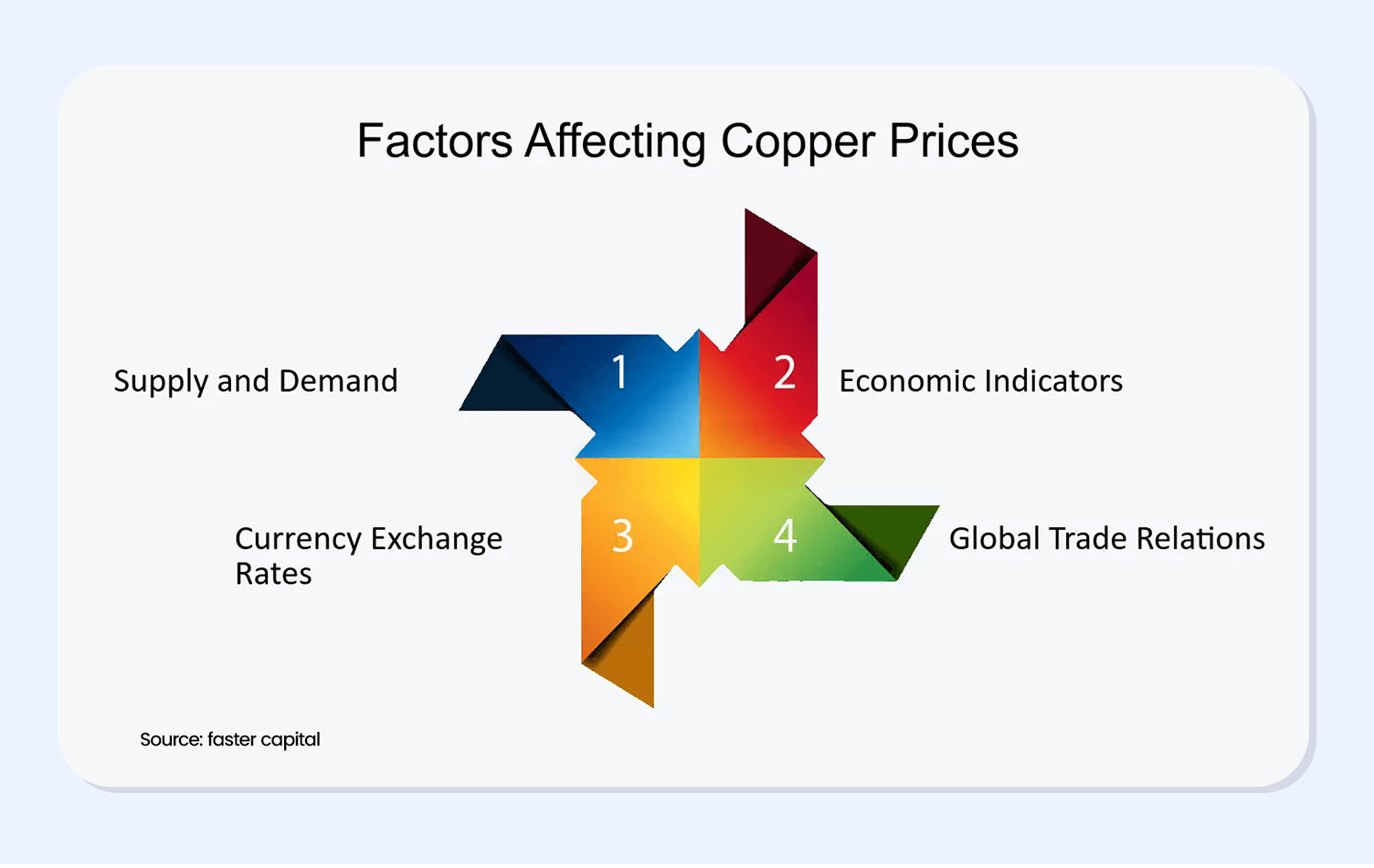
What Drives Copper Prices?
The copper price forecast can be understood with an interplay among international economic expansion, manufacturing requirements, production limitations, and the investment market's attitudes toward copper. As a consequence, copper is extremely sensitive to global changes in economic conditions.
Also Read: Sterling Silver Vs Silver: What Is The Difference And Which Is Better For Investors?
Global Demand And Infrastructure
Fundamentally, demand growth and supply constraints influence copper pricing. The world is largely dependent on infrastructure, housing, transportation, and manufacturing. Indicatively, in a hypothetical case where an emerging economy declares a 200 billion-dollar infrastructure stimulus based on railways, power grids, and urban housing, the consumption of copper may skyrocket in several years and exert upward pressure on prices.
China And Emerging Markets
China is always at the centre of copper price analysis. It consumes over half of the world's refined copper, and even minor fluctuations in Chinese construction or manufacturing would have a global impact on the prices.
When property in China stabilises, and the installation of renewable energy continues to grow, the trend in the copper price may gain momentum, despite the slow increase in other areas.
Supply Disruptions
Copper mining is supply-side, unresponsive and capital-intensive. It takes 7-10 years to start new mines. Suppose that labour strikes or environmental policies cause output at large producers, such as Chile or Peru, to decrease by even 3%-4%, the tightness in the global supply can be realised very soon.
This disequilibrium between rapid demand and slow supply is one of the main reasons why copper market predictions tend to be bullish during a phase of structural change.
Also Read: Gold And Silver Prices Gain After US Action In Venezuela
Historical Copper Price Trends
Examining past copper price trends can help put copper prices in perspective. Copper has been in distinct cycles in the last 20 years. The early 2000s commodity supercycle saw high prices that crashed in the 2008 financial crisis, then rose with the global stimulus, only to crash again during the pandemic years.
In 2020-2022, copper prices almost doubled due to a combination of global stimulus, supply issues, and demand from electronics and renewable energy.
An investor who had invested in copper markets when they were slowing in 2020 would have made a lot of money in 2021 as the world began to recover.
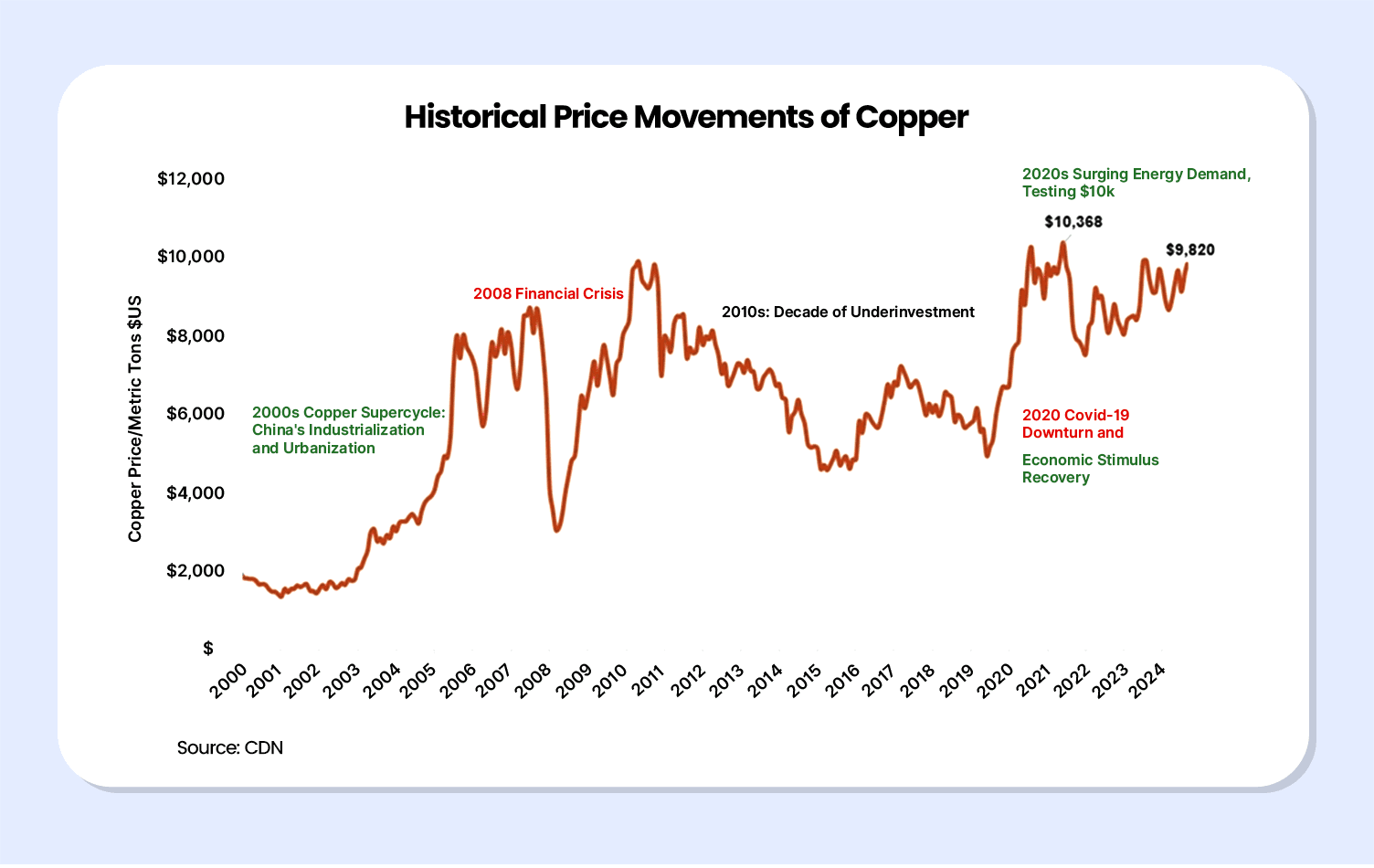
These upcycles and falls can help you understand how copper reacts to macroeconomic changes from 2000 to 2024. This shows that, as with copper, short-term volatility can be attributed to its volatility. Still, in the long term, the trend is usually structural, demand-based, and not speculation-driven.
Copper Price Outlook: Key Factors to Watch
The 2026 copper price prediction is closely linked to the world's energy transformation. Compared to conventional technologies, electric cars, renewable electric grids, and energy storage systems are much more copper-intensive.
Let us take an example: a standard petrol car consumes about 20 to 25 kg of copper, while an electric vehicle can consume more than 80 kg, not only in the batteries and charging infrastructure. Provided the pace of EV adoption is more rapid than anticipated, future copper prices might reflect the pressure of demand.
Simultaneously, risks associated with global growth cannot be disregarded. Copper demand can vary if there are sustained slowdowns in developed economies, as emerging markets develop unevenly. A copper price vs. world growth chart shows that a period of coordinated global growth is associated with a rise in the copper price, whereas disjointed growth tends to lead to flat or sporadic markets.
The supply constraints also determine the copper investment outlook. Sluggish ore quality, increased mining expenses, and more expensive environmental regulations imply that a price increase may not prompt the release of new supply. In theory, an increase in demand of 3% per annum and an increase in supply of only 1.5% would allow the deficit to boost average prices by 2026.
Also Read: How To Invest In Gold For Beginners: A Simple Step-By-Step Guide
Balancing Commodity Exposure
Although copper has the potential to be an upside, it also creates volatility in portfolios. The commodity prices can vary due to geopolitical events, currency fluctuations, or unforeseen demand shocks. This is why many long-term investors offset their copper exposure with predictable income returns, such as bonds.
Take the case of a portfolio in which 15% comprises commodities, such as copper, with the rest divided between equities and high-quality bonds. With a decline in commodity prices, fixed bond returns may smooth returns and reduce the total portfolio stress. Grip can help plan portfolio risk and estimate investment risk. It allows investors to remain invested during market peaks and troughs rather than attempting to time the market.
Conclusion
Here’s the thing. Copper’s price outlook for 2026 is being shaped less by short-term speculation and more by structural forces like electrification, infrastructure spending, and constrained supply.
These factors support a constructive long-term view, but copper remains a cyclical and volatile asset that can swing sharply with global growth and policy changes.
What this really means is that copper works best as a supporting asset, not a standalone bet. For most investors, the smarter approach is balancing growth-linked commodities like copper with predictable, income-generating investments that bring stability to the portfolio.
This is where Grip Invest fits in.
By offering access to curated fixed-income opportunities such as high-quality bonds and structured investments, Grip helps investors offset commodity volatility while staying invested through different market cycles. Instead of trying to time copper’s ups and downs, investors can focus on building a more resilient portfolio that combines growth potential with steady returns.
FAQs On Copper Price Prediction 2026
1. Is copper a good long-term investment?
Copper is potentially an attractive long-term investment due to its critical role in infrastructure and the energy transition. But it is a cyclical portfolio, so it is better held alongside other portfolios and not on its own.
2. What affects copper prices the most?
Global economic growth, copper demand, supply interruptions in China, and long-term structural developments, e.g., electrification and the adoption of renewable energy sources, have the greatest impact on copper prices.
3. How do interest rates and inflation impact copper prices?
Higher inflation and falling real interest rates often support copper prices, as investors shift toward real assets. On the flip side, aggressive rate hikes can slow construction and manufacturing, temporarily softening copper demand.
4. Is copper more volatile than gold or silver?
Yes. Copper is more closely tied to industrial and economic cycles, which makes it more volatile than gold or silver. While precious metals often act as safe havens, copper tends to move with global growth expectations and industrial activity.
References:
1. Upstox, accessed from: https://upstox.com/learning-center/commodity/investing-in-copper-in-2026-price-history-supply-demand-shifts-and-what-it-means-for-investors/article-1500/
2.Devere group, accessed from: https://www.devere-group.com/copper-price-forecast-2026-analysts-issue-bullish-outlook-amid-supply-shortage/
3. JP morgan, accessed from: https://www.jpmorgan.com/insights/global-research/commodities/copper-outlook
6. ET now, accessed from: https://www.etnownews.com/markets/copper-prices-surge-to-record-highs-whats-driving-the-rally-and-what-lies-ahead-article-153450796
7. Faster capital, accessed from: https://fastercapital.co/i/Commodity-Cycles--Riding-the-Waves-with-Doctor-Copper--Factors-Affecting-Copper-Prices.webp
8. CDN, accessed from: https://cdn.prod.website-files.com/64523461a75e4b406281bdba/6865ffd9dc6482e76cdecb95_Copper%202025.png
Want to stay at the top of your finances?
Join the community of 4 lakh+ investors and learn more about Grip Invest, the latest financial knick-knacks, and shenanigans in the world of investing.
Happy Investing!
Disclaimer - Investments in debt securities are subject to risks. Read all the offer-related documents carefully. The investor is requested to take into consideration all the risk factors before the commencement of trading. This communication is prepared by Grip Broking Private Limited (bearing SEBI Registration No. INZ000312836 and NSE ID 90319) and/or its affiliate/ group company(ies) (together referred to as “Grip Invest”) and the contents of this disclaimer are applicable to this document and any and all written or oral communication(s) made by Grip Invest or its directors, employees, associates, representatives and agents. This communication does not constitute advice relating to investing or otherwise dealing in securities and is not an offer or solicitation for the purchase or sale of any securities. Grip Invest does not guarantee or assure any return on investments and accepts no liability for the consequences of any actions taken based on the information provided. For more details, please visit https://www.gripinvest.in/.
Registered Address - 106, II F, New Asiatic Building, H Block, Connaught Place, New Delhi 110001.


