

How To Invest In Gold For Beginners: A Simple Step-By-Step Guide


In India, gold has always been a symbol of wealth and culture. For centuries, investing in gold has been a long-standing tradition. It is a precious metal used to preserve value, portfolio stability, and also as a hedge against inflation and market volatility.
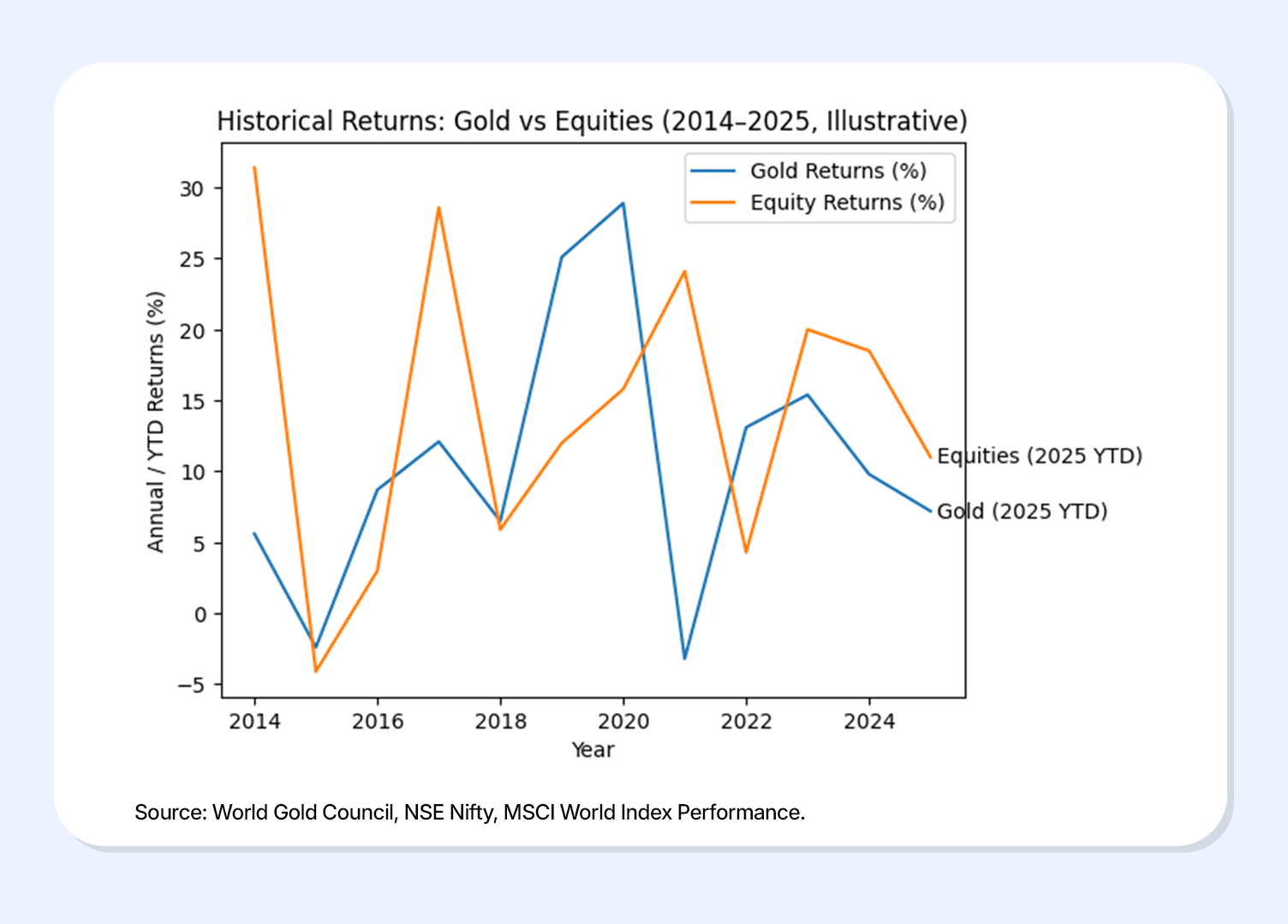
Currently, it remains a good investment option for new, old, and seasoned investors alike. Reports from the World Gold Council indicate that gold has delivered a 10-year annualised return of around 8.8%, often outperforming traditional fixed-income investments in times of stress.
To start investing, you must first understand your accessible options, their benefits and drawbacks, and how to build a resilient portfolio alongside other stable investment options. This article is the perfect beginner's investment guide for such investments.
Understanding The Different Ways To Invest In Gold
It is crucial for beginners to first understand the available gold investment options and then find ways to invest in gold based on their requirements. Each option differs in cost, risk, ease of access, and liquidity.
1. Physical gold
Physical gold refers to the precious metal itself, available in forms of coins, bars, or purchased as jewellery from jewellers or banks. It allows direct ownership but comes with additional costs such as storage charges, making charges, and purity verification.
Out of all forms, jewellery is the least efficient option due to the added making charges, making the overall cost high. On the other hand, bars and coins are relatively better but still require proper storage and security.
2. Paper gold
Paper is a financial instrument that tracks the price of gold without requiring any physical ownership. Some common examples of such instruments include the Gold Exchange Traded Funds and the Sovereign Gold Bonds issued by the Indian Government.
Traded on stock exchanges, Gold EFTs offer high liquidity and transparency. Providing an additional fixed annual interest, Sovereign Gold Bonds link capital appreciation with gold prices.
3. Digital gold
With digital gold, you can buy small quantities of gold online through apps and platforms. When the gold is purchased, it is stored securely by the service provider on your behalf. These options have benefits such as low entry barriers, ease of transaction, and flexibility.
Although a great investment method, digital gold is not SEBI-regulated and does not generate interest income. Digital gold should be used by beginners mainly for short-term exposure or gradual accumulation, instead of as a long-term wealth creation option.
Pros And Cons Of Each Gold Investment Method
Investment Method | Liquidity | Cost | Risk |
Physical Gold | Moderate. Jewellery resale depends on buyer demand and deductions. Coins and bars are easier to sell but still involve delays. | High. Includes making charges, storage costs, and potential resale deductions. | Higher risk due to purity concerns, theft, and storage issues. |
Gold ETFs | High. Traded on stock exchanges and can be bought or sold during market hours. | Low. No making charges or storage costs, only expense ratios and brokerage. | Lower risk as ETFs are SEBI-regulated and track gold prices transparently. |
Sovereign Gold Bonds (SGBs) | Moderate. Tradable on exchanges, but liquidity is lower than that of ETFs. Best if held till maturity. | Very low. No storage cost, no capital gains tax on maturity, and it earns fixed interest. | Lowest risk. Backed by the Government of India, it is linked to gold prices. |
Digital Gold | High. Can be bought and sold easily through apps. | Moderate. No storage cost, but spreads and platform fees apply. | Medium risk due to lack of SEBI regulation and dependence on platform credibility. |
Common Mistakes Beginners Make When Investing In Gold
Although considered a stable asset, beginner investors often make avoidable mistakes that could reduce overall returns and increase risks. Understanding these mistakes can reduce errors and help make informed decisions.
1. Buying without understanding purity
Buying gold without checking purity is a more commonly made mistake than one would think. Low purity and high making charges reduce the resale value.
2.Ignoring taxes
Beginner investors tend to overlook tax implications, while physical gold, EFTs, and digital gold attract capital gains tax, Sovereign Gold Bonds offer tax exemption on capital gains when held till maturity. Being familiarised with such rules proves to be effective for gold investment for beginners in India.
3. Over-timing the market
Another common mistake made by first-time investors is to buy gold at the lowest price or sell at the highest price. Due to global factors such as inflation, geopolitical events, and interest rates, gold prices fluctuate. This becomes difficult to predict consistently. Beginners should focus on gradual purchase costs and reduce emotional decision-making.
How Gold Fits Alongside Other Stable Investments
Gold investment works best as a portfolio stabiliser instead of a standalone investment option. Combining gold with other stable investment options can reduce volatility while also maintaining steady returns.
1. Combining gold with fixed-income instruments
Both gold and fixed-income instruments have different roles in diversifying your portfolio. While gold helps protect against inflation and market volatility, fixed-income investments provide a predictable cash flow and capital stability.
2. Building a balanced beginner portfolio
Building a balanced portfolio usually includes a mix of growth-oriented and stability-focused assets or instruments. Gold investments are better at playing a supporting role by lowering overall portfolio risk rather than maximising returns.
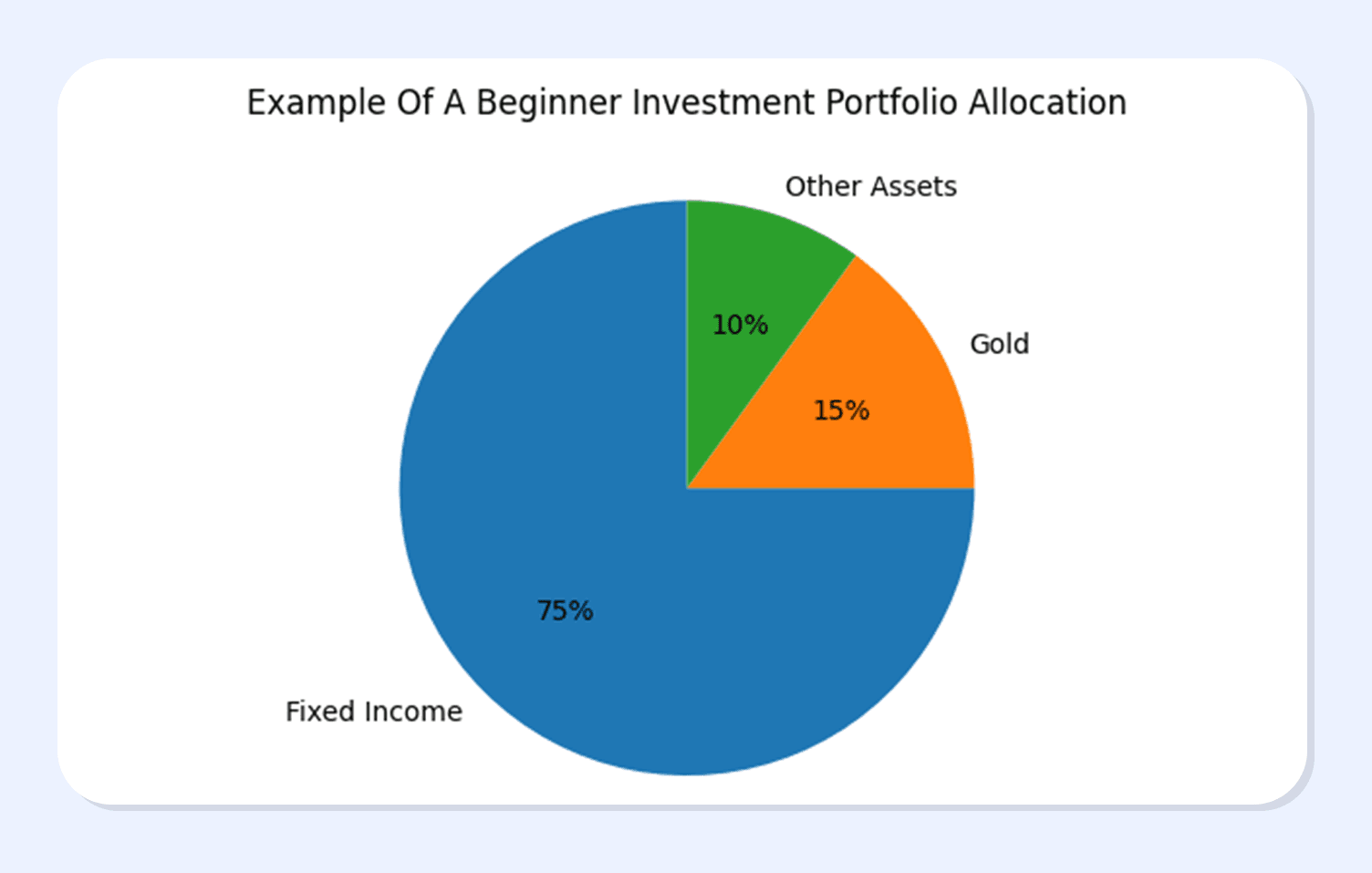
This illustrative allocation highlights how gold can support portfolio stability when combined with fixed-income instruments.
Conclusion
For beginners seeking stability, diversification, and long-term value preservation, gold remains a relevant investment. It is a useful addition to a balanced portfolio alongside equities, having the ability to act as an inflation hedge.
Learning how to invest in gold for beginners is essential, focusing on instruments such as Gold ETFs and Sovereign Gold Bonds that offer transparency and efficiency compared to physical gold.
Diversifying your portfolio by using other fixed-income instruments available on trusted platforms such as Grip Invest is a good way to build a resilient portfolio. To start investing safely and have access to a curated list of investment options, invest with Grip Invest!
FAQs
1. Is gold a safe investment for first-time investors?
Gold is considered one of the safest investments in India for first-time investors. Learning how to invest in gold for beginners can act as a stabilising asset rather than a high-growth instrument.
2. Should beginners buy physical or digital gold?
Digital gold or paper gold is better suited for beginners compared to physical gold. Factors like storage cost, purity verification, and making charges reduce overall returns and add complexity when purchasing physical gold. Whereas digital gold, gold ETFs, and Sovereign Gold Bonds offer easy access along with better transparency without the operational hassle.
3. Is gold taxed in India?
Gold investments are taxable in India. In case gold is sold within 24 months of purchase, it is treated as short-term capital gains and taxed based on your income slab.
Want to stay at the top of your finances?
Join the community of 4 lakh+ investors and learn more about Grip Invest, the latest financial knick-knacks, and shenanigans in the world of investing.
Happy Investing!
Disclaimer - Investments in debt securities are subject to risks. Read all the offer-related documents carefully. The investor is requested to take into consideration all the risk factors before the commencement of trading. This communication is prepared by Grip Broking Private Limited (bearing SEBI Registration No. INZ000312836 and NSE ID 90319) and/or its affiliate/ group company(ies) (together referred to as “Grip Invest”) and the contents of this disclaimer are applicable to this document and any and all written or oral communication(s) made by Grip Invest or its directors, employees, associates, representatives and agents. This communication does not constitute advice relating to investing or otherwise dealing in securities and is not an offer or solicitation for the purchase or sale of any securities. Grip Invest does not guarantee or assure any return on investments and accepts no liability for the consequences of any actions taken based on the information provided. For more details, please visit https://www.gripinvest.in/.
Registered Address - 106, II F, New Asiatic Building, H Block, Connaught Place, New Delhi 110001.


