

Form 10F Explained: Meaning, Format, And Filing Process


The importance of Form 10F has increased rapidly over recent years as the Income Tax Department raised scrutiny of cross-border income and tightened the electronic filing mandates. Moreover, the Non-Resident Indians (NRIs) and global investors end up paying higher taxes if they miss the Form 10F filing.
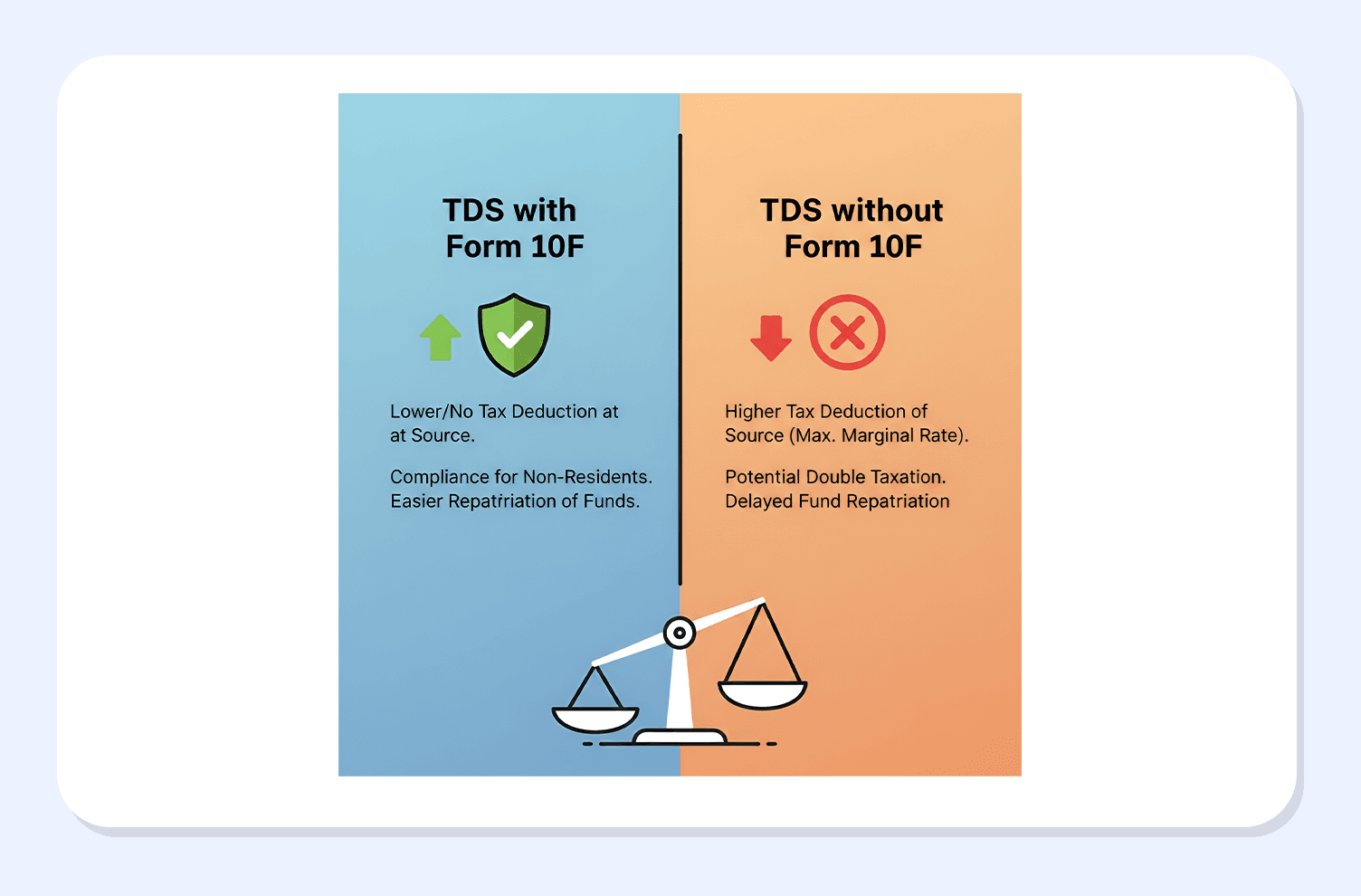
Therefore, this blog decodes the Form 10F meaning and breaks down the key aspects for successful filing.
Introducing Form 10F
Income Tax Rule 21AB defines Form 10F as a type of self-declaration form required under Section 90(5) and Section 90A (5) of the Income Tax Act 19611. The Form 10F Self-Declaration is submitted by NRIs along with their Tax Residency Certificate (TRC) to gain several tax benefits. Let us decode the purpose of the form to understand its meaning better.
Also Read: What Is Form 12BB?
Purpose Of Form 10F
The parameters listed below make Form 10F a key aspect of NRI and global investor filings.
1. Tax Residency Certificate (TRC) and Form 10F: NRIs who earn income in India have to provide a TRC, which is issued by the tax authority of the country they reside in, to the Indian authorities. However, sometimes the foreign-issued TRC can lack the details required in India. Therefore, Form 10F acts as a supplementary self-declaration that addresses this misalignment and allows reduced foreign income TDS in India.
For example, the permanent address in India of the NRI might not be mentioned in the TRC, but can be disclosed in 10F.
2. DTAA Benefits NRI: An NRI living abroad can come under the purview of the tax regimes applicable to both countries. Authorities make sure that the exact income is not taxed in multiple countries by signing a Double Taxation Avoidance Agreement (DTAA).
For instance, if Mr A is an NRI living in Australia, a DTAA between India and Australia will ensure he does not pay tax twice, once in India and another in Australia, on the same dividend income earned.
India has a DTAA with over 90 countries, and Form 10F, along with TRC, allows individual NRIs and others to claim the benefits of the DTAA agreements2.
The Form 10F non-resident declaration allows India double taxation relief. However, not just the NRIs, several other taxpayer categories can use 10F.
Nuances Of Form 10F: Taxpayer Categories And More
Let us clarify the Form 10F requirements, like the category of taxpayers that come under its purview, along with other key details.
- Taxpayers: The status of the assessee can be individual, company, firm, etc. Therefore, NRIs, foreign companies, and other overseas investors who earn income in India, in the form of investment returns, royalties, fees, etc., must file Form 10F if the TRC does not contain all the information required3.
- Form 10F Validity Period: The Form 10F is filed for a particular previous year. The filing should ideally be made before receiving payment to claim lower TDS on Form 10F and get DTAA benefits.
- Not a Replacement of TRC: The Form 10F is submitted along with the TRC to provide information not mentioned in the TRC.
- DTAA Form 10F PAN: NRIs who do not have a PAN card can also submit their Form 10F. Visit the e-filing web portal and click on the Register button. From the Others option, select Non-residents not holding and not required to have PAN.
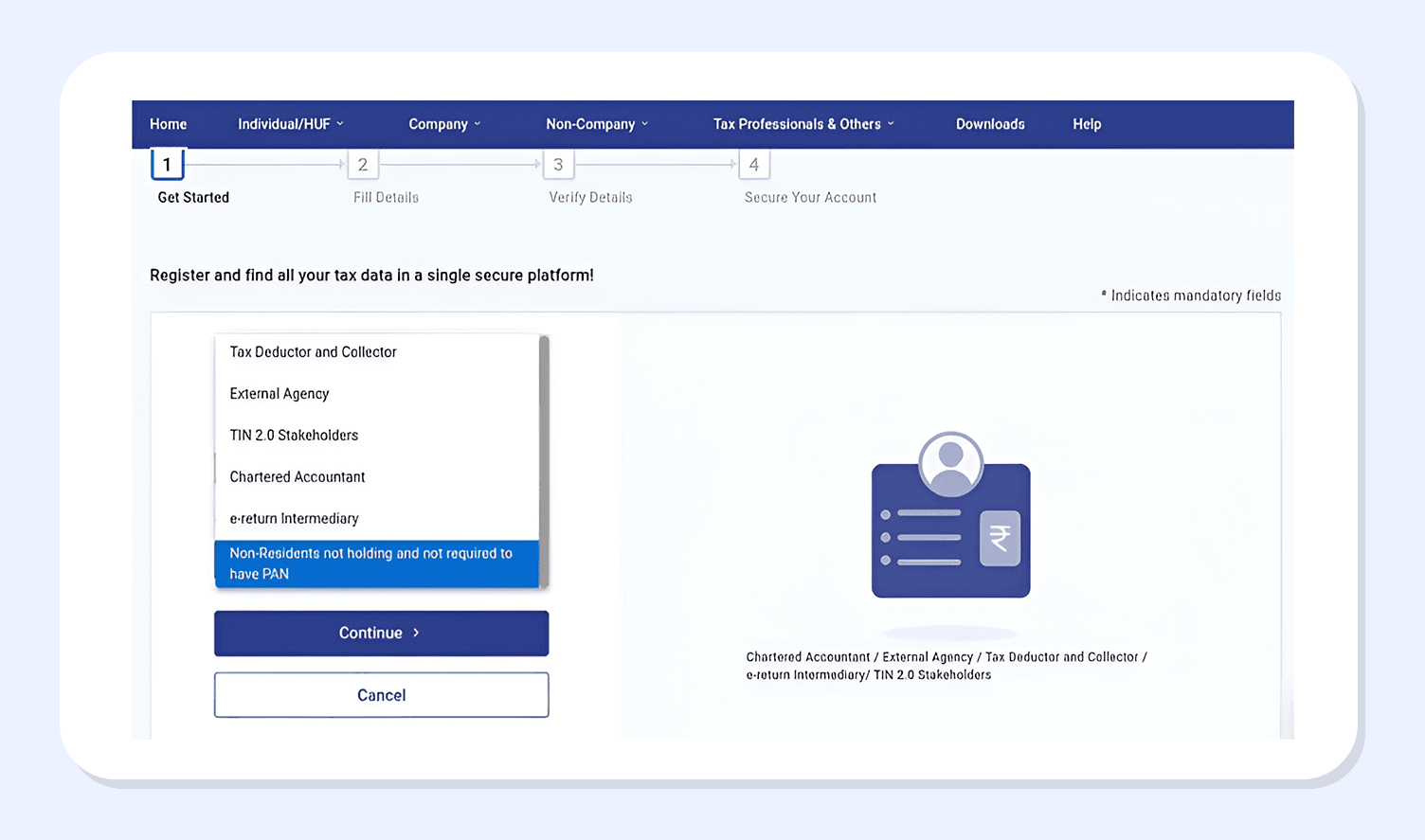
Based on these parameters, once the registration is complete, the taxpayer is ready for Form 10F online submission. However, before moving on to the steps, let us decode some real scenarios to gauge the impact of this form.
Case Studies: Real Scenarios Where Form 10F Made A Difference
Imagine Mr B, an NRI living in the United Arab Emirates (UAE), invested in FDs and bonds in India through his Non-Resident Ordinary (NRO) account. According to the Indian tax code, he should face a 30% TDS along with a surcharge on his investment interests4.
Therefore, if he earned INR 30,000 as interest from FD and INR 60,000 as interest from bonds, without submitting Form 10F and TRC, his total tax liability (without considering surcharge) will be INR 27,000.
However, India does have a DTAA agreement with the UAE. After submitting Form 10F and TRC, he would have to pay only 12.50% tax, making his total tax liability INR 11,2505.
| Situation | Tax Rate | Total Tax Liability of B |
| Did not file Form 10F and TRC | 30% | INR 27,000 |
| Filed Form 10F and TRC | 12.50% | INR 11,250 |
As Indian markets continue to surge, NRI investors often diversify into fixed-income generating Indian assets for hedge and growth. However, choosing the right bond platform is important to optimise investment. For instance, Grip is a SEBI-registered platform that can offer up to 12.5% bond return, and paired with DTAA benefits, NRIs can ensure healthy portfolio planning and tax control.
Let us now move on to the next step of NRI Taxation India and decode how NRI tax treaty claims can be secured by filing Form 10F online.
How To File Form 10F Correctly And Avoid Penalties
Rather than trying to perform a Form 10F download, taxpayers can now make the full process online, through the following steps.
- If the Taxpayer has a PAN
Step 1: After logging in to the income tax portal, select Income Tax Forms from the E-file tab6.
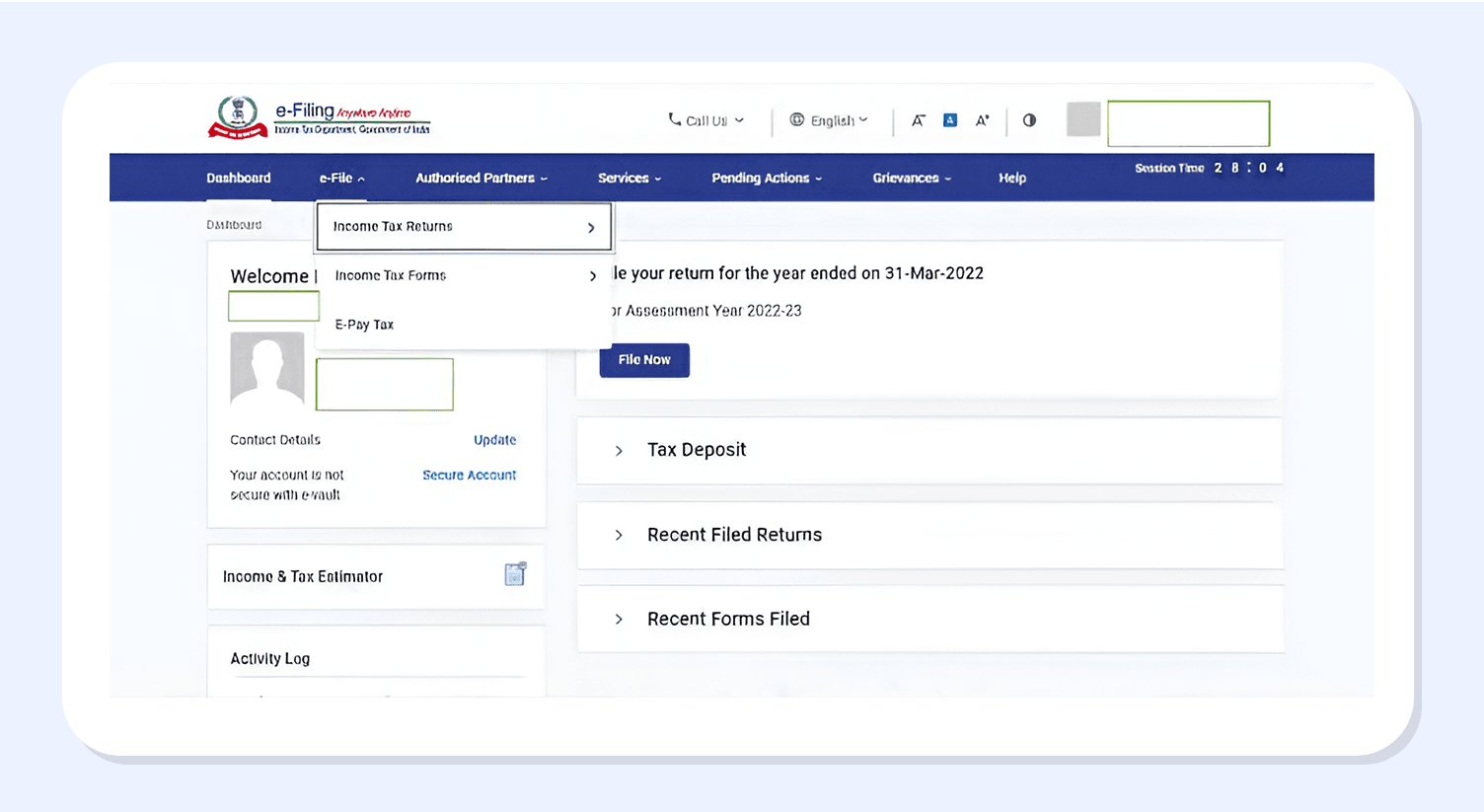
Step 2: After selecting File Income Tax Forms, select Person not dependent on
any source of Income (Source of Income not relevant) from the third tab.
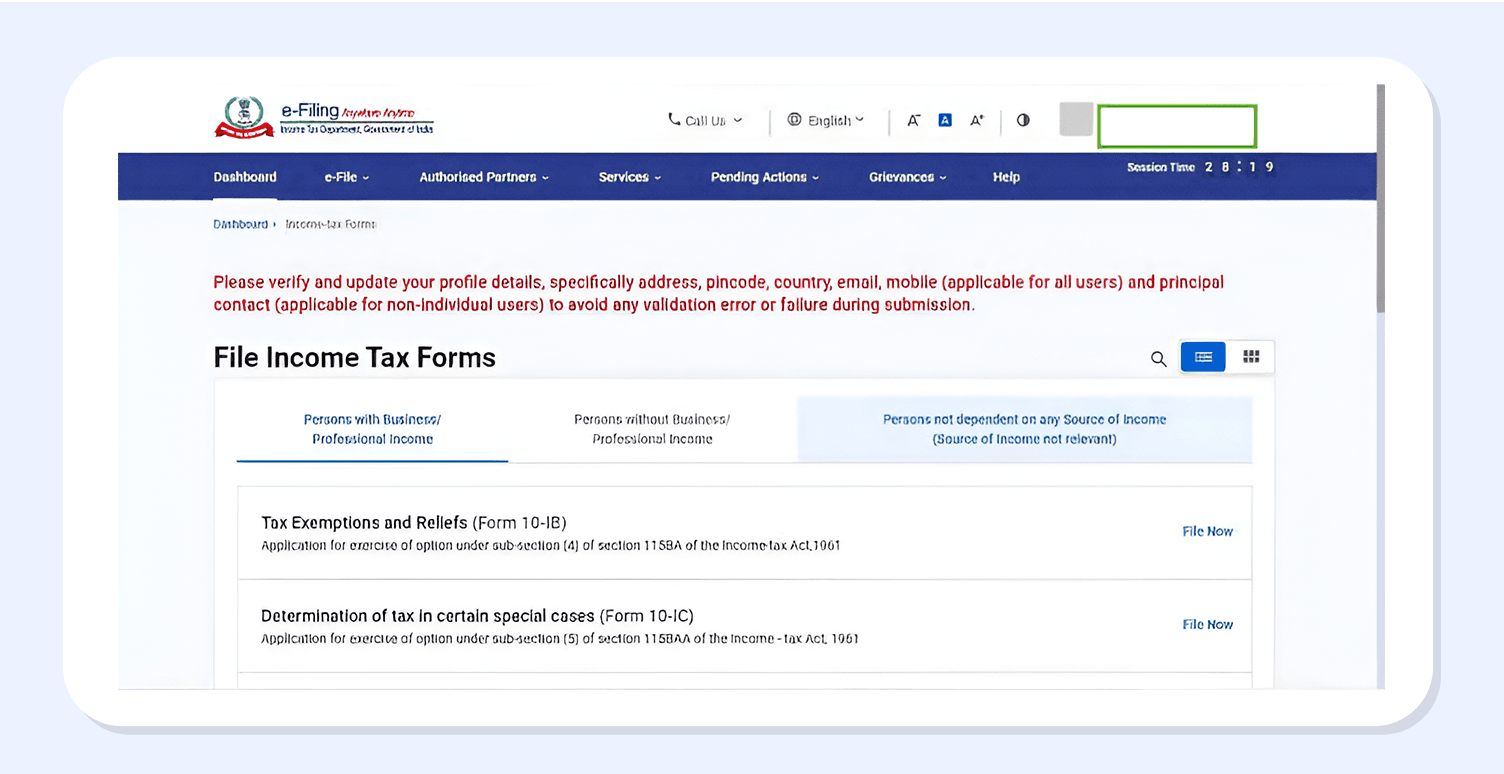
Step 3: Then select Form 10F and hit File Now. Then choose the Assessment Year.
Step 4: Input all the required details, as required.
Step 5: Select the period for which the TRC is received and provide information regarding the country of residence.

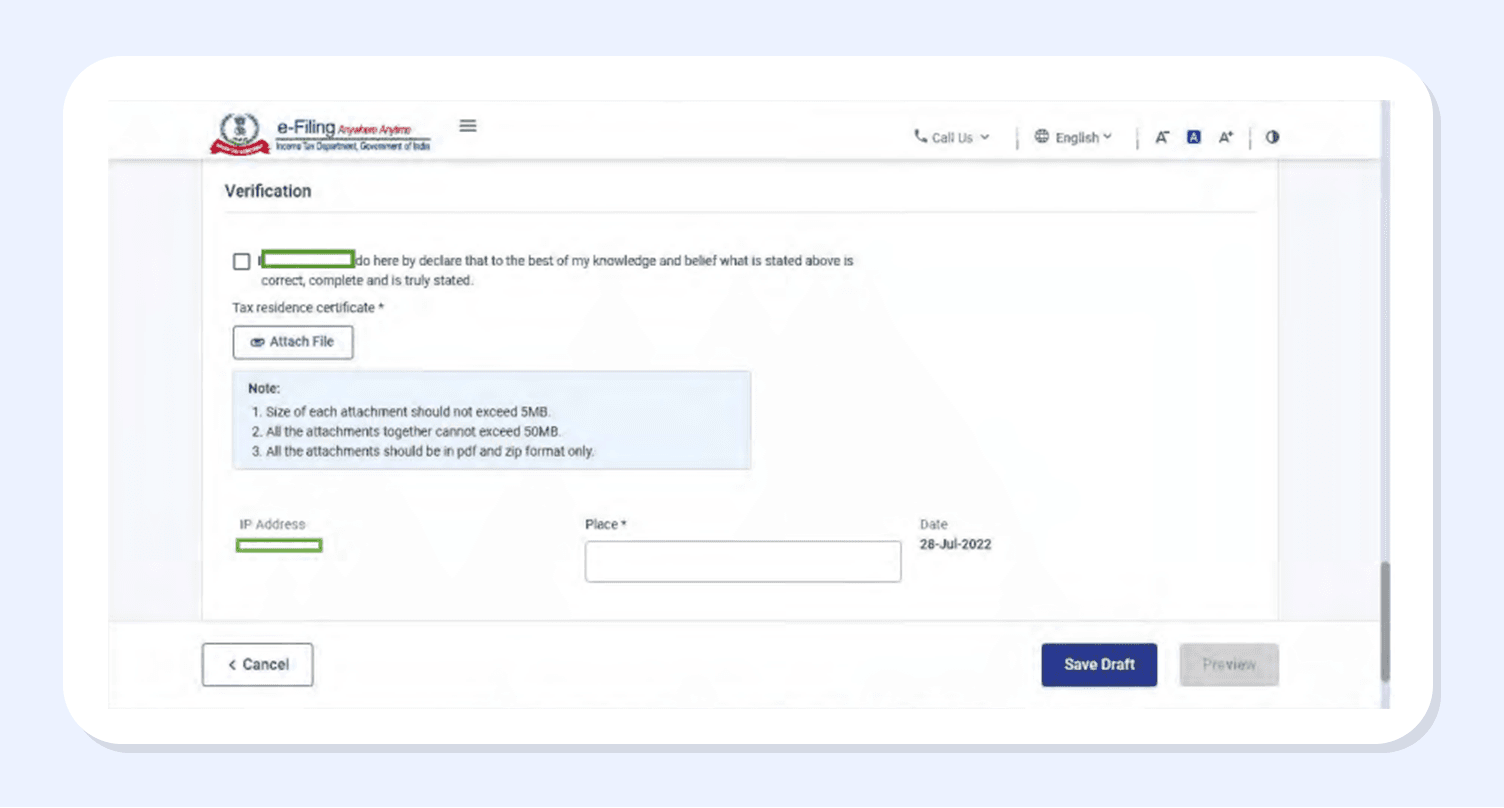
Step 6: Finally, attach the TRC.
- If the Taxpayer does not have a PAN7
Step 1: Visit the e-filing web portal and click on the Register button. From the Others option, select Non-residents not holding and not required to have PAN.
Step 2: Enter the taxpayer information, key person details, contact information and postal address.
Step 3: Check and enter the OTP received to the specified contact information.
Step 4: Attach the Tax Residency Certificate and submit.
- Document Required
Usually, only the Tax Residency Certificate has to be uploaded. However, you must keep other documents like Indian identity proofs, income statements, etc., handy to enter information correctly.
Grip is a SEBI-registered platform that can offer up to 12.5% returns on bonds, along with a range of other assets like High-Yield FDs, Mutual Funds, and so on.
Visit Grip Invest Today!
FAQs On Form 10F
1. What is Form 10F used for?
Form 10F is submitted along with the Tax Residency Certificate to provide additional information, required by Indian authorities, that is not given in the TRC.
2. Is Form 10F mandatory for NRIs?
Yes, NRIs who want to claim the tax benefits due to them under the DTAA between India and their home country are required to file Form 10F.
3. What happens if Form 10F is not submitted?
If Form 10F is not submitted, then taxpayers run the risk of carrying a greater tax burden by paying double taxes, once in India and another in their home country.
4. Can Form 10F be filed online?
Yes, Form 10F can be submitted only through the income tax portal.
References:
1. Income tax, accessed from: https://incometaxindia.gov.in/_layouts/15/dit/Pages/viewer.aspx?grp=Rule&cname=CMSID&cval=103120000000007365&searchFilter=[%7B%22CrawledPropertyKey%22:0,%22Value%22:%22Income-tax%20Rules%22,%22SearchOperand%22:2%7D,%7B%22CrawledPropertyKey%22:1,%22Value%22:%22Rule%22,%22SearchOperand%22:2%7D]&k=&IsDlg=0
2. Tax summaries accessed from: https://taxsummaries.pwc.com/india/individual/foreign-tax-relief-and-tax-treaties
3. Income tax, accessed from: https://incometaxindia.gov.in/_layouts/15/dit/Pages/viewer.aspx?grp=Rule&cname=CMSID&cval=103120000000007365&searchFilter=[%7B%22CrawledPropertyKey%22:0,%22Value%22:%22Income-tax%20Rules%22,%22SearchOperand%22:2%7D,%7B%22CrawledPropertyKey%22:1,%22Value%22:%22Rule%22,%22SearchOperand%22:2%7D]&k=&IsDlg=0
4. Axis bank, accessed from: https://www.axis.bank.in/blogs/nri-banking/tds-for-nri-fixed-deposit
5. KUEY, accessed from: https://kuey.net/index.php/kuey/article/download/7567/5653/14738#:~:text=The%20agreement%20serves%20to%20facilitate,investment%20between%20these%20two%20nations
6. TCS, accessed from: https://www.tcs.com/content/dam/tcs/pdf/discover-tcs/investor-relations/faq/steps-to-file-online-form-10f.pdf
7. Hindustan petroleum, accessed from: https://www.hindustanpetroleum.com/documents/pdf/Annexure-5b_Easy_Steps_to_File_Online_Form_10F_for_NRIs-NO_PAN_CASE_Final_Dividend.pdf
Want to stay at the top of your finances?
Join the community of 4 lakh+ investors and learn more about Grip Invest, the latest financial knick-knacks, and shenanigans in the world of investing.
Happy Investing!
Disclaimer - Investments in debt securities/municipal debt securities/securitised debt instruments are subject to risks including delay and/ or default in payment. Read all the offer related documents carefully. The investor is requested to take into consideration all the risk factors before the commencement of trading.
This communication is prepared by Grip Broking Private Limited (bearing SEBI Registration No. INZ000312836 and NSE ID 90319) and/or its affiliate/ group company(ies) (together referred to as “Grip”) and the contents of this disclaimer are applicable to this document and any and all written or oral communication(s) made by Grip or its directors, employees, associates, representatives and agents. This communication does not constitute advice relating to investing or otherwise dealing in securities and is not an offer or solicitation for the purchase or sale of any securities. Grip does not guarantee or assure any return on investments and accepts no liability for consequences of any actions taken based on the information provided. For more details, please visit www.gripinvest.in
Registered Address - 106, II F, New Asiatic Building, H Block, Connaught Place, New Delhi 110001


