

Invest In Government Bonds
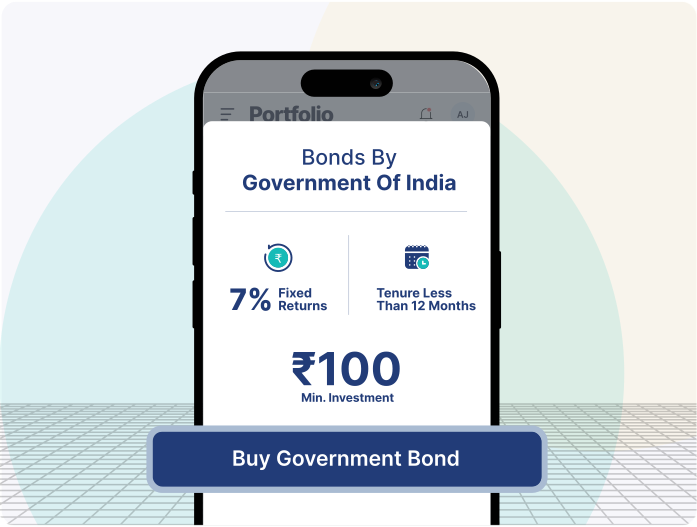
Government bonds are debt instruments issued by the central government to raise funds for public expenditure, infrastructure development, and other fiscal needs.
Investors lend money to the government in exchange for periodic fixed interest payments and the return of principal on maturity.
These bonds are backed by the government’s sovereign guarantee, making them one of the safest investment options with minimal credit risk.
Different types of government bonds are available, including Treasury Bills (T-Bills) for short-term needs and dated securities like G-Secs for medium to long-term investments.
Government bonds have predefined tenures, ranging from short-term treasury instruments to long-term securities extending up to 40 years.


REASON AND BENEFITS

Safety and Stability
Backed by the sovereign guarantee of the Government of India, these bonds carry minimal default risk, making them one of the safest investment options for capital protection.

Predictable Income
These are fixed-rate bonds offering fixed interest payouts, ensuring a consistent and reliable income stream regardless of market conditions.

Portfolio Diversification
They help balance risk by countering equity market volatility, serving as a stabilising component in a diversified investment portfolio.

Easy Entry/Exit
Grip Invest makes it easy to start investing in government bonds with as little as Rs 100. Investors can sell these government bonds on Grip anytime, allowing them to exit before maturity if needed.

How to Invest?


- Treasury Bills (T-Bills): Short-term debt maturing in 91, 182, or 364 days. They are issued at a discount and redeemed at par value without periodic coupon payments.
- Dated Government Securities (G-Secs): Medium to long-term bonds (1–40 years) used for ongoing fiscal needs. They offer fixed or floating interest rates, typically paid semi-annually.
- Sovereign Gold Bonds (SGBs): Securities linked to gold prices, allowing digital investment in gold. They offer a fixed interest rate plus potential appreciation from gold price movements.
- Inflation-Indexed Bonds: Instruments where principal and interest are linked to inflation indices. They ensure constant real returns and safeguard investors' portfolios against rising prices.

OTHER OFFERINGS
Other Secured Fixed-Income Products By Grip Invest

Corporate Bonds
- Securities issued by corporates & NBFCs
- Up to 12.5% pre-tax YTM
- Start investing with Rs 1,000
- Exchange listed and credit rated

InvoiceX
- Loans backed by Invoice Discounting
- Up to 14% pre-tax YTM
- Start investing with Rs 1,00,000
- SEBI/RBI compliant and credit rated

LoanX
- Diverse pool of loans from top NBFCs
- Up to 14% pre-tax
- Start investing with Rs 1,00,000
- SEBI/RBI compliant and credit rated

Baskets
- Theme based investing
- Up to 14% pre-tax YTM
- Start investing with Rs 5,000
- SEBI/RBI compliant and credit rated

Corporate FDs
- High Yield Fixed Deposit Investments
- Up to 10% pre-tax
- Start investing with Rs 1,000
- SEBI/RBI compliant and credit rated
For your knowledge
Some of our partners






Market Insights
Latest Update on Government Bonds Market
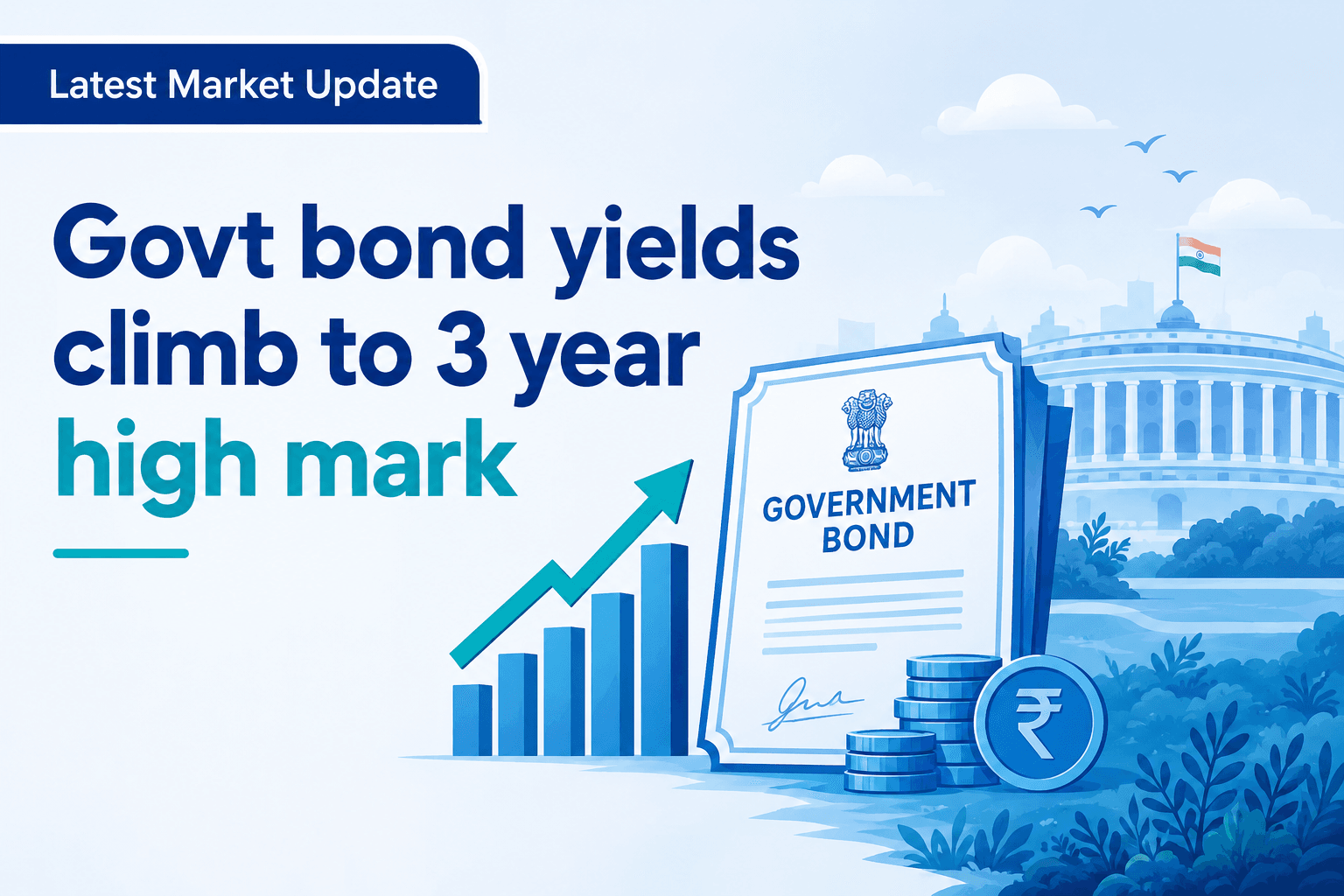
Indian govt bond yields climb to 3 year high mark after RBI hikes repo rate
Following the RBI’s decision to hike the repo rate by 25 basis points on October 7th, Indian government bond yields climbed to their highest level in more than three years. The benchmark 6.94% 2036 government bond yield stood at 7.3886% on 14th October, a day after touching its highest mark of 7.4112% since March 2023. With this recent rate hike decision, India joined the long list of countries who have begun hiking their interest rates, including Japan, USA, UK and Australia, amidst rising energy costs due to geopolitical tensions.
Read MoreInsightful Blogs
Following Blogs Provide Detailed Insights On Government Bonds
Insightful Videos
Watch & Learn More About Government Bonds
Government Securities Explained | Types, Advantage of G-Secs & How They Work
What Are RBI Floating Rate Savings Bonds? Interest, Tax Rules & How to Invest?
Earn Upto 9% Fixed Returns With State Govt Guaranteed Bonds!
To help you
Frequently Asked Questions
How does interest rate movement affect government bond prices?
Where can I track government bond prices and yields?
What is the minimum amount needed to invest in Government Bonds?
Who can invest in Government Bonds?


