

From Dabbas To Dividends: The Real Delivery Of Financial Gains


Introduction: Dividend Investing In India
As dabbawalas in Mumbai provide lunch boxes with unmatched accuracy and dependability, similarly dividends provide investors with a continuous flow of financial benefits. In India, where people place great importance on trust and consistency in their investment culture, the dividend-paying companies tend to be the preferred option for people who want stability and growth.
Dividend investing in India is not simply about regular dividends but about having a reliable source of passive income and enjoying long-term wealth generation.
This blog explains the definition of dividends, how they work in India, and the advantages and smart tips on how to maximise the dividends.
What Are Dividends And Why Do Companies Pay Them?
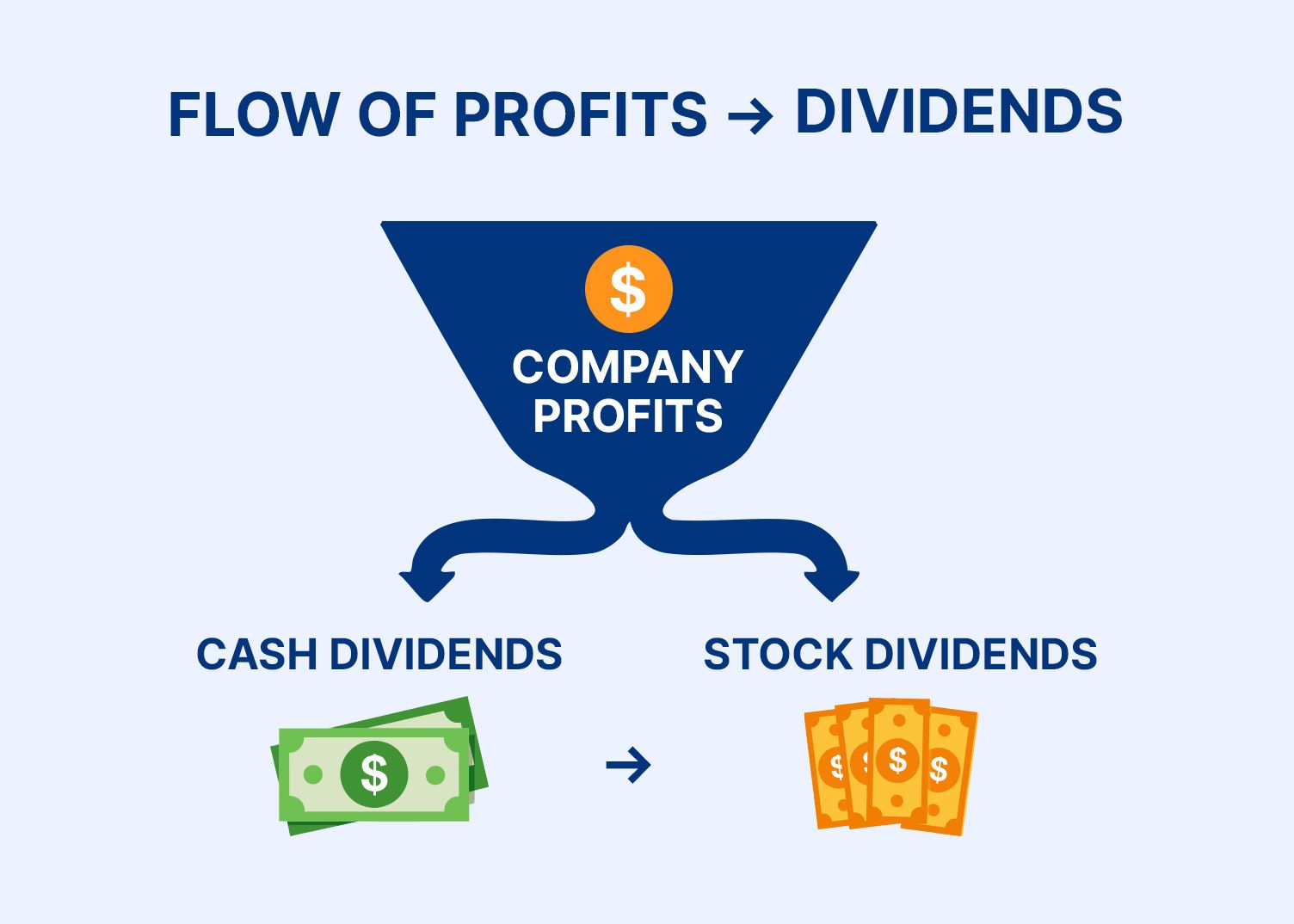
A dividend is a share payment of income of an organisation given to its shareholders as a form of reward for its shareholders because they invested in the company. It is just like you have got your portion of the lunch box when the company has made a nice meal.
Why Companies Issue Dividends:
Companies distribute dividends for several strategic and financial reasons:
1. Rewarding shareholders: Companies share profits, and this way they reveal their gratitude to the investors. This has resulted in dividend investing in India being a favourite among individuals seeking passive income through dividends in India.
2. Sign of financial stability: A company that pays dividends regularly is an indication that the company has good cash flows and predictable profits. They are also regarded as among the best dividend-paying stocks in India 2025 by investors because they offer regular dividends as well as growth over the long term.
3. Boosting investor confidence: Dividend payments establish trust, which helps investors know that the company is not just making profits but is ready to share them. This minimises the uncertainty and in most cases it draws in more long term investors.
4. Efficient capital allocation: Companies that are mature with minimal expansion potential prefer a dividend investment strategy in India over investing all profits in new projects. In giving money back to shareholders, they enable investors to choose whether they want to reinvest in the same company, diversify or pursue a dividend reinvestment plan in India.
5. Creating shareholder loyalty: Constant dividends would ensure that investors will have the propensity to retain their shares even when the times are volatile. That is why dividend yield stocks in India have been known to panic sell less than growth-only stocks.
Types of Dividends:
- Cash dividends: Direct payments made to shareholder bank accounts.
- Stock dividends: Additional shares given instead of cash, increasing ownership stake.
Example: Suppose that you possess 100 shares of Infosys. Assuming that the company pays out a dividend of INR 20 per share, then you would obtain a payout of INR 20 x 100 = INR 2000. This is one amount that is directly credited to your bank account without the need to tell your shares.
That is why your investment in Infosys continues to multiply, and you are also being given another flow of revenue in the form of dividends.
Dividend Investing In India: How It Works
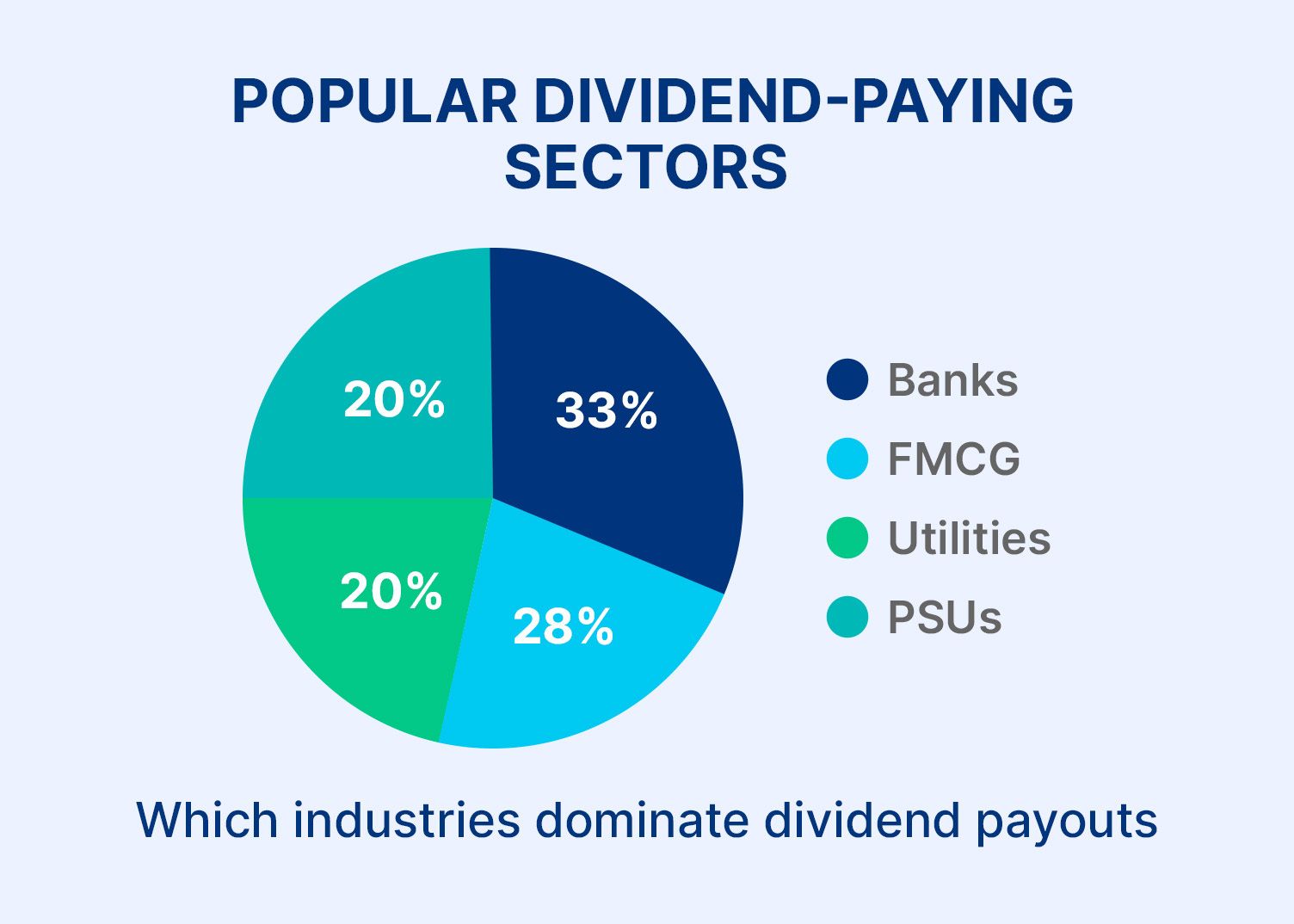
Dividend investing focuses on buying stocks of companies that regularly distribute profits. In India, some sectors are more reliable in paying dividends than others.
Popular dividend-paying sectors:
- Banks and Financial Institutions: These sectors provide constant earnings, frequent dividends.
- FMCG (Fast-Moving Consumer Goods): They are companies that pay high dividends, such as those of HUL, ITC.
- Utility and Energy: NTPC, Coal India, and Power Grid yield stable returns.
- PSUs (Public Sector Undertakings): Most of the PSUs or government-sponsored companies have high dividend payouts.
Dividend Stocks Vs Growth Stocks India:
Feature | Dividend Yield Stocks in India | Growth Stocks in India |
| Payouts | Frequent cash dividends or stock dividends (regular income). | Maximum dividends are paid; profits are invested in the growth of the business. |
| Investor Goal | Earn passive income through dividends in India and minimise volatility. | Emphasize long-term capital gains and no short-term payouts. |
| Risk Level | Generally lower risk, as returns are partly guaranteed through dividends. | Higher risk due to reliance on future growth potential. |
| Taxation | Subject to dividend taxation in India rules, depending on the income slab. | Profits are taxed only when shares are sold (capital gains tax). |
| Ideal For | Retirees, conservative investors, or those following a dividend investment strategy in India. | Younger investors or those seeking high growth over long horizons. |
Think of it as choosing between a guaranteed lunch delivery every day vs. investing in a restaurant that might expand tomorrow.
Benefits of Dividend Investing – Why Investors Love Their “Dabba Returns”

Just like how Mumbai’s dabbawalas never miss a delivery, the benefits of dividend investing in India ensure reliability, stability, and rewarding financial gains for investors:
1. Constant Stream of Income: A dividend investment in India can be used to secure a stream of income, as it is punctual and consistent, hence allowing you to accumulate a regular passive income with dividends.
2. Capital Appreciation: Stock prices may also increase with time, as well as dividends, providing investors with cash flow and long-term benefits of dividend investing in India.
3. Less Volatility: The dividend payment companies, which are usually among the high dividend-paying stocks in India 2025, offer greater stability compared to growth-only stocks.
4. Wealth Compounding: Investors have the ability of a dividend reinvestment plan in India, where they invest to purchase additional shares, which accumulate wealth on a steady basis over a period of many years.
5. Balanced portfolio support: A portfolio of stocks with high-risk growth will be added with dividend yield stocks in India, so that the high-risk growth stock can be balanced to provide a smoother return and predictable income in the troubled markets.
Smart Strategies For Dividend Investors
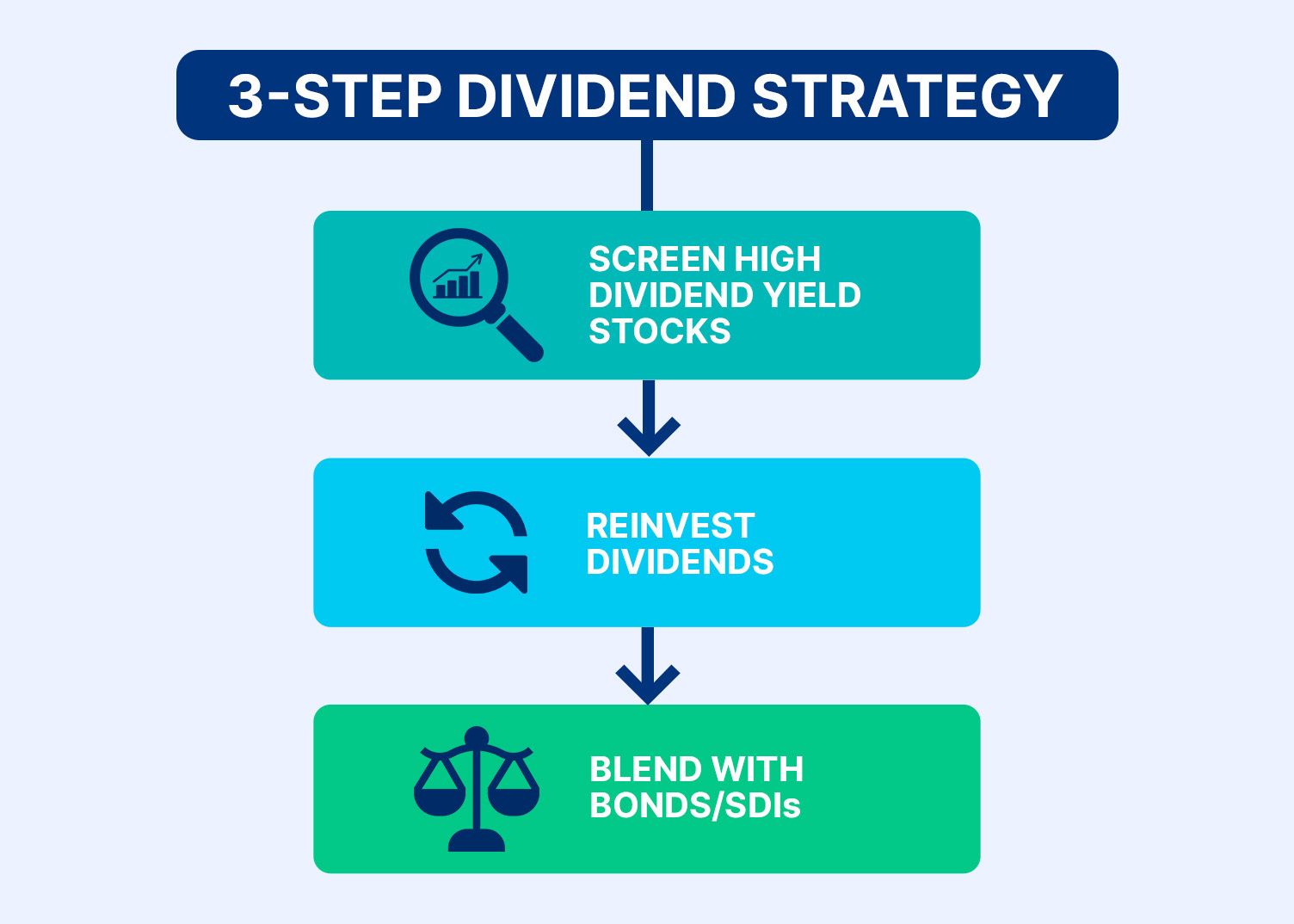
Dividend wealth-building is more than simply accumulating dividends; it is utilising intelligent tactics that ensure a higher income, stability, and growth in the long run.
- Screen for high dividend yield stocks in India
Seek firms that have a history of paying dividends. As an example, ITC and Coal India have high dividend yields. - dividend reinvestment plan in India (DRIP approach)
Reinvest your dividends in order to purchase additional shares as opposed to using them. With time, this adds to your wealth. - Blend with bonds/SDIs for balance
Invest in dividend-paying stocks together with bonds or SDIs on investment platforms such as Grip Invest. This guarantees stability as well as a consistent payout.
Hypothetical Example:
Considering that you have invested in dividend-bearing stocks at a rate of INR 300,000, the expected annual rate of dividends paid out is around INR 25000. Meanwhile, when you invest the rest of your money of INR 2,00,000 in bonds or SDIs, you get extra fixed interest. This will cause your portfolio to produce both a constant stream of dividend income and a predictable bond pay-off, which will provide you with a stable and reliable income stream.
Conclusion
Dividend investing continues to be a powerful way for Indian investors to balance steady cash flow with long-term wealth creation. While it may not deliver the rapid gains of growth-focused strategies, the consistency and resilience of dividends make them an essential part of a diversified portfolio. For anyone aiming to build passive income without losing sight of stability, dividend-paying stocks remain a reliable choice.
Looking to diversify beyond equities? Platforms like Grip Invest offer access to alternative fixed-income opportunities that can complement your dividend strategy.
Want to stay at the top of your finances?
Join the community of 4 lakh+ investors and learn more about Grip Invest, the latest financial knick-knacks, and shenanigans in the world of investing.
Happy Investing!
Disclaimer - Investments in debt securities/municipal debt securities/securitised debt instruments are subject to risks including delay and/ or default in payment. Read all the offer related documents carefully. The investor is requested to take into consideration all the risk factors before the commencement of trading.
This communication is prepared by Grip Broking Private Limited (bearing SEBI Registration No. INZ000312836 and NSE ID 90319) and/or its affiliate/ group company(ies) (together referred to as “Grip”) and the contents of this disclaimer are applicable to this document and any and all written or oral communication(s) made by Grip or its directors, employees, associates, representatives and agents. This communication does not constitute advice relating to investing or otherwise dealing in securities and is not an offer or solicitation for the purchase or sale of any securities. Grip does not guarantee or assure any return on investments and accepts no liability for consequences of any actions taken based on the information provided. For more details, please visit www.gripinvest.in
Registered Address - 106, II F, New Asiatic Building, H Block, Connaught Place, New Delhi 110001


