

Foreign Exchange Risk Explained (2025): Meaning, Types And Effective Management


Imagine the world before 1971: exchange rates were tightly fixed under the Bretton Woods system, and businesses moved across borders without much concern about fluctuating currencies. This era changed overnight when global policymakers decided to allow the world's major currencies to float freely.
From that moment, companies and investors were no longer shielded from volatility—they had to face the realities of sharp swings in currency values that could turn profits into losses within days. Over time, this shift reshaped the way global trade and investments were managed.
By the year 2025, foreign exchange movements are no longer just background noise in the financial system; they are at the very heart of how nations, businesses, and even individual investors measure success. A rise or fall in a currency helps to determine the cost of imports, the competitiveness of exports, and the real value of overseas investments.
This is why understanding foreign exchange risk has become so important. Before we explore its impact in detail, it is important to start with the basics: what exactly do we mean by foreign exchange risk?
Understanding Foreign Exchange Risk
Foreign exchange risk refers to the possibility of financial loss due to fluctuations in exchange rates between currencies. It is also known as currency risk or FX risk. It arises when businesses, investors, or individuals engage in transactions or hold assets denominated in a currency other than their domestic one1.
Fluctuations in these rates can alter the actual costs, revenues, or investment returns when converted back to the home currency, impacting profitability and financial outcomes.
Foreign exchange risk is essential in today's globalized economy because of the sheer volume of cross-border trade, investment, and capital flows. Without managing this risk, companies can face unexpected expenses or erosion of income margins, while investors holding foreign assets risk declines merely due to adverse currency moves.
Three main types of foreign exchange risk are commonly recognized:
1. Transaction risk – arises from time delays between agreeing to a transaction and settling it in a foreign currency, exposing parties to exchange rate volatility during the interval.
2. Translation risk – affects companies when consolidating financial statements of foreign subsidiaries into the parent company's currency, potentially changing reported earnings.
3. Economic risk – longer-term effects on a company's competitive position due to currency movements impacting prices and demand.
Indian companies and investors routinely face forex risk due to India’s active participation in global trade and investment.
For example, Infosys is a major Indian IT exporter that earns substantial revenues in US dollars. When the Indian rupee strengthens against the dollar, the rupee value of their dollar earnings declines, squeezing profit margins unless hedged properly.
Tata Motors experienced a forex loss of about Rs 22.96 billion (approximately $342 million) in the year 2016 after the British pound depreciated post-Brexit, affecting its Jaguar Land Rover subsidiary which reports in pounds.
Indian investors buying foreign equities, say US stocks, may see portfolio returns affected adversely if the rupee appreciates, even if the foreign stock prices rise, reducing real gains in rupee terms2. Import-dependent businesses like oil refiners face cost spikes when the rupee weakens, as their raw material bills in US dollars rise, impacting profitability.
| Type | Description | Example |
| Transaction Risk | Risk on actual cash flow from completed transactions | Exporter’s dollar invoice value changes |
| Translation Risk | Risk when consolidating foreign subsidiaries’ results | MNC must “translate” overseas earnings |
| Economic (Operating) Risk | Long-term impact on market value and competitiveness | Rupee depreciation assists Indian IT exporters |
Due to such risks, Indian businesses and investors often adopt hedging strategies such as forward contracts, options, and currency swaps to stabilize cash flows and protect returns.
Understanding and managing foreign exchange risk is therefore crucial for financial stability and successful global participation. With these foundational aspects in mind, it is essential to now examine the broader impact of foreign exchange risk on the Indian economy and markets.
Impact Of Currency Volatility On Indian Businesses
Every time the rupee moves, it creates ripples across boardrooms, stock markets, and even household budgets. What may seem like a technical currency fluctuation often translates into shifting profits for companies, volatile trade balances for the nation, and unpredictable swings in investment portfolios.
Foreign exchange risk has quietly become one of the most critical yet overlooked drivers of India’s economic and corporate landscape. With global capital flows, volatile oil prices, and geopolitical events feeding directly into currency markets, the rupee’s movements now carry far-reaching consequences.
- Rupee Volatility: With the RBI now tolerating greater INR swings, Indian firms are compelled to hedge more actively—at times covering nearly 90% of exposures, up from 60-70%3
- Sector Impact: Export-heavy sectors (IT, pharma, auto-components) benefit from rupee weakness but face margin stress when the rupee strengthens. Importers (energy, electronics) face the opposite.
- Investment Portfolios: Indian investors in global mutual funds or ETFs have witnessed portfolio swings due to sharp moves in dollar, euro, or yen values.
- Macro Impact: India’s trade deficit and fluctuating reserves further amplify currency risk, linking monetary policy and fiscal health to global events.
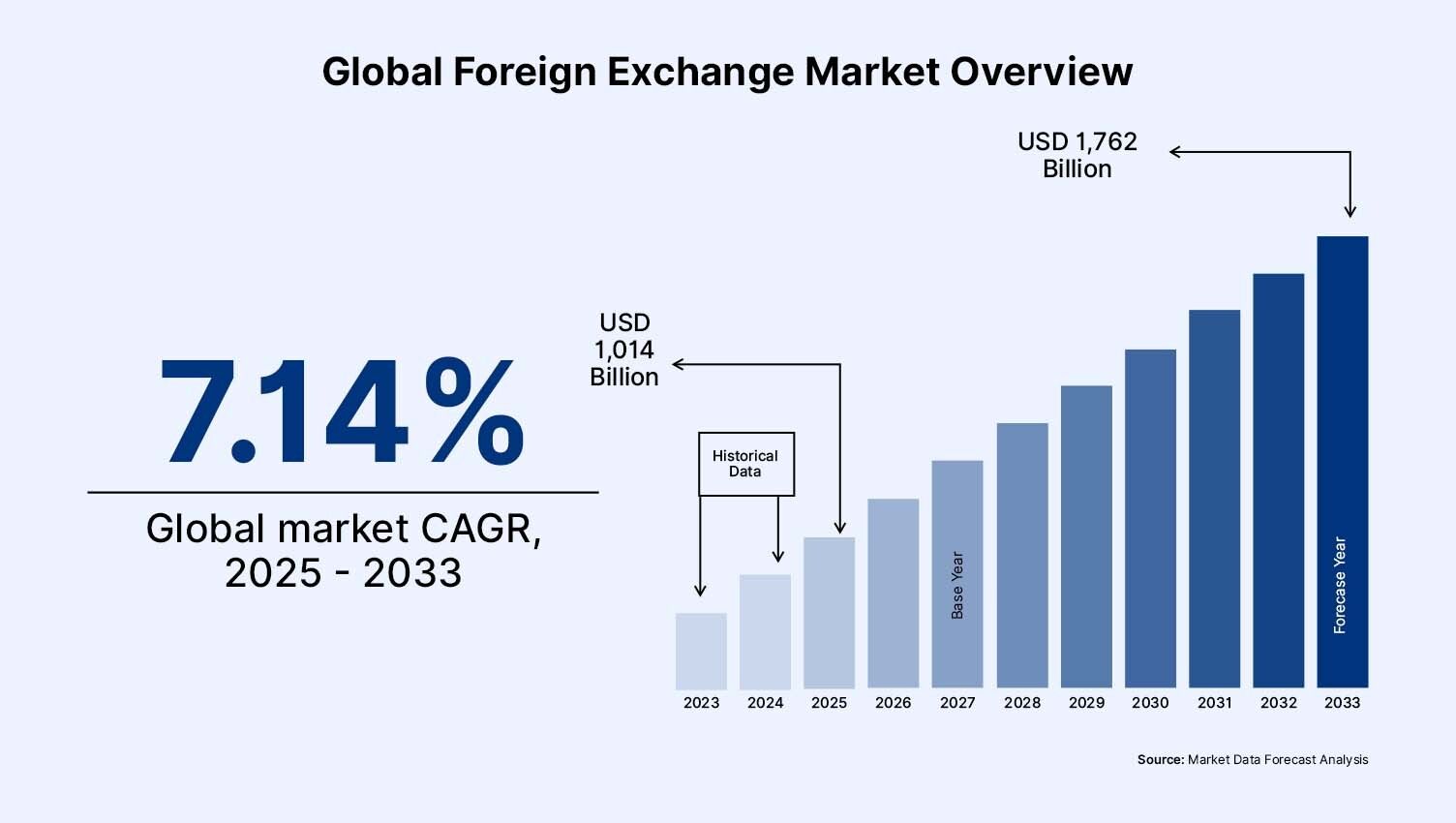
Global Foreign Exchange Market Trends 2025
- Global FX trading hit $9.6 trillion per day in April 2025, marking a 28% increase from 2022.
- FX swaps are the most commonly traded instrument, accounting for 41% of global FX market transactions. Forwards, spot trades, and OTC options fill out the rest.
How Indian Companies Manage Forex Risk
Managing foreign exchange (FX) risk is no longer just a corporate boardroom concern—it’s now a daily reality for Indian exporters, investors, and even retail savers looking abroad.
With the rupee facing global uncertainties, businesses and individuals alike must balance growth opportunities with strategic risk protection.
Here are the most effective ways to manage foreign exchange risk in today’s Indian context and these are -
1. Natural Hedging
Many Indian exporters and importers cleverly match their receivables and payables in the same currency to “net off” exposure. This lowers risk without new costs or products.
2. Using Forwards and Derivatives
Firms and investors lock in exchange rates with forward contracts or hedge profit risk with vanilla forex options. These are now accessible beyond just big corporates—Indian exchanges like NSE and BSE have popularized FX derivative products, driven by rising awareness and fintech innovation.
- Forward Contract Example:
An Indian IT company expecting $500,000 revenue in 90 days can use a forward to lock in the current USD/INR rate, anchoring profitability even if the rupee appreciates.
3. Portfolio Diversification
By combining currency-hedged international mutual funds, Indian investors can lower portfolio volatility from random currency swings. Products focused on foreign debt, global equities, or diversified assets mitigate the risks of any single market’s currency move.
4. Accessing Professional FX Risk Management
Expert advisors and fintech solutions now offer algorithmic and AI-driven hedging, providing real-time analytics and tailored solutions, even for mid-size enterprises. This increased sophistication has expanded India’s FX market share and lowered per-transaction costs.
5. Mutual Fund Route
FX risk mutual funds and dynamic currency funds allow retail investors to participate globally while minimizing direct risk from sudden rupee moves.
6. Grip Investment: For Stable Fixed-Income Returns
For risk-averse investors, diversified fixed-income products from trusted platforms like Grip Invest offer stable rupee returns, making them an attractive complement to high-risk global assets. These help Indian investors tap steady yields, reduce exposure to rupee swings, and align strategies with 2025’s best practices.
Conclusion
The conclusion on foreign exchange risk management in 2025 is clear: proactive, technology-driven strategies are essential. With daily global FX turnover exceeding $9.6 trillion and rising volatility from geopolitical and monetary shifts, managing transaction, translation, and economic risks is critical.
Tools like forward contracts, options, and AI analytics provide the stability businesses and investors need. In India, the RBI’s light-touch approach to rupee volatility increases the imperative for exporters, importers, and investors to hedge effectively using natural hedging, currency derivatives, and diversified portfolios. According to the LSEG 2025 report, 65% of global FX participants prioritize risk management, highlighting its importance.
For Indian investors seeking balanced, resilient portfolios amid volatility, combining global opportunities with stable domestic instruments is vital. Grip Invest’s reliable fixed-income products offer such stability, helping investors hedge currency risk while achieving consistent returns in an uncertain global environment.
FAQs On Foreign Exchange Risk
1. What is foreign exchange risk and why is it important for Indian businesses?
Foreign exchange risk, also called currency risk or FX risk, refers to potential financial losses due to fluctuations in currency exchange rates. It affects Indian companies and investors engaged in cross-border trade or holding foreign assets.
Managing this risk is essential because currency swings can impact costs, revenues, and profitability, especially for exporters like Infosys or import-dependent firms like oil refiners.?
2. How did Tata Motors suffer forex losses due to Brexit in 2016?
Tata Motors experienced a forex loss of approximately Rs 22.96 billion ($342 million) in 2016 after the British pound depreciated following the Brexit vote. This loss impacted its Jaguar Land Rover subsidiary, which reports earnings in pounds.
The pound’s decline significantly reduced the rupee value of revenues and profits, highlighting the economic risk associated with currency fluctuations.?
3. What are the common types of foreign exchange risks faced by Indian companies?
The three main types are:
- Transaction Risk: Risk from exchange rate fluctuations between deal agreement and settlement.
- Translation Risk: Impact on consolidated financial statements of foreign subsidiaries.
- Economic Risk: Long-term effects on competitiveness and market position due to currency movements.
Indian firms routinely face all these risks due to active global trade participation.?
4. What are effective forex risk management strategies for Indian exporters and investors?
Key strategies include:
- Natural hedging by matching currency inflows and outflows.
- Using forward contracts and derivatives such as options available on NSE and BSE.
- Portfolio diversification with currency-hedged international mutual funds.
- Professional FX risk management using AI-driven fintech solutions.
- Investing in mutual funds and fixed-income products like those offered by Grip Invest to stabilize returns.
These approaches help mitigate volatility risks and protect profitability.
References:
1. British Business Bank, accessed from: https://www.british-business-bank.co.uk/business-guidance/guidance-articles/finance/what-is-foreign-exchange-risk
2. Reuters, accessed from: https://www.reuters.com/article/markets/tata-motors-q1-net-profit-halves-on-forex-loss-post-brexit-vote-idUSKCN1111Q1/
3. Reuters, accessed from: https://www.reuters.com/world/india/indias-new-light-touch-fx-volatility-spurs-hedging-ramp-up-2025-07-02/
ant to stay at the top of your finances?
Join the community of 4 lakh+ investors and learn more about Grip Invest, the latest financial knick-knacks, and shenanigans in the world of investing.
Happy Investing!
Disclaimer - Investments in debt securities/municipal debt securities/securitised debt instruments are subject to risks including delay and/ or default in payment. Read all the offer related documents carefully. The investor is requested to take into consideration all the risk factors before the commencement of trading.
This communication is prepared by Grip Broking Private Limited (bearing SEBI Registration No. INZ000312836 and NSE ID 90319) and/or its affiliate/ group company(ies) (together referred to as “Grip”) and the contents of this disclaimer are applicable to this document and any and all written or oral communication(s) made by Grip or its directors, employees, associates, representatives and agents. This communication does not constitute advice relating to investing or otherwise dealing in securities and is not an offer or solicitation for the purchase or sale of any securities. Grip does not guarantee or assure any return on investments and accepts no liability for consequences of any actions taken based on the information provided. For more details, please visit www.gripinvest.in
Registered Address - 106, II F, New Asiatic Building, H Block, Connaught Place, New Delhi 110001


