

Inflation-Indexed Bonds In India: Meaning, Benefits, And How To Invest


Inflation is one of the biggest motivations for investing, as the value of money declines each year. For example, something that costs INR 100 today may cost INR 105 a year later due to inflation, reducing your purchasing power. While saving and investing, your return on investment (ROI) should ideally exceed the prevailing inflation rate. However, aiming for higher ROI often comes with higher risk.
This is where Inflation-Indexed Bonds (IIBs) become valuable. These government-backed bonds are designed to protect investors from the erosion of investment value caused by inflation.
IIBs adjust their principal or interest payments in line with the prevailing inflation rate, ensuring stable real returns over time. Linked to benchmarks like the Consumer Price Index (CPI), they are a strong option for investors seeking lower-risk alternatives in high-inflation environments.
How Inflation-Indexed Bonds Function In Practice
Link Between Inflation And Bond Returns
IIBs operate differently from conventional bonds (which offer fixed payouts). These debt instruments’ returns are tied to the inflation rate, derived from the CPI (Consumer Price Index). The CPI is a measure of the average change in prices of baskets of goods and services over a given period.
When the inflation rate is rising, these inflation-protected securities increase the payouts to preserve the purchasing power. This means that the real return of the investment remains stable throughout the bond tenure.
On the other hand, when the inflation rate is low (or even in deflation), the adjustment is minimal, thereby ensuring that the investor is still shielded from erosion in investment value.
How Principal And Interest Are Calculated
In these bonds, either the principal amount, the interest payment, or both are adjusted periodically to reflect changes in the inflation index.
For example, if an investor holds INR 10,000 in IIBs and inflation for the year is 6%, the principal is revised to INR 10,600. Interest for the next period is then calculated on the revised principal, creating a compounding inflation-protection effect.
IIB Returns Vs. Inflation Rates (10-Year Period)
Here is a chart depicting the comparison between IIB Returns and Inflation Rates in the past ten years:
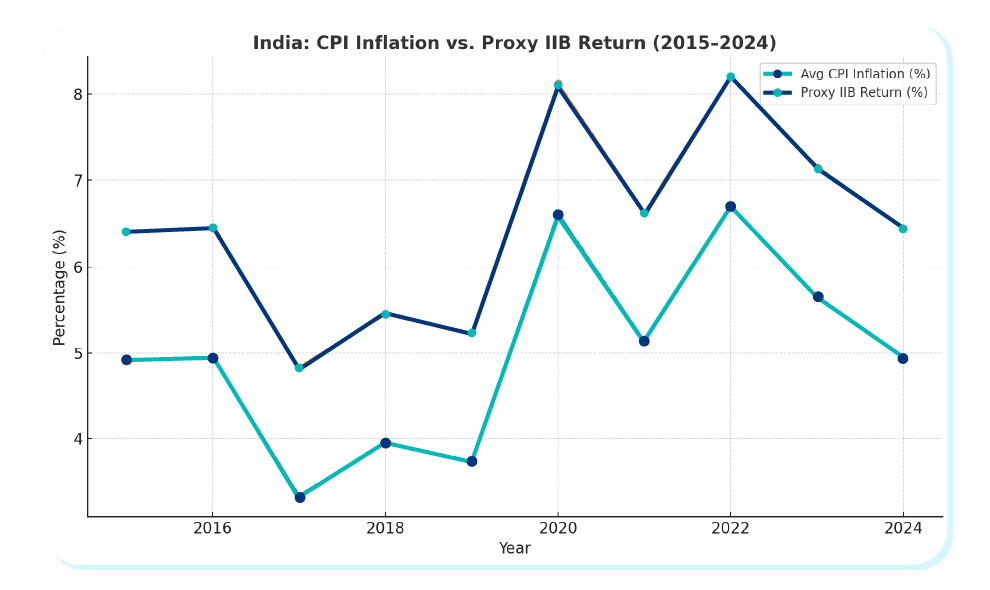
Figure 1.0: CPI Rate vs. Proxy IIB Return
Proxy IIB Return refers to the Rate of Return (ROR) on IIBs in India. As per the RBI’s clarification, there is no separate data about IIBs published1. As per RBI’s retail IINSS-C formula: fixed 1.5% + inflation, it is a clean proxy for what a CPI-linked bond’s nominal return would approximate. For CPI data, we have opted for the information published by the World Bank2.
The chart shows that RBI Bonds returns consistently stay about 1.5 percentage points above CPI inflation across 2015–2024, reflecting the fixed-plus-inflation structure that preserves real purchasing power.
Why Were IIBs Discontinued?
When the Inflation-Indexed Bonds (IIBs) were launched by the Government of India (GoI) and the Reserve Bank of India (RBI) in 2013, the purpose was to ensure that the investments made by the investors were inflation-hedged and, at the same time, would motivate household savings to shift away from physical assets like gold.
Even with the advantages listed above, however, IIBs did not achieve mass popularity and finally became obsolete. This could be attributed to the following facts:
- Limited number of investors willing to participate: Not many people knew about IIBs, and the majority were more inclined to invest in fixed deposits or gold.
- Liquidity issues: The bonds could not be easily traded in the secondary market.
- Complex structure of the product: The inflation adjustment mechanism of both the principal and interest rate was not as clear-cut as that of traditional fixed-income instruments.
- Moderation of inflation: With the moderation of headline inflation and retail inflation post-2014, there was less demand for investment tools specifically to hedge against inflation.
- Benchmark for inflation changed: Early issues of IIBs used WPI as the index, whereas the RBI now uses CPI.
Though no new issuance has occurred since then, Inflation-Indexed Bonds are significant in the history of fixed-income securities in India.
Inflation-Indexed Bonds Around the World
Even though India stopped issuing Inflation-Indexed Bonds (IIBs), many countries are still issuing inflation-indexed bonds under their government bond program. The objective of inflation-indexed bonds is to maintain the investor’s purchasing power by adjusting either the face value or the interest rate, or both, according to domestic inflation.
Country | Instrument | Inflation Index Used | Issuer |
United States | Treasury Inflation-Protected Securities (TIPS) | Consumer Price Index (CPI-U) | U.S. Treasury |
United Kingdom | Index-Linked Gilts | Retail Price Index (RPI) | UK Debt Management Office |
France | OATi and OAT€i Bonds | French CPI / Euro HICP | French Treasury |
India (Historical) | Inflation Indexed Bonds (IIBs) and IINSS-C | WPI (initially), later CPI-based products | Government of India / RBI |
These securities are widely employed by conservative investors and pension funds to protect themselves from the declining value of money due to increases in the level of inflation. Although the structure of such investments varies depending on the country, the goal is basically the same—to earn enough to cover inflation.
Government Buyback Of IIBs In 2016
When the interest from investors in Inflation Indexed Bonds (IIBs) of India reduced, the Indian Government decided to have a buyback scheme for its IIBs in February 2016. This was aimed at the 1.44 per cent Inflation-Indexed Government Stock that matures in 2023.
This was mainly influenced by two things:
- Firstly, there was an excess of cash that the government had, and therefore they could repay some of their debts even before time.
- Secondly, there was low demand from investors for the bonds because of low liquidity, thus making the bonds ineffective as an investment product.
The buyback was termed as a one-off measure by the government instead of a shift in its overall borrowing policy. It was also indicative of the partial success of the WPI-linked IIBs in the Indian debt market and heralded the process of their eventual phase-out.
Types Of Inflation-Indexed Bonds
1. Capital-Indexed Bonds
Capital-indexed bonds adjust only the principal value in line with inflation, while the interest (coupon) rate remains consistent. At maturity, the investor receives fixed income inflation protection through inflation-adjusted principal, ensuring that the real value of the investment is preserved. This type is particularly suitable for investors who prioritise capital protection over regular income.
2. Inflation-Indexed Savings Bonds
These bonds, such as India’s Inflation-Indexed National Savings Securities-Cumulative (IINSS-C), adjust both the principal and interest payments according to inflation. They typically pay a fixed rate (e.g., 1.5% p.a.) above the inflation rate (as discussed in the chart), ensuring a consistent real return. Interest is compounded periodically, making them ideal for long-term savers seeking steady growth with inflation-proof investments.
3. International Examples
Globally, similar capital-indexed bond instruments include the U.S. Treasury Inflation-Protected Securities (TIPS), which adjust the principal based on the Consumer Price Index (CPI-U) and pay interest semi-annually, and the U.K.’s Index-Linked Gilts, which link both principal and coupon to the Retail Price Index (RPI). Other economies, such as Canada and Australia, also issue inflation-linked bonds as part of their government securities portfolio.
Traditional Bonds vs Inflation-Indexed Bonds (Intro + Table)
Both traditional bonds and Inflation-Indexed Bonds (IIBs) are instruments that help an investor earn regular income without affecting their capital. The main difference between them is how they deal with inflation.
While traditional bonds pay out a fixed amount of interest during their entire tenure, inflation-linked bonds adjust the principal, interest rate, or both according to inflation.
Feature | Traditional Bonds | Inflation-Indexed Bonds (IIBs) |
Returns | Fixed coupon throughout the tenure | Linked to inflation, along with a fixed real return (where applicable) |
Inflation Protection | No protection against rising inflation | Designed to provide a hedge against inflation |
Purchasing Power | May decline during periods of high inflation | Helps preserve purchasing power by adjusting for inflation |
Principal Value | Remains fixed | May be adjusted based on the Consumer Price Index (CPI) or other inflation index |
Interest Payments | Calculated on the original principal | May be calculated on the inflation-adjusted principal, depending on the bond type |
Risk | Exposed to inflation risk | Lower inflation risk but still subject to interest rate and market risks |
Suitable For | Investors seeking predictable fixed income | Investors looking for purchasing power protection and stable real returns |
Although conventional securities will remain ideal for people who want stable incomes from their investments, Inflation-Indexed Bonds (IIBs) will serve well for investors who wish to protect their money from the effects of rising retail inflation.
How Are Inflation-Indexed Bonds Taxed?
The tax treatment of Inflation-Indexed Bonds (IIBs) varies based on the nature of the income, which is either in the form of interest income or capital gains. Inflation-indexed bonds do not provide any form of exemption from income tax, as opposed to some government schemes. Interest income is subject to the relevant provisions of the Income-tax Act.
Interest Income
Interest income on Inflation-Indexed Bonds is subject to income tax, depending on the relevant tax bracket of the individual. This is because the interest income is treated like other interest income in the calculation of income.
Capital Gain
In case there is a gain on the sale of such bonds before maturity, the said gains would be taxable according to the relevant holding period and tax legislation that is in effect at the time of transfer. The tax regime of listed bonds and unlisted bonds has been amended under the Finance (No. 2) Act, 2024.
How To Invest In Inflation-Indexed Bonds In India
As of now, Inflation Indexed Bonds (IIBs) and the Inflation Indexed National Savings Securities-Cumulative (IINSS-C) are not available for investment anymore since the Government of India (GoI) and the Reserve Bank of India (RBI) have ceased issuing them. The investors holding them retained them until their maturity.
Availability and RBI's Involvement
During the period when IIBs were available, the RBI was responsible for issuing these bonds on behalf of the Government of India by conducting auctions and distributing them under various schemes. The RBI was also responsible for determining the issue size, the auction method, and the measure of inflation that would be used to determine the returns. This is now the CPI.
Present State of Investment
With no further issuance happening, individual investors are not able to buy any fresh issue of Inflation Indexed Bonds in India. For individuals who need an investment that will safeguard their money from the adverse effects of inflation, there are other types of securities that can be used.
Benefits Of Inflation-Indexed Bonds
1. Inflation Protection: The primary advantage is the protection offered against inflation, ensuring that the purchasing power of the investment is preserved.
2. Stable Real Returns: IIBs provide a more stable real rate of return (return above inflation) compared to traditional bonds, which can be eroded by inflation.
3. Low Risk: Typically issued by governments or top-rated entities, IIBs are considered safe investments with low default risk.
4. Diversification: They can enhance portfolio diversification by offering a unique asset class with a low correlation to other assets like equities.
Drawbacks Of Inflation-Indexed Bonds
1. Lower Starting Yields: IIBs generally offer lower initial interest rates compared to traditional bonds due to the added inflation protection feature.
2. Complexity: The adjustments to principal and interest payments can be complex for some investors to understand.
3. Tax Implications: Inflation adjustments to the principal may be considered taxable income in some regions, even though the investor may not receive this cash until maturity or sale.
4. Market Risk: IIBs are still subject to market risks such as interest rate fluctuations and shifts in inflation expectations.
Conclusion
Inflation-indexed bonds offer a reliable way to safeguard wealth from the silent erosion caused by rising prices. By linking returns to inflation, they ensure that investors maintain their purchasing power while earning a modest real yield. Products like the RBI’s IINSS-C make this asset class accessible to retail investors, while global equivalents like TIPS and index-linked gilts highlight their broader relevance.
For those seeking portfolio stability and predictable, inflation-adjusted growth, IIBs present a prudent choice for investment in government securities. However, as with any investment, assessing one’s risk tolerance, time horizon, and market conditions remains essential before committing funds. To learn more about Inflation-Indexed Bonds, log in to Grip Invest today.
FAQs On Inflation-Indexed Bonds
1. Are inflation-indexed bonds a good investment in India?
Yes, they are suitable for conservative investors seeking protection against inflation. They help preserve real purchasing power and offer predictable, inflation-adjusted returns, though liquidity can be limited.
2. How are inflation-indexed bonds taxed?
There is no special tax exemption for these bonds4. The interest is taxable as per the investor’s slab rate, and any capital gains are also potentially taxable, depending on prevailing tax laws.
3. Can retail investors buy inflation-indexed bonds directly?
Yes, retail investors can invest through products like the RBI’s IINSS-C via banks, demat accounts, or authorised exchanges, subject to minimum investment rules.
References:
1. RBI, accessed from: https://www.rbi.org.in/commonperson/English/scripts/FAQs.aspx
2. World Bank Group, accessed from: https://data.worldbank.org/indicator/FP.CPI.TOTL.ZG
3. RBI, accessed from: https://www.rbi.org.in/commonperson/English/scripts/FAQs.aspx
4. Bajaj Finserv, accessed from: https://www.bajajfinserv.in/what-are-inflation-indexed-bonds
Want to stay at the top of your finances?
Join the community of 4 lakh+ investors and learn more about Grip Invest, the latest financial knick-knacks, and shenanigans in the world of investing.
Happy Investing!
Disclaimer - Investments in debt securities/municipal debt securities/securitised debt instruments are subject to risks including delay and/ or default in payment. Read all the offer related documents carefully. The investor is requested to take into consideration all the risk factors before the commencement of trading.
This communication is prepared by Grip Broking Private Limited (bearing SEBI Registration No. INZ000312836 and NSE ID 90319) and/or its affiliate/ group company(ies) (together referred to as “Grip”) and the contents of this disclaimer are applicable to this document and any and all written or oral communication(s) made by Grip or its directors, employees, associates, representatives and agents. This communication does not constitute advice relating to investing or otherwise dealing in securities and is not an offer or solicitation for the purchase or sale of any securities. Grip does not guarantee or assure any return on investments and accepts no liability for consequences of any actions taken based on the information provided. For more details, please visit www.gripinvest.in
Registered Address - 106, II F, New Asiatic Building, H Block, Connaught Place, New Delhi 110001


