

Demand Pull And Cost Push Inflation Explained With Simple Examples


Often viewed as a domestic issue, inflation can arise from multiple factors depending on prevailing economic conditions. Demand-pull inflation and cost-push inflation are two distinct causes of inflation, each explaining how and why an economy experiences rising prices and how policymakers should respond. Since different economic situations require different policy measures, understanding these causes becomes essential.
In India, inflation directly affects loan costs, interest rates, savings, and investment returns. The underlying causes of inflation influence how the Reserve Bank of India and financial markets respond. For investors, understanding the types of inflation is important, as the same inflation level can signal either healthy economic growth or stress within the economy.
What Is Demand Pull Inflation?
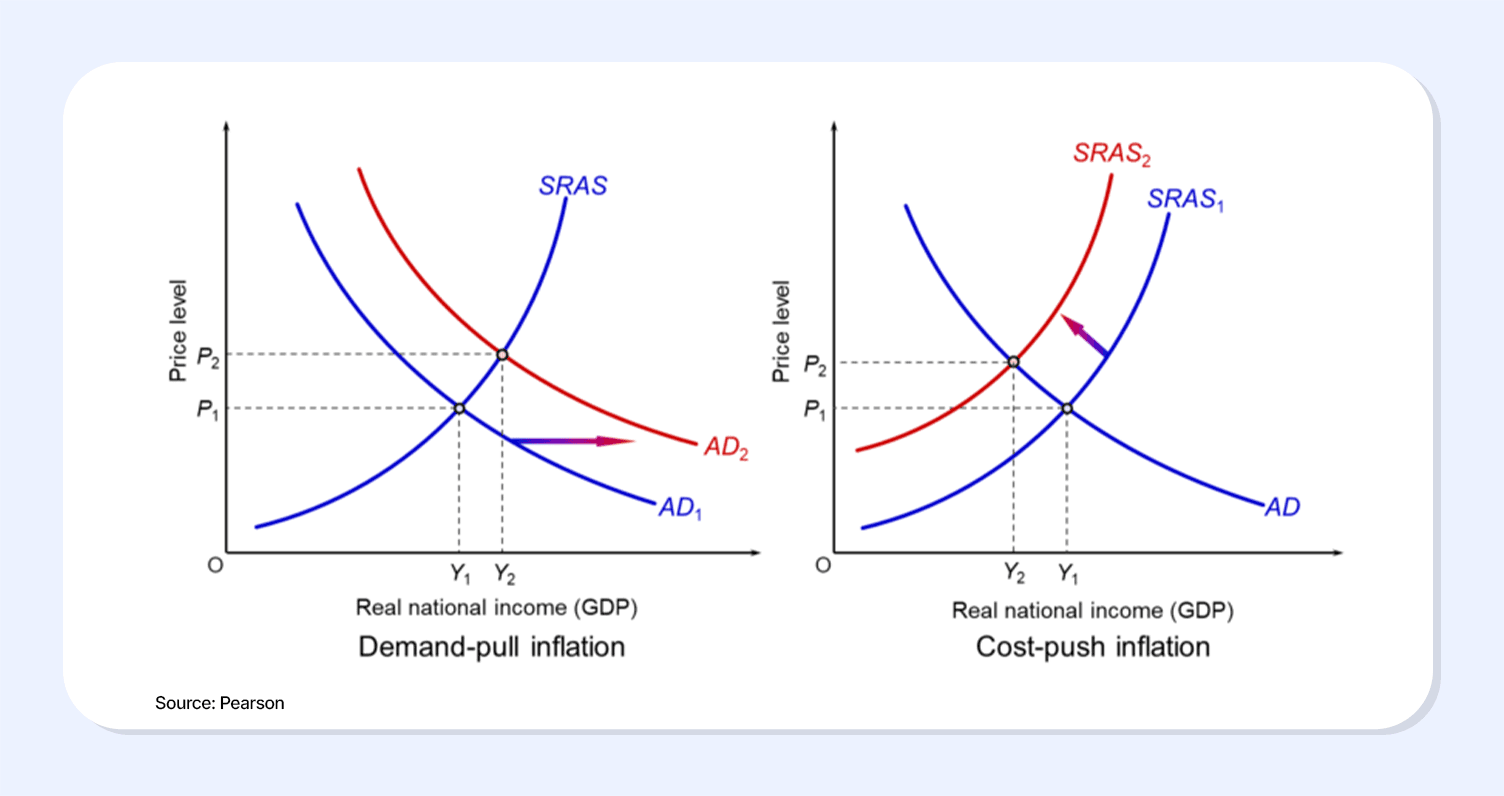
Demand-pull inflation occurs when demand for goods and services exceeds what the economy can realistically produce at that time. Generally, demand side inflation is most prevalent during economically expansive periods. It is the time when consumers have higher incomes and a strong sense of confidence in the marketplace.
Cause
Demand-pull inflation is driven by rising disposable income, expansionary fiscal policy, easy access to credit, a growing population, and increased government spending. Demand outstrips the available supply of goods and services when the money supply and the amount of purchasing power increase at a faster rate than production. When a situation of this nature arises, prices will increase.
Real-life Indian examples
During periods of high growth, demand for housing and automobiles often increases due to higher wages, which increase disposable income, and low interest rates that push up these markets. If production cannot keep pace with demand due to land and regulatory issues, cost increases will occur despite stable production costs.
What Is Cost Push Inflation?
When businesses cannot absorb the increase in the cost of producing their products and services and must raise their prices, even though demand remains unchanged, this is called cost-push inflation. The supply side of the economy drives this inflation and is usually caused by external shocks.
Rising Input Costs
When the price of inputs such as crude oil rises significantly, transportation and manufacturing across all sectors increase. To remain profitable, companies pass on higher costs to consumers by raising prices. Consequently, consumers experience higher prices due to rising input costs, leading to cost-push inflation.
Supply Side Pressures
Supply disruptions include geopolitical tensions, poor monsoons, global supply chain breakdowns, or currency depreciation. These disruptions can cause a shortage of goods available on the market.
For example, in India, due to weather-related supply disruptions, inflation may rise; thus, even with constant consumer demand, food inflation may be affected.
Key Differences Between Demand Pull And Cost Push Inflation
By comprehending the two types of inflation, namely demand-pull inflation and cost-push inflation, you will be able to understand how different types of inflation behave over different times in an economic cycle. This will also help you understand the various types of policies used to combat inflation.
1. Demand-pull or demand side inflation occurs when the level of demand for goods/services increases. Cost-push inflation occurs when the costs of producing and supplying goods increase.
2. Demand-pull inflation usually occurs during periods of expansion, whereas cost-pull inflation can occur even during periods of slow or stagnant growth.
3. Corporations generally benefit from demand-pull inflation because it increases revenue and jobs. Still, corporations are usually adversely affected by cost-pull inflation because cost-push inflation typically lowers profit margins and therefore reduces household purchasing power.
4. Demand-pull inflation tends to respond to interest rate increases, whereas cost-push inflation generally requires government intervention through supply-side policies.
How Inflation Types Affect Investments
Inflation affects asset classes differently depending on whether it is demand-driven or cost-driven. Investors who understand the underlying causes of inflation are better positioned to manage risk and returns effectively.
Equity Reaction
When inflation is driven by strong demand, equities perform relatively well, as higher demand supports revenue growth and improves pricing power. Sectors such as banking, infrastructure, automobiles, and consumer discretionary typically benefit during these phases. However, equity valuations may eventually come under pressure if rising inflation leads to higher interest rates.
In contrast, cost-push inflation puts pressure on corporate margins, as higher input costs reduce profitability. Companies with limited pricing power struggle to pass on costs, leading to increased market volatility. While some defensive sectors may hold up better, overall equity performance is usually subdued during prolonged cost-push inflation.
Fixed Income Performance During Inflation Phases
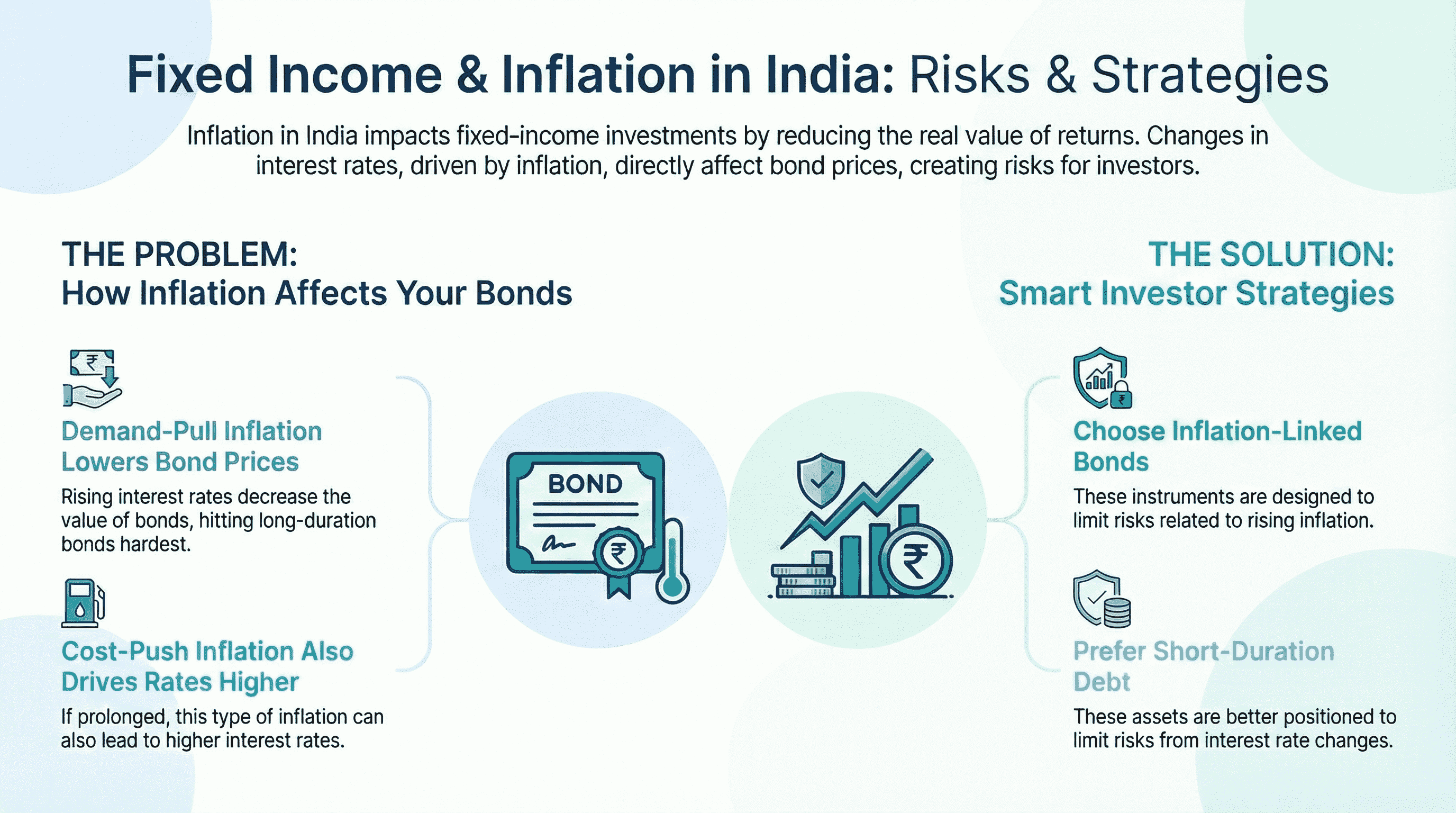
Inflation affects fixed-income investments in India mainly by reducing the real value of interest payments. During periods of demand-pull inflation, rising interest rates tend to push bond prices lower, with longer-duration bonds being more adversely impacted.
Cost-push inflation can also lead to higher interest rates, especially when price pressures remain elevated for an extended period. In such scenarios, investors often prefer inflation-linked bonds and short-duration debt instruments, as they are better positioned to limit interest rate and inflation-related risks.
Conclusion
Understanding whether inflation is driven by demand or rising costs changes how you read the economy and how you invest within it. Demand-pull inflation often reflects growth and expanding consumption, while cost-push inflation signals pressure points that can erode margins, purchasing power, and real returns.
For investors, this distinction matters because equities, bonds, and interest rates respond very differently to each scenario. Building awareness of inflation cycles helps investors make smarter allocation decisions, manage risk more effectively, and avoid reacting emotionally to headline inflation numbers.
Platforms like Grip Invest help investors navigate these phases by offering access to diversified, regulated fixed-income opportunities that can play a stabilising role when inflation and interest rate conditions shift.
FAQs
1. What is the difference between demand pull and cost push inflation?
Demand-pull inflation is caused by excess demand within the economy, whereas cost-push inflation is caused by increases in the costs of producing goods and/or services.
2. Which type of inflation is worse for consumers?
Cost-push inflation is a more severe form of inflation because it drives up prices without increasing income, thereby reducing real purchasing power.
3. How does inflation affect bond returns?
The value of the fixed rate of return on bonds will decrease due to inflation, and the higher level of short-term interest rates will also reduce bond investments, as bond investors sell their holdings as interest rates climb.
4. Can investors plan for inflation cycles?
Yes, investors can prepare for inflation by adjusting asset allocation, investing in stocks with price elasticity, managing bond duration, and using inflation-indexed fixed-income securities.
References:
1. Pearson, accessed from: https://pearsonblog.campaignserver.co.uk/wp-content/uploads/Inflation-types-768x360.png
Want to stay at the top of your finances?
Join the community of 4 lakh+ investors and learn more about Grip Invest, the latest financial knick-knacks and shenanigans that take place in the world of investing.
Happy Investing!
Disclaimer - Investments in debt securities/municipal debt securities/securitised debt instruments are subject to risks including delay and/ or default in payment. Read all the offer related documents carefully. The investor is requested to take into consideration all the risk factors before the commencement of trading.
This communication is prepared by Grip Broking Private Limited (bearing SEBI Registration No. INZ000312836 and NSE ID 90319) and/or its affiliate/ group company(ies) (together referred to as “Grip”) and the contents of this disclaimer are applicable to this document and any and all written or oral communication(s) made by Grip or its directors, employees, associates, representatives and agents. This communication does not constitute advice relating to investing or otherwise dealing in securities and is not an offer or solicitation for the purchase or sale of any securities. Grip does not guarantee or assure any return on investments and accepts no liability for consequences of any actions taken based on the information provided. For more details, please visit www.gripinvest.in
Registered Address - 106, II F, New Asiatic Building, H Block, Connaught Place, New Delhi 110001


