

Penny Stocks Explained: Meaning, Risks, And What Investors Should Know


Penny stocks captivate retail investors through the "low price illusion"—snapping up 10,000 shares at INR 1 feels far more accessible than one blue-chip at INR 1,000, with dreams of 100x returns if it doubles. This thrill, however, masks deep psychological biases, not genuine undervaluation, especially in the volatile NSE and BSE markets1.
In India, penny stocks—typically trading below INR 10-20—fuel hype around "multibagger penny stocks" via social media and Telegram tips. Yet, SEBI data reveals over 90% erode wealth, hit by manipulation, low liquidity, and promoter exits. Novices chase lottery-like wins, ignoring red flags like tiny market caps and erratic volumes.
This is not investing; it is speculation disguised as opportunity. To demystify the risks and spot real patterns, let us first define what penny stocks really are in the Indian context.
What Are Penny Stocks?
Penny stocks are low-priced equity shares, typically under INR 10, issued by small or micro-cap companies with market caps below INR 500 crore. They trade on NSE and BSE but stand apart from mainstream stocks due to thin volumes and limited free float, fueling wild price swings. Indian examples like Shukra Pharmaceuticals Ltd and Sumeet Industries Ltd often spike short-term but falter long-term.
Key market characteristics include:
- Low liquidity: Sparse buyers/sellers create wide bid-ask spreads, trapping investors.
- Small company focus: Niche players in textiles (e.g., Nandan Denim Ltd) or pharma with unproven models.
- High volatility: Prices surge 50% or plunge overnight on rumors, not fundamentals.
- Promoter dominance: Insiders hold most shares, enabling easy manipulation.
While these traits promise quick multibaggers, they hide dangers—let us explore why penny stocks are so risky next.
Why Penny Stocks Are Risky
Penny stocks pack severe risks, starting with low liquidity—selling even modest holdings can crash prices, trapping you in illiquid positions. Pump-and-dump schemes flourish: operators hype via Telegram/social media, inflate prices, then dump, leaving retail investors wrecked. SEBI cracks down but can not fully eradicate it2.
Other major dangers:
- Lack of transparency: Tiny firms skimp on disclosures, breeding fraud and insider trading.
- Delisting threats: Non-compliance lands them in BSE's "Z" group, slashing liquidity further.
Economic sensitivity: They magnify downturns, plummeting 80%+ in bear markets.
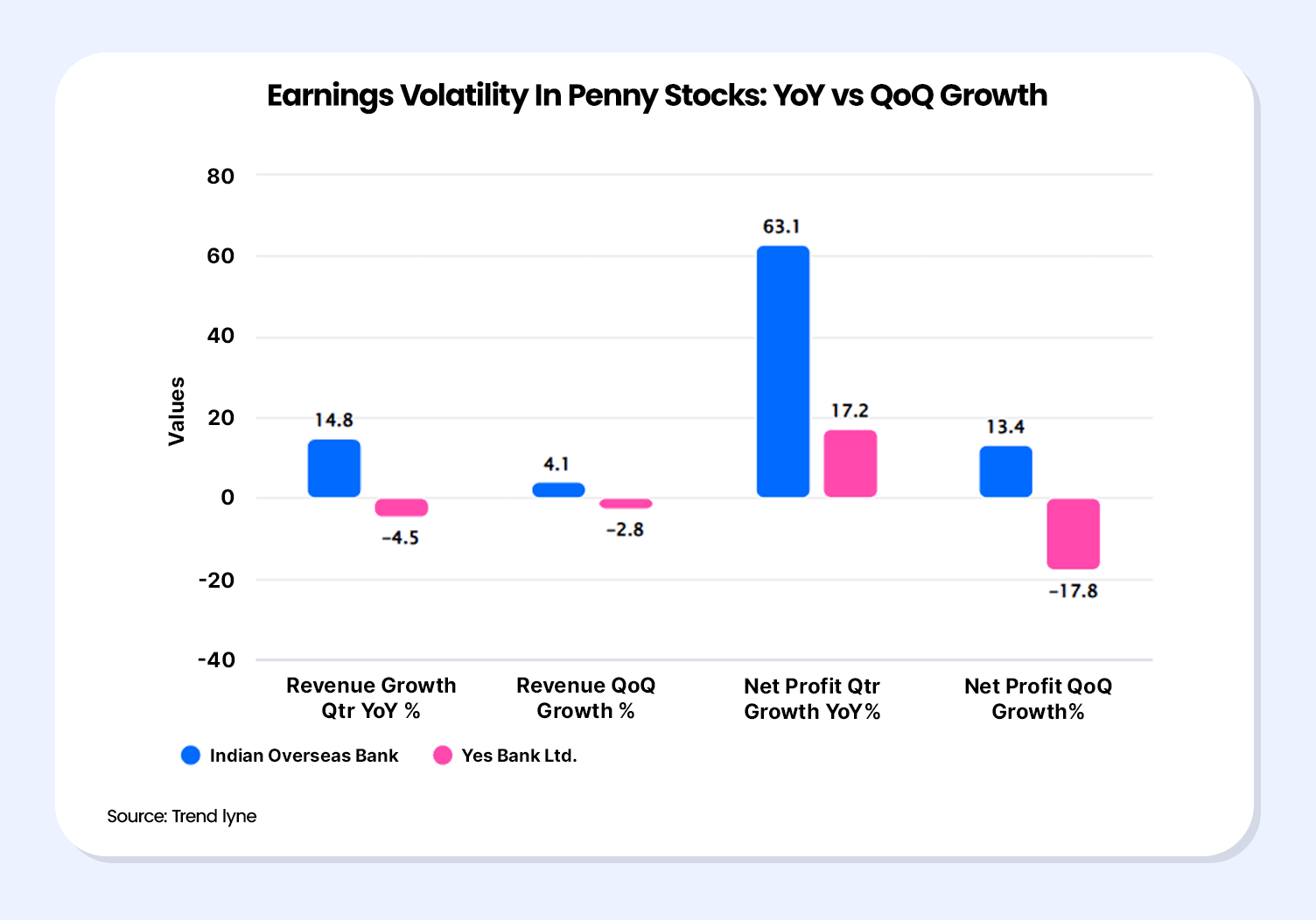
Historical data bites hard: From 2021-2026, over 70% of BSE sub-INR 10 stocks lost 50%+ value amid crackdowns. SEBI's rules now enforce ASM/GSM surveillance, higher margins, and trade restrictions4.
Performance Comparison Table
| Stock Name | 2021 Price (INR ) | 2026 Price (INR ) | 5-Year Return (%) |
| Hypothetical Pharma Ltd | 5.00 | 0.50 | -90 |
| Hypothetical Textile Co | 8.00 | 1.20 | -85 |
| Shukra Pharmaceuticals | ~2.00 | ~4.50 | +125 (volatile) |
| Nandan Denim Ltd | 3.50 | 4.20 | +20 |
Common Myths Around Penny Stocks
Penny stocks promise quick riches but hide deadly traps. Let us bust the top myths with hard facts from the Indian market.
Myth 1: "High returns guaranteed"
Outliers like SBC Exports Ltd delivered 100%+ gains in a year, dazzling investors. Reality: 90% of penny stocks fail long-term due to shaky fundamentals. Survivor bias skews perceptions—most erode your capital over time.
Myth 2: "Low price means cheap"
A INR 1 share is not a bargain; it screams distress. Unlike blue-chips with solid P/E ratios, penny stocks signal red flags. Indian data shows even "debt-free" ones underperform benchmarks by 15-20% annually.
Myth 3: "Easy to trade"
High brokerage fees on tiny values, plus STT and GST, devour profits. SEBI's stringent rules—like enhanced surveillance—pile on compliance headaches for retail traders.
Myth 4: "Perfect for quick flips"
Illiquid markets mean you can not exit fast during crashes. Manipulation thrives in low-volume BSE/NSE counters.
The Reality Check
Stick to diversified mutual funds or blue-chips for sustainable wealth. Penny stocks suit pros only—high risk, low reward for most. Coming up to the next point is Smarter Portfolio Construction to supercharge your returns safely.
Smarter Portfolio Construction
Penny stocks tempt with moonshot dreams, but smart investors balance them with reliable anchors. Opt for stable income instruments like FDs or government bonds yielding 7-8% annually—steady returns that crush penny volatility without the sleepless nights6.
The 5% Rule
Never allocate more than 5% to high-risk penny stocks. Diversify aggressively: 40% in broad index funds (Nifty 50 ETFs averaging 12-15% long-term), 30% debt funds or FDs, 20% gold ETFs, and 10% alternatives.
Key Strategies for Success
- Rigorous Screening: Zero in on debt-free penny stocks with ROE >15%, positive cash flow, and revenue growth >20%. Examples include select NSE small-caps—vet them on Screener.in or Tickertape7.
- Yield Booster: Incorporate Grip Invest for 12-14% returns on secured non-convertible debentures (NCDs) and invoice discounting. It is SEBI-registered, app-based, and starts at INR 10,000—perfect for retail diversification.
- Practical India Guide: Open a free demat with Zerodha or Groww. Research via NSE India, avoid Telegram "tips" (SEBI red flag), and use SIPs for disciplined entry.
NSE data shows balanced portfolios deliver 15-18% CAGR vs. penny losses. Rebalance yearly.
Conclusion
Penny stocks may look attractive because of their low prices and stories of outsized gains, but the reality is far less forgiving. Most sub-INR 10 stocks operate in the micro-cap space, where illiquidity, price manipulation, weak governance, and frequent business failures are common. Data from Indian markets consistently shows that the majority of penny stocks destroy capital over time rather than create wealth.
Examples from the past highlight how sharp price swings, delistings, and prolonged declines can erode investor confidence and capital alike. These risks make penny stocks unsuitable as a core holding for most investors, especially when decisions are driven by social media tips rather than business fundamentals.
A more sustainable approach is portfolio balance. Limiting speculative exposure to a small portion of capital while anchoring the portfolio with relatively stable assets such as fixed-income instruments, diversified equity funds, and gold can help manage volatility across market cycles. Regular review and disciplined rebalancing often matter more than chasing the next high-return story.
For investors looking to bring stability alongside growth, platforms like Grip Invest provide access to curated fixed-income opportunities that can support a more structured, long-term investment approach. Over time, patience, diversification, and risk control tend to outperform hype-driven decisions.
Frequently Asked Questions
1. Are penny stocks legal in India?
Yes, fully legal on NSE/BSE under SEBI oversight, but manipulated ones face bans.
2. What are penny stock trading risks?
Penny stocks carry high risks due to low liquidity, which makes it hard to enter or exit positions at fair prices. They are also more vulnerable to price manipulation, misleading promotions, and sudden trading suspensions. In many cases, weak business fundamentals, poor disclosures, or regulatory action can lead to sharp losses or even complete capital erosion, especially for investors without deep financial analysis and risk controls.
3. SEBI penny stock rules?
SEBI monitors penny stocks through measures such as price and volume-based circuit breakers, enhanced surveillance mechanisms, and stricter disclosure requirements for companies showing unusual trading activity. Stocks flagged under these frameworks may face trading restrictions, reduced price bands, or mandatory additional disclosures, all aimed at protecting investors and curbing market manipulation.
References:
1. Street gains, accessed from: https://streetgains.in/insights/what-are-penny-stocks-in-india/
2. Market feed, accessed from: https://www.marketfeed.com/read/en/uncovering-the-truth-about-penny-stocks-in-india
3. Trend lyne, accessed from: https://trendlyne.com/equity/compare-stocks/638/1535/iob-vs-yesbank/
4. Screener, accessed from: https://www.screener.in/screens/8277/low-price-shares/
5. Tickertape, accessed from: https://www.tickertape.in/stocks/collections/penny-stocks
6. Ind money, accessed from: https://www.indmoney.com/stocks/category/penny-stocks
7. Dhan, accessed from: https://dhan.co/stocks/market/fundamentally-strong-penny-stocks/
Want to stay at the top of your finances?
Join the community of 4 lakh+ investors and learn more about Grip Invest, the latest financial knick-knacks, and shenanigans in the world of investing.
Happy Investing!
Disclaimer - Investments in debt securities are subject to risks. Read all the offer-related documents carefully. The investor is requested to take into consideration all the risk factors before the commencement of trading. This communication is prepared by Grip Broking Private Limited (bearing SEBI Registration No. INZ000312836 and NSE ID 90319) and/or its affiliate/ group company(ies) (together referred to as “Grip Invest”) and the contents of this disclaimer are applicable to this document and any and all written or oral communication(s) made by Grip Invest or its directors, employees, associates, representatives and agents. This communication does not constitute advice relating to investing or otherwise dealing in securities and is not an offer or solicitation for the purchase or sale of any securities. Grip Invest does not guarantee or assure any return on investments and accepts no liability for the consequences of any actions taken based on the information provided. For more details, please visit https://www.gripinvest.in/.
Registered Address - 106, II F, New Asiatic Building, H Block, Connaught Place, New Delhi 110001.


