

SEBI Proposes Salary Deduction For Mutual Fund SIPs Like EPF And NPS


India’s market regulator SEBI has announced a big proposal which could potentially affect each and every employee in India.
In a recent consultation paper released on May 20th 2026, SEBI has proposed to allow employers to contribute mutual fund units on employee's behalf, through payroll deduction. This would enable employees to contribute a part of their salary directly into mutual funds, a facility that has till now been available only for EPF and NPS contributions.1
What Does The SEBI Circular Say?
SEBI’s circular has proposed to enable payment for investment in mutual fund units by employer, on behalf of its employees through payroll deduction:
“The proposed scenario acknowledges the established practice of employers offering various benefits and savings avenues to their employees. This mechanism would allow AMCs to accept consolidated payments for mutual fund investments through salary deduction.
Such facility would be available to all listed and EPFO registered companies and the AMCs themselves and only interested employees may opt for such an arrangement and agree for salary deduction for MF schemes of their choice”, the circular mentioned.
Also, SEBI’s consultation paper signals that this facility for employers to deduct mutual fund contributions would most likely be available only to listed companies, EPFO registered firms and AMCs themselves.2 Employees would have to explicitly opt in to the arrangement, and the investments would continue to be credited in the employee’s own name every month.
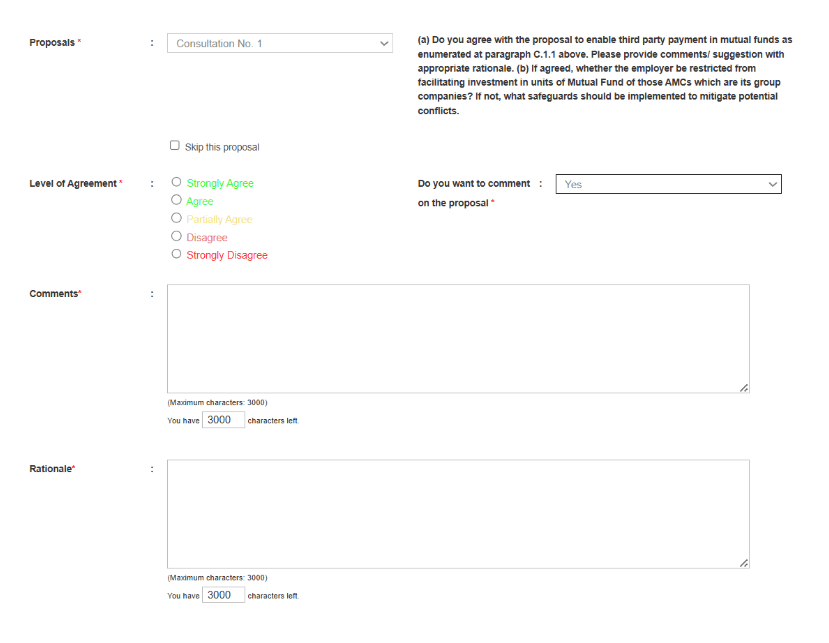
Moreover, SEBI has also invited the public to give their comments on this consultation paper, by filing this form: https://www.sebi.gov.in/sebiweb/publiccommentv2/PublicCommentAction.do?doPublicComments=yes 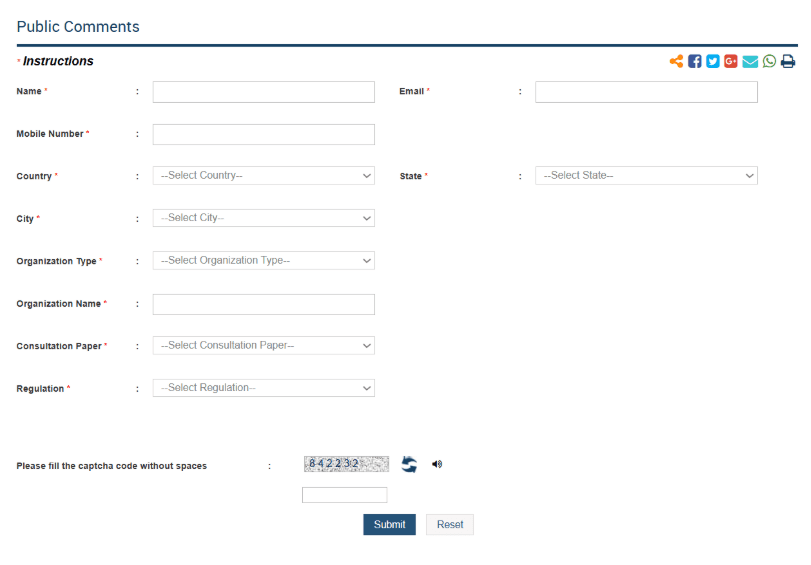
The Massive Growth Of Mutual Fund SIPs In India
It’s a no-brainer that SIPs have been no less than a revolution in India’s financial industry. And the numbers are there to prove it. As per AMFI data, SIP contributions have grown leaps and bounds in the last 10 years.3
Total monthly SIP contributions (Rs in crores) | |||||||||||
Month | FY 26-27 | FY 25-26 | FY 24-25 | FY 23-24 | FY 22-23 | FY 21-22 | FY 20-21 | FY 19-20 | FY 18-19 | FY 17-18 | FY 16-17 |
Mar | — | 32,087 | 25,926 | 19,271 | 14,276 | 12,328 | 9,182 | 8,641 | 8,055 | 7,119 | 4,335 |
Feb | — | 29,845 | 25,999 | 19,187 | 13,686 | 11,438 | 7,528 | 8,513 | 8,095 | 6,425 | 4,050 |
Jan | — | 31,002 | 26,400 | 18,838 | 13,856 | 11,517 | 8,023 | 8,532 | 8,064 | 6,644 | 4,095 |
Dec | — | 31,002 | 26,459 | 17,610 | 13,573 | 11,305 | 8,418 | 8,518 | 8,022 | 6,222 | 3,973 |
Nov | — | 29,445 | 25,320 | 17,073 | 13,306 | 11,005 | 7,302 | 8,273 | 7,985 | 5,893 | 3,884 |
Oct | — | 29,529 | 25,323 | 16,928 | 13,041 | 10,519 | 7,800 | 8,246 | 7,985 | 5,621 | 3,434 |
Sep | — | 29,361 | 24,509 | 16,042 | 12,976 | 10,351 | 7,788 | 8,263 | 7,727 | 5,516 | 3,698 |
Aug | — | 28,265 | 23,547 | 15,814 | 12,693 | 9,923 | 7,792 | 8,231 | 7,658 | 5,206 | 3,497 |
July | — | 28,464 | 23,332 | 15,245 | 12,140 | 9,609 | 7,831 | 8,324 | 7,554 | 4,947 | 3,334 |
June | — | 27,269 | 21,262 | 14,734 | 12,276 | 9,156 | 7,917 | 8,122 | 7,554 | 4,744 | 3,310 |
May | — | 26,688 | 20,904 | 14,749 | 12,286 | 8,819 | 8,123 | 8,183 | 7,304 | 4,584 | 3,189 |
Apr | 31,115 | 26,632 | 20,371 | 13,728 | 11,863 | 8,596 | 8,376 | 8,238 | 6,690 | 4,269 | 3,122 |
Total during FY | 31,115 | 3,49,589 | 2,89,352 | 1,99,219 | 1,55,972 | 1,24,566 | 96,080 | 1,00,084 | 92,693 | 67,190 | 43,921 |
As you can see, monthly SIP contributions back in FY16-17 were Rs 3,000-Rs 4,000 crore. And they have gradually jumped to around Rs 25,000-Rs 30,000 crore in ten years, signalling a nearly 10 fold jump.
This recent proposal by SEBI, if approved, may push even more inflows into SIPs, and deepen the penetration of mutual funds into India’s financial ecosystem.
How Much Can Employees Currently Contribute Towards NPS And EPF?
While this proposal by SEBi is expected to take some time to materialize, if approved, lets have a look at how much can employees currently contribute towards the available options EPF and NPS from their salary:
EPF contribution: The employee needs to make EPF contributions of 12% of the basic salary + dearness allowance per month. So suppose your basic pay + DA is Rs. 10,000, your mandatory contribution would be 12% of it, which is Rs.1,200. Whereas if you have the pay of Rs 15,000 (which is the upper limit), your contribution would come out to be Rs 1,800.4
Also, given that Rs 15,000 is the maximum wage ceiling for mandatory contribution, an employee’s maximum contribution becomes Rs 1,800 for their EPF account. If you want to contribute a higher amount, you can voluntarily contribute through VPF (voluntary provident fund), but remember that your employer is not under any obligation to pay the higher contribution.5
NPS contribution: Upto 10% of employee’s salary (basic + DA) under Section 80CCD (1). This can be claimed as tax deduction upto a maximum of Rs 1.5 lakhs for a given financial year (but only under the old regime).
Additionally under Section 80CCD (1B), upto Rs 50,000 additionally can contributed and claimed. This is over and above the limit of Rs 1.5 lakhs provided overall in Section 80C. Again this benefit is also available only under the old tax regime.
Last but not the least, under Section 80CCD (2), salaried individuals can claim the following deduction against their employer's contribution towards the National Pension Scheme:
- Upto 14% of their salary (basic + DA) contributed by the Central or State Government towards NPS.
- Upto 10% of their salary (basic + DA) contributed by any other employer towards NPS, under the old tax regime.
- Upto 14% of their salary (basic + DA) contributed by any other employer towards NPS, under the new tax regime.6
Conclusion
While SIP investing has clearly been witnessing a massive adoption over the last decade or so, this latest SEBI proposal holds the potential to mark another key step towards deepening mutual fund penetration in India.
If it goes on to get implemented, this payroll-based mutual fund SIP contribution system may change how Indian salaried employees invest, and encourage more disciplined investing habits, something that EPF and NPS contributions are somewhat doing today.
As of now, this SEBI proposal remains at an early consultation stage, and we will have to wait and watch how its final structure, timeline and industry response turns out to be.
Grip offers corporate bonds and other fixed-income investment options with yields up to 12.5% and institutional-grade security features. Visit Grip Today!
FAQs On SIPs Proposal By SEBI
 |
Author: Grip Invest Editorial Team The Grip Invest Editorial Team is a group of Chartered Accountants, MBA (Finance) graduates, and Qualified Research Analysts dedicated to helping you invest smarter. We dive deep into India's fixed income landscape to deliver content that is accurate, up-to-date, and easy to understand. Whether you're exploring bonds, fixed deposits, or other fixed income opportunities, our guides cut through the noise and give you the clarity to make better financial decisions. |
Want to stay at the top of your finances?
Join the community of 4 lakh+ investors and learn more about Grip Invest, the latest financial knick-knacks, and shenanigans in the world of investing.
Happy Investing!
Disclaimer - Investments in debt securities/municipal debt securities/securitised debt instruments are subject to risks including delay and/ or default in payment. Read all the offer related documents carefully. The investor is requested to take into consideration all the risk factors before the commencement of trading.
This communication is prepared by Grip Broking Private Limited (bearing SEBI Registration No. INZ000312836 and NSE ID 90319) and/or its affiliate/ group company(ies) (together referred to as “Grip”) and the contents of this disclaimer are applicable to this document and any and all written or oral communication(s) made by Grip or its directors, employees, associates, representatives and agents. This communication does not constitute advice relating to investing or otherwise dealing in securities and is not an offer or solicitation for the purchase or sale of any securities. Grip does not guarantee or assure any return on investments and accepts no liability for consequences of any actions taken based on the information provided. For more details, please visit www.gripinvest.in
Registered Address - 106, II F, New Asiatic Building, H Block, Connaught Place, New Delhi 110001


