

Bank Of India Mutual Fund: Secret Treasure Or A High-Risk Choice For 2026 Investors?


Introduction
Bank of India Mutual Fund (BOI MF) is not among the most popular Indian AMCs that investors consider when choosing mutual funds. However, it still offers investors a solid heritage and stability. As a mutual fund arm of a major public sector bank, BOI MF enjoys the advantages of a reliable brand and the relationships that the banking sector has been building for decades.
Conservative investors, especially those who focus on capital preservation and income, can find this positioning particularly relevant as we approach 2026.
While large and high-growth AMCs get most of the attention, BOI MF’s strategy is more focused on steady growth and risk management: a profile that would be attractive to those who are scared of unstable markets.
What Bank Of India MF Offers
BOI MF has a well-balanced offering of debt, hybrid, and a few
equity funds. The range of products is undoubtedly aimed at serving the needs of investors who seek low-risk debt solutions, are income-oriented, or wish to achieve moderate growth through hybrid vehicles.
On the debt side, the leading funds are the overnight, liquid, ultra-short, and short-term income funds that aim at capital preservation and liquidity.
Conservative Hybrid Fund-type hybrid funds mix mostly debt with a small equity component to provide stability with some return potential. On the equity side, BOI MF also offers broader exposure, including flexi cap, large and mid cap, and small-cap equity funds, but these are secondary to its fixed-income focus.
Here is how net inflow in debt funds has been in the past five years in India, as per the AMFI data:
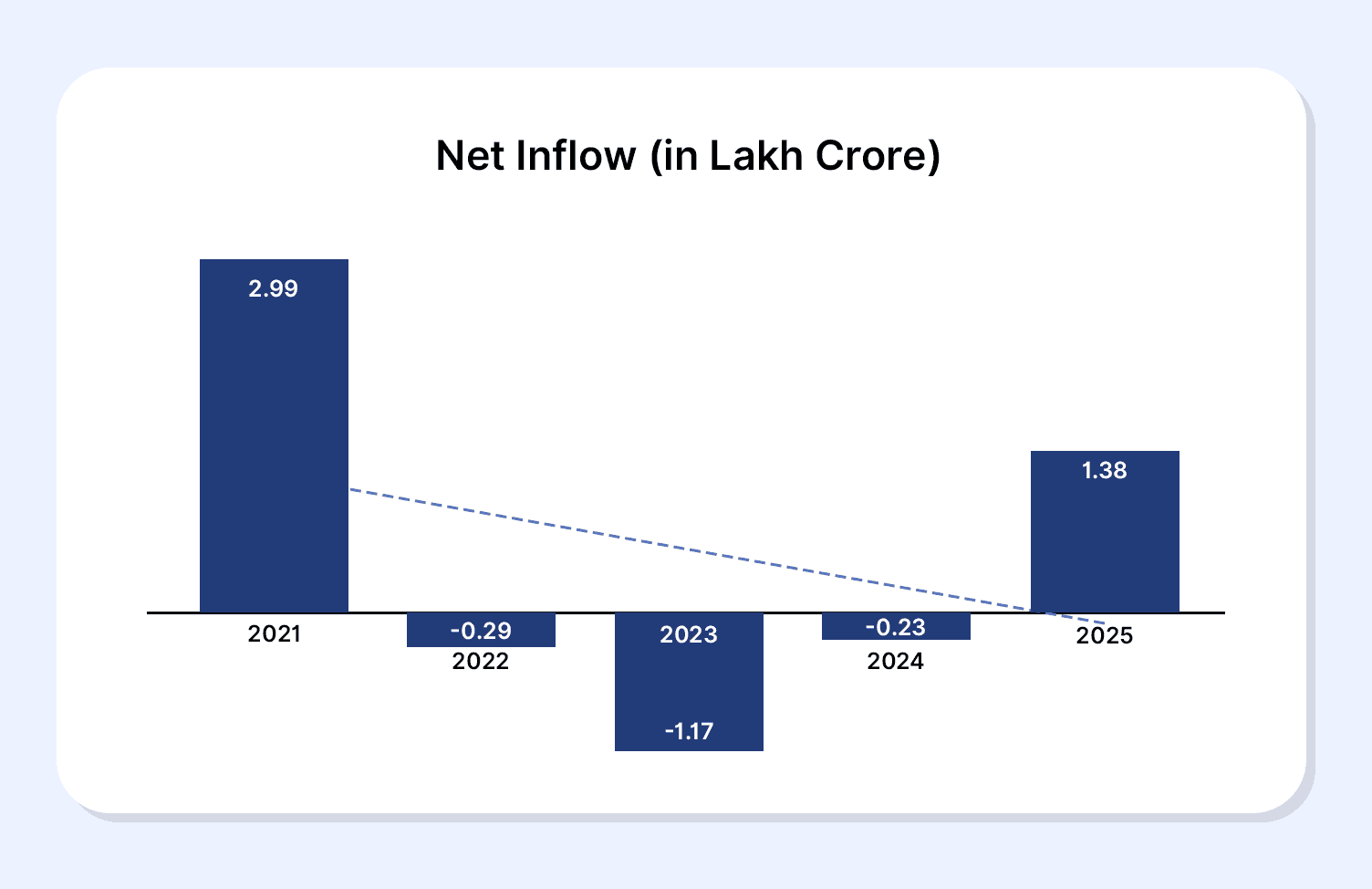
Figure 1.0: Net Inflow in Debt Funds (2021-2025)
Top 10 Mutual Funds From Bank Of India
Bank of India offers various mutual fund options to choose from, some of which are:
1. Bank of India Liquid Fund – Capital preservation with daily liquidity
A low-risk debt mutual fund that invests in high-quality money market and short-term debt instruments, suitable for parking surplus cash while aiming to generate slightly better returns than a savings account.
2. Bank of India Overnight Fund – Lowest risk, overnight maturity exposure
Invests in overnight securities with one-day maturity, making it one of the lowest-risk mutual fund options for investors seeking very high liquidity and minimal interest rate risk.
3. Bank of India Ultra Short Duration Fund – Low to moderate risk short-term debt
Targets short-duration bonds and money market instruments, aiming to offer better returns than liquid funds with limited volatility, ideal for short-term goals of 3–12 months.
4. Bank of India Short Term Income Fund – Income-oriented short- to medium-term debt
Focuses on high-quality corporate bonds and government securities with relatively short duration, suitable for investors seeking regular income with controlled interest rate risk.
5. Bank of India Conservative Hybrid Fund – Primarily debt with limited equity
Allocates a major portion to debt and a smaller part to equities, aiming to provide stable returns with mild growth potential, ideal for conservative investors starting with mutual funds.
6. Bank of India Balanced Advantage Fund – Dynamic equity–debt allocation Actively adjusts between equity and debt based on market conditions, seeking to reduce downside risk while participating in equity upside, suitable for moderate-risk investors.
7. Bank of India Mid and Small Cap Equity and Debt Fund – Aggressive hybrid with growth focus
Invests predominantly in mid and small-cap stocks along with a smaller debt component, targeting higher long-term capital appreciation for investors with high risk tolerance.
8. Bank of India Large and Mid Cap Equity Fund – Diversified multi-cap equity
Allocates primarily to large and mid-cap companies across sectors, aiming to balance stability and growth potential for long-term wealth creation.
9. Bank of India ELSS Tax Saver Fund – Equity-linked tax-saving option
A diversified equity fund that qualifies for tax deduction under Section 80C (subject to prevailing tax laws), with a 3-year lock-in aimed at long-term capital growth and tax savings.
10. Bank of India Bluechip Fund – Large-cap focused equity portfolio
Invests mainly in established, high market-cap companies with stronger balance sheets, suitable for long-term investors looking for relatively stable equity exposure.
These funds address a wide spectrum of investor requirements. Consider your long-term investment goals before choosing any one or a combination of different BOI Mutual Funds listed above.
Pros And Cons For Investors
Pros For Investors
1. First of all, stability: A solid placement of BOI MF in both debt and conservative hybrid funds attracts risk-averse investors to the mutual fund. Conservative Hybrid Funds commit up to 90% of their investments to debt and money markets, areas where capital preservation is paramount1.
2. B30 traction: BOI MF is one of the top performers in B30 AUM share growth, which bumped over 26% in September 2025; indicative of the strong retail segment in smaller towns2.
3. Clear and effective role in portfolio risk management: Reasonable use as a stabiliser of the stock riskier allocations and market fluctuations.
Cons For Investors
1. Less aggressive equity depth: The equity mutual funds and aggressive hybrid options of BOI MF are limited, and a few of their AUM tend to be of medium size, compared to their peers.
2. Slower AUM growth: The total AUM of Bank of India Mutual Fund (INR 13,428 Cr as of Sep 2025) is quite low if we compare it with the top AMCs; thus, it may not be attractive to institutional or large-scale investors.
3. Risk vs return trade-off: Even though they are safer, the downside is often slower long-term returns compared to pure equity funds or flexi cap alternatives.
In a nutshell, BOI MF is a winner when the focus is on stability and slow growth rather than on quick returns.
Where Bank Of India Mf Fits Into Investor Portfolios
The best usage of debt in a portfolio: BOI’s range of debt funds (overnight, liquid, short duration) is the perfect tool for the low-risk part of a portfolio building investors. Because of their hypothetical nature, an investor with a stable-income goal for 2-5 years could invest in this category, with the rest invested in equities for growth.
Complementing with market-linked products: Conservative hybrid funds or balanced advantage funds from BOI are great additions to the equities of other strong AMCs, as they stabilise the portfolio without increasing the risk of overexposure. Assess yield against risk: Especially considering the present macro situation (with fluctuating interest rates and SEBI reclassifications expected in 2026), investors ought to be very careful when deciding about yield potential and credit risk in the debt portfolios.
Also Read: SEBI Eases Rules For Investment Advisers And Research Analysts
Supplementing Debt Funds With Other Low-Risk Options
Apart from mutual funds, investors may also look into:
Corporate bonds or SDIs (Structured Debt Instruments) for steady income sources, Government securities or gilt funds for the most secure sovereign exposure, Fixed deposits and PPF for guaranteed returns. In the case of modern fixed-income stacks, platforms like Grip Invest provide easy access to curated bond offerings, helping investors complement their traditional mutual fund exposure with direct fixed-income instruments.
FAQs On Bank Of India Mutual Fund
1. Which BOI fund category is good for short-term goals?
Liquid and overnight funds are best for ultra-short horizons with minimal risk.
2. Are debt funds enough for low-risk investors?
They’re a strong component, but often pairing with ultra-short, gilt, or bond products can enhance predictability.
3. Should investors diversify debt with corporate bonds?
Yes, mixing mutual funds with high-quality corporate bonds can improve yield while managing credit risk.
References:
1. Goinri, accessed from: https://tinyurl.com/3bzte2tv
2. Cafe mutual, accessed from: https://tinyurl.com/2fa27dms
Want to stay at the top of your finances?
Join the community of 4 lakh+ investors and learn more about Grip Invest, the latest financial knick-knacks, and shenanigans in the world of investing.
Happy Investing!
Disclaimer - Investments in debt securities/municipal debt securities/securitised debt instruments are subject to risks including delay and/ or default in payment. Read all the offer related documents carefully. The investor is requested to take into consideration all the risk factors before the commencement of trading.
This communication is prepared by Grip Broking Private Limited (bearing SEBI Registration No. INZ000312836 and NSE ID 90319) and/or its affiliate/ group company(ies) (together referred to as “Grip”) and the contents of this disclaimer are applicable to this document and any and all written or oral communication(s) made by Grip or its directors, employees, associates, representatives and agents. This communication does not constitute advice relating to investing or otherwise dealing in securities and is not an offer or solicitation for the purchase or sale of any securities. Grip does not guarantee or assure any return on investments and accepts no liability for consequences of any actions taken based on the information provided. For more details, please visit www.gripinvest.in
Registered Address - 106, II F, New Asiatic Building, H Block, Connaught Place, New Delhi 110001


