

Headline Inflation Vs Core Inflation: What India’s Inflation Numbers Really Mean


India has consistently published its inflation numbers, but with mixed results. The headline and core inflation numbers are two different but equally informative views of price changes over time. For instance, as the RBI (Reserve Bank of India) makes policy decisions related to inflation management, it has to take into account both trends.
An environment where inflation erodes the value of money, the value of one's savings will decrease in value over time. This trend has only increased as the severity of the economic cycles today have been impacted by the fluctuation of food prices.
So, knowing headline inflation vs core inflation can help you understand how to invest in India's economy and the impact that inflations have on economic cycles.
What Is Headline Inflation ?
A general know-how to inflation, using a broad measure that includes everything consumers spend money on, is called ‘headline’ or CPI inflation India.
For example, when monsoon rains cause an influx of vegetables into the market, this causes a temporary decrease of headline inflation figures. Although, as indicated, the headline view shows the tremendous cost pressures most families are experiencing.
It is unable to capture steadier underlying trends that may exist beneath the headline figure. This is why the RBI takes very close consideration of the headline inflation data India has in order to obtain a sense of the public opinion on the economy.
What Is Core Inflation ?
The term ‘core inflation’ refers to that part of inflation that does not take food and fuel out of the equation. By doing so, it gives a more accurate view of inflation trends due to services and goods moving at more gradual rates and may reflect longer-term trends.
The RBI prefers core when compared to headline inflation when making policy as there are a lot of uncontrollable fluctuations associated with headline inflation figures. But, core inflation indications provide a much clearer picture of the monthly trends as well as for quarter and annual probability as well.
Key Differences Between Headline And Core Inflation
Breaking the data into Headline and Core measures helps reveal what is genuinely changing versus what is temporary noise. Here is how this approach brings greater clarity.
1. Basket Composition
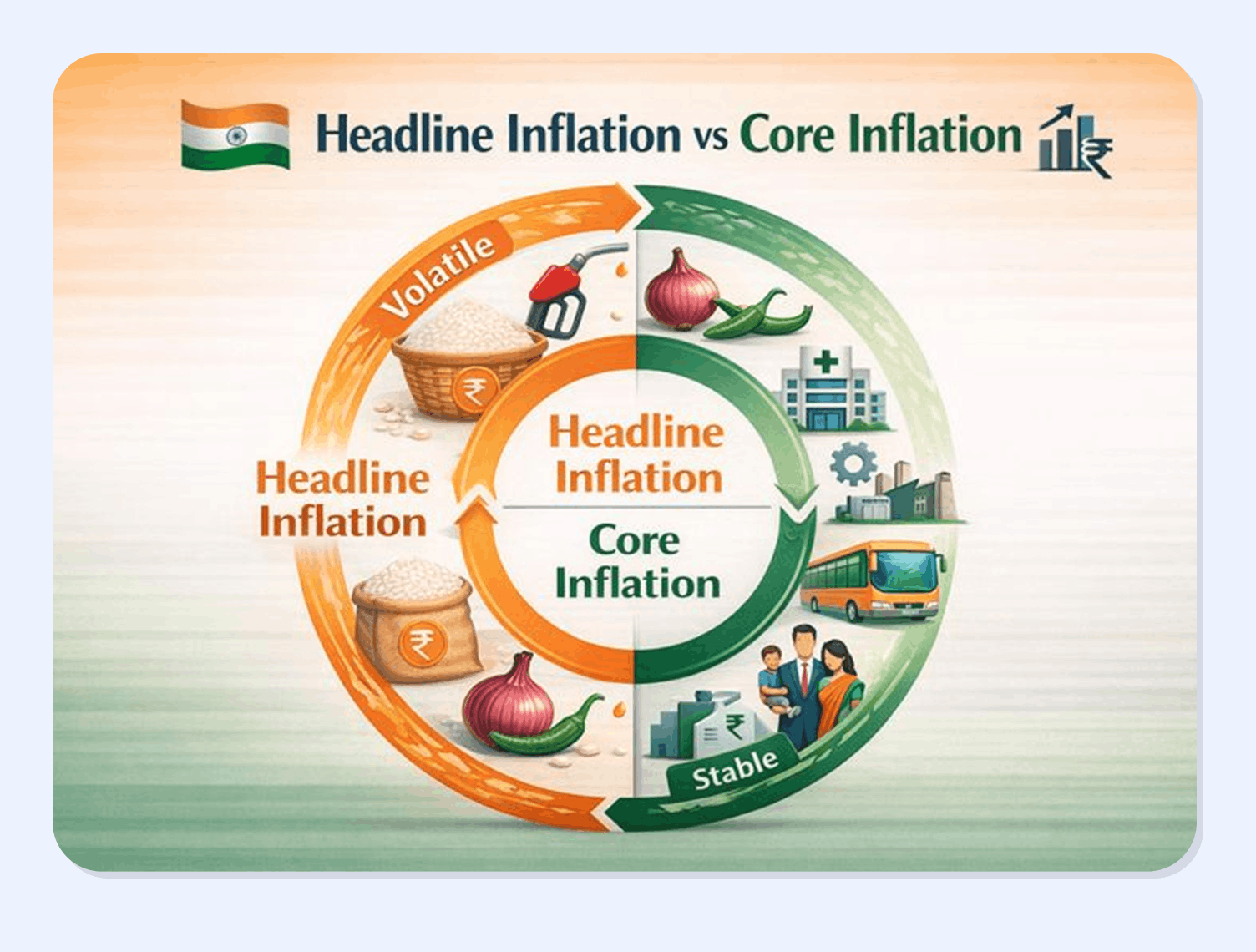
The Headline includes all items such as rice, fuel, and clothing, whereas the Core eliminates most of the volatile fuel and food inflation prices. Thus, it allows a more concentrated view of price movements.
The Headline will move with any spike in onion prices while the Core will not include that spike, forming an immediate correlation with kitchen budgets through the Headline.
2. Volatility Levels
The Headline is very volatile and subject to major fluctuations with global oil price shifts or crop failures. However, the Core is relatively stable and provides a better indicator of long-term inflation impact.
For example, an increase in fuel prices will move the Headline quickly with fuel prices, but the Core reacts slowly to fuel prices. In an inflationary environment, the effects of deflation will impact the Headline much more negatively given the economic downturn.
As a result, when investors are considering long-term investment plans, they will consider the core measurement when they are attempting to navigate through increases or decreases in price.
3. Policy Relevance
The Reserve Bank of India (RBI) uses both the Headline and Core measurements to evaluate Inflationary Policy. Although the RBI will react to public perceptions regarding the Headline, they will ultimately base their monetary policy on the Core measurement.
Therefore, the Core measurement provides the best guide to understanding continued inflation and its impact on Investment strategies. The Headline is more reactive to external events while the Core is more reflective of demand. A balance between the two measurements will provide better insight as to the effectiveness of any Central Bank's Inflationary Policy.
| Aspect | Headline Inflation | Core Inflation |
| Items Included | Food, fuel, all goods | Excludes food, fuel |
| Volatility | High due to shocks | Low, steady trends |
| Best For | Daily consumer view | Policy and long-term planning |
Why RBI Tracks Both Measures
RBI needs full views to steer the economy right. The headline shows immediate pain points for citizens. Core flags deep pressures needing rate tweaks. Together, they guide central bank inflation control against deflation economy effects.
- Headline alerts to urgent food inflation India numbers or fuel crises affecting voters.
- Core drives repo rate decisions for sustainable growth.
- Both help predict economic cycles in India, blending short and long views.
- Headline influences public sentiment, core shapes monetary policy inflation.
This dual watch prevents overreactions. For example, high Headline from floods won't prompt rate hikes if core stays low.
Inflation Protection Through Bonds
Bonds shield portfolios from inflation vs deflation twists. Fixed-rate bonds lock yields above expected rises, preserving value. In Headline spikes, they offer steady payouts unlike stocks. Core trends guide bond picks for duration.
For Instance:
A 7% bond holds real returns if inflation averages 5%. Platforms like Grip provide easy access to fixed rate bonds for predictable income. This helps plan amid purchasing power inflation without daily worries.
Diversify with short-term bonds in high headline times, longer in low core phases. Deflation economy effects boost bond prices further. Such strategies counter inflation's impact on investments smoothly. Rebalance yearly per RBI signals.
Hypothetical Examples
During the Monsoon floods vegetable shortages were evident, however core inflation remains at a lower rate. The Reserve Bank of India kept interest rates on hold because of confidence that the core would recover.
This is in contrast to the rise of core inflation over the years prior to 2020 where there had been gradual increases in core; this has prompted the Reserve Bank to raise interest rates, even though there were only modest increases in headline inflation.
These examples illustrate that both headline and core are important. Lessons learned from deflation and inflation have shown that when deflationary fears occur, the bond markets boomed.
Beyond Basics: Investor Tips
Monitor the monthly CPI announcements to track both types of inflation. In conjunction with this information, keep abreast of global market influences such as oil prices. Be sure to follow your monthly CPI announcements with the assistance of apps to provide you with timely tracking information.
In this way, you will be able to safely increase your savings into bonds when you notice a rise in core inflation. This will yield you greater returns in circumstances where you are experiencing price increases during a price decrease.
Conclusion
Understanding the difference between headline and core inflation helps investors see past short-term noise and focus on what truly drives long-term returns. While headline inflation captures immediate price pressures, core inflation offers clearer signals for interest rate cycles and portfolio planning. In such environments, fixed-income instruments can play a stabilising role by providing predictable returns when markets react to inflation swings. Platforms like Grip Invest make it easier to access curated bond opportunities, helping investors align their strategies with RBI signals and protect purchasing power across economic cycles.
FAQs On Headline vs Core Inflation
1. Why is headline inflation higher than core inflation at times?
Headline inflation rises faster when food or fuel prices spike due to factors like monsoons or global oil prices, even if underlying demand remains stable.
2. Which inflation measure does the RBI focus on more?
The RBI monitors both, but core inflation plays a bigger role in interest rate decisions because it reflects long-term inflationary pressure.
3. Can headline inflation fall while core inflation stays high?
Yes. Temporary drops in food or fuel prices can lower headline inflation even when services and non-food prices continue to rise.
4. How should investors use headline and core inflation data?
Headline inflation helps assess short-term cost pressures, while core inflation is more useful for long-term investment planning, especially for bonds and interest-rate-sensitive assets.
References:
1. Godigit, accessed from: https://www.godigit.com/life-insurance/financial-planning/inflation/headline-inflation-vs-core-inflation
2. Economic times, accessed from: https://m.economictimes.com/news/et-explains/et-explains-difference-between-core-and-non-core-inflation-in-india/articleshow/107149878.cms
3. Science direct, accessed from: https://www.sciencedirect.com/science/article/abs/pii/S0165176521004584
Want to stay at the top of your finances?
Join the community of 4 lakh+ investors and learn more about Grip Invest, the latest financial knick-knacks, and shenanigans in the world of investing.
Happy Investing!
Disclaimer - Investments in debt securities/municipal debt securities/securitised debt instruments are subject to risks including delay and/ or default in payment. Read all the offer related documents carefully. The investor is requested to take into consideration all the risk factors before the commencement of trading.
This communication is prepared by Grip Broking Private Limited (bearing SEBI Registration No. INZ000312836 and NSE ID 90319) and/or its affiliate/ group company(ies) (together referred to as “Grip”) and the contents of this disclaimer are applicable to this document and any and all written or oral communication(s) made by Grip or its directors, employees, associates, representatives and agents. This communication does not constitute advice relating to investing or otherwise dealing in securities and is not an offer or solicitation for the purchase or sale of any securities. Grip does not guarantee or assure any return on investments and accepts no liability for consequences of any actions taken based on the information provided. For more details, please visit www.gripinvest.in
Registered Address - 106, II F, New Asiatic Building, H Block, Connaught Place, New Delhi 110001


