

Sensex Today: Returns, History And 2026 Outlook


2025 was no less than a rollercoaster year for India’s stock market. From geopolitical tensions, tariff wars, FII sell-off in Indian equities, to the Rupee’s depreciation against the US dollar, multiple factors contributed to the muted growth of India’s stock market last year, especially when compared to many other major economies.
But what does the new year 2026 have in store for India’s stock market investors? Will the market crash, remain muted, or jump to new highs? Here is what industry experts are predicting for the stock market’s performance in 2026.
But first, let us look at how India’s stock market performed vs other countries in 2025:
Stock Market Performance 2025: India Vs USA Vs China Vs Japan
| Country | Stock market index | Returns in 2025 |
| India | Sensex | 8.55% |
| USA | Dow Jones Industrial Average | 13.37% |
| China | SSE Composite Index | 21.64% |
| Japan | Nikkei 225 | 28.06% |
| *Returns as per the market’s closing figures on 1st January 2025 vs 31st December 2025. | ||
As this table’s data shows, India’s stock market index Sensex’s single-digit returns of 2025 turned out to be much lower than those of many other major countries’ indices, be it the USA, China, or, Japan.
Now lets focus on what the year 2026 is expected to be for India’s stock market investors.
Will The Sensex Crash In 2026?
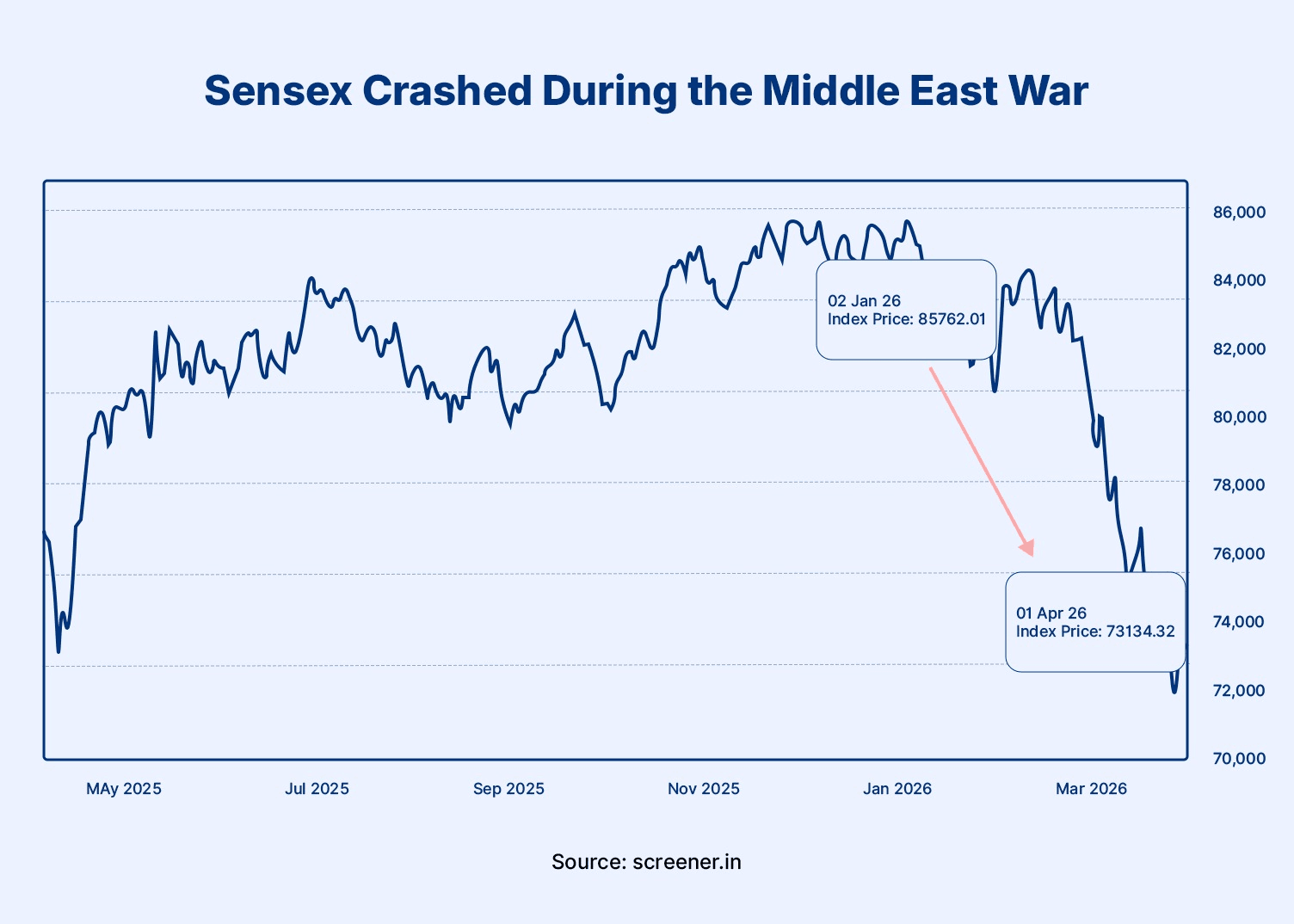
The current scenario is indicating the same. We can observe a big decline in the index due to middle east war. On 2nd Jan 2026, Sensex was at 85,762 and on 1st April it has reached 73,134.
How Crude Oil Prices And Forex Concerns Triggered The Recent Sensex Fall
The recent decline in the Sensex was not driven by a single factor alone. Rising geopolitical tensions in the Middle East, especially the escalating conflict involving Iran, pushed global crude oil prices sharply higher. Since India imports a large portion of its crude oil requirements, higher oil prices increase the country’s import bill and put pressure on inflation and the rupee.
Investor sentiment weakened further after Prime Minister Narendra Modi urged citizens to avoid unnecessary fuel consumption, delay gold purchases, and reduce foreign travel to help manage pressure on India’s foreign exchange reserves. The comments sparked concerns that rising oil prices and forex outflows could create broader economic challenges in the near term.
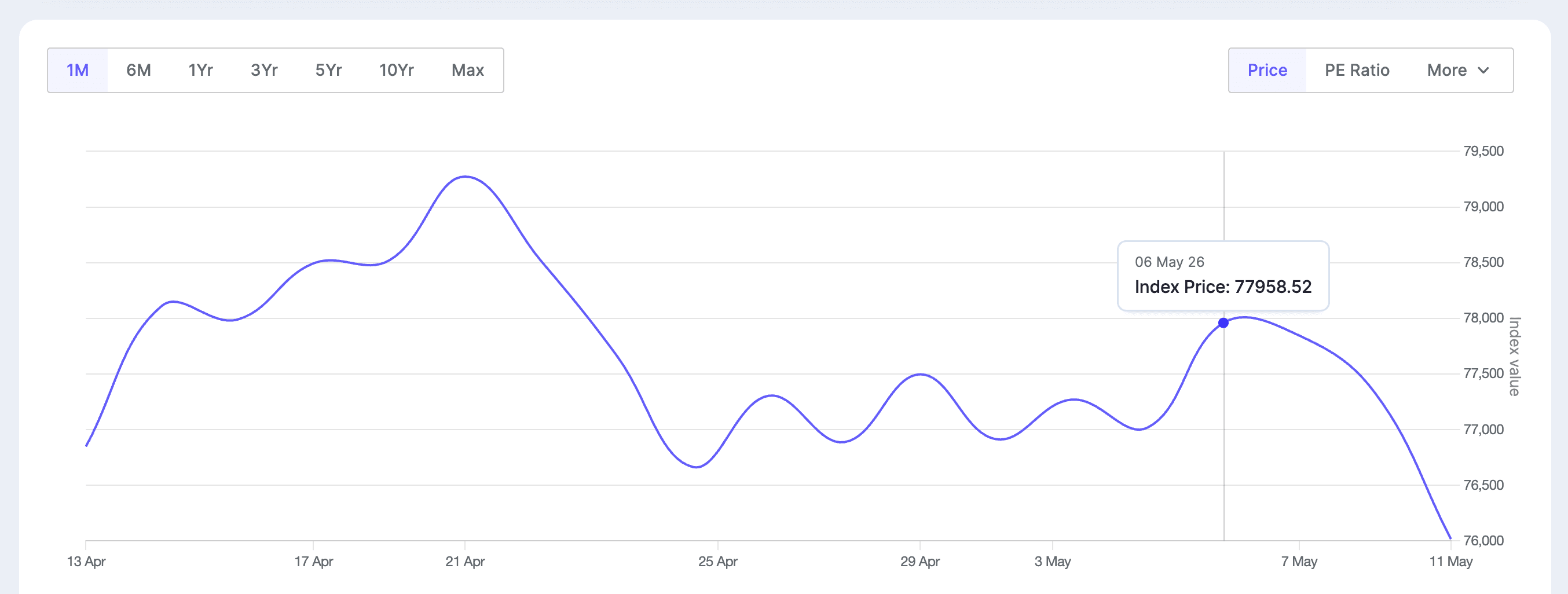
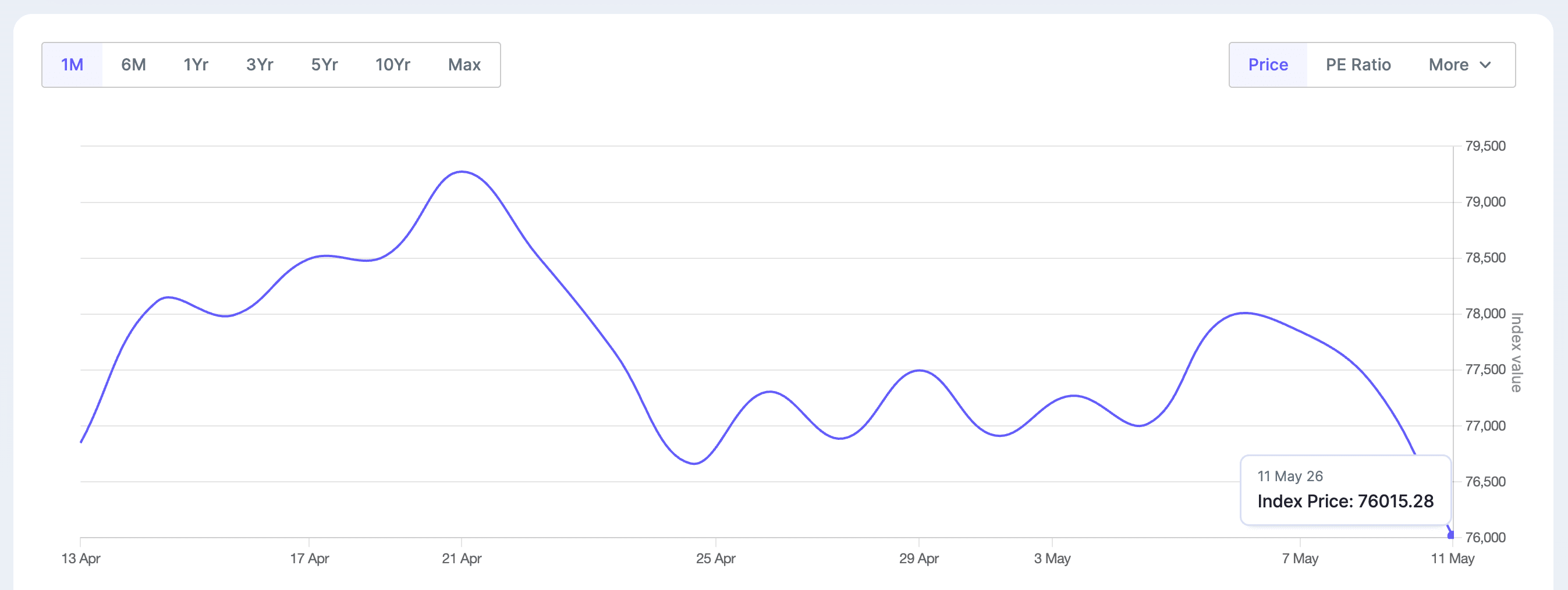
As a result, equity markets witnessed sharp selling pressure, with the Sensex falling over 1,300 points in a single session. Sectors dependent on consumer spending, aviation, jewellery, and oil consumption remained under pressure, while foreign institutional investors also continued their cautious stance toward Indian equities.
Sensex Gains And Market Outlook
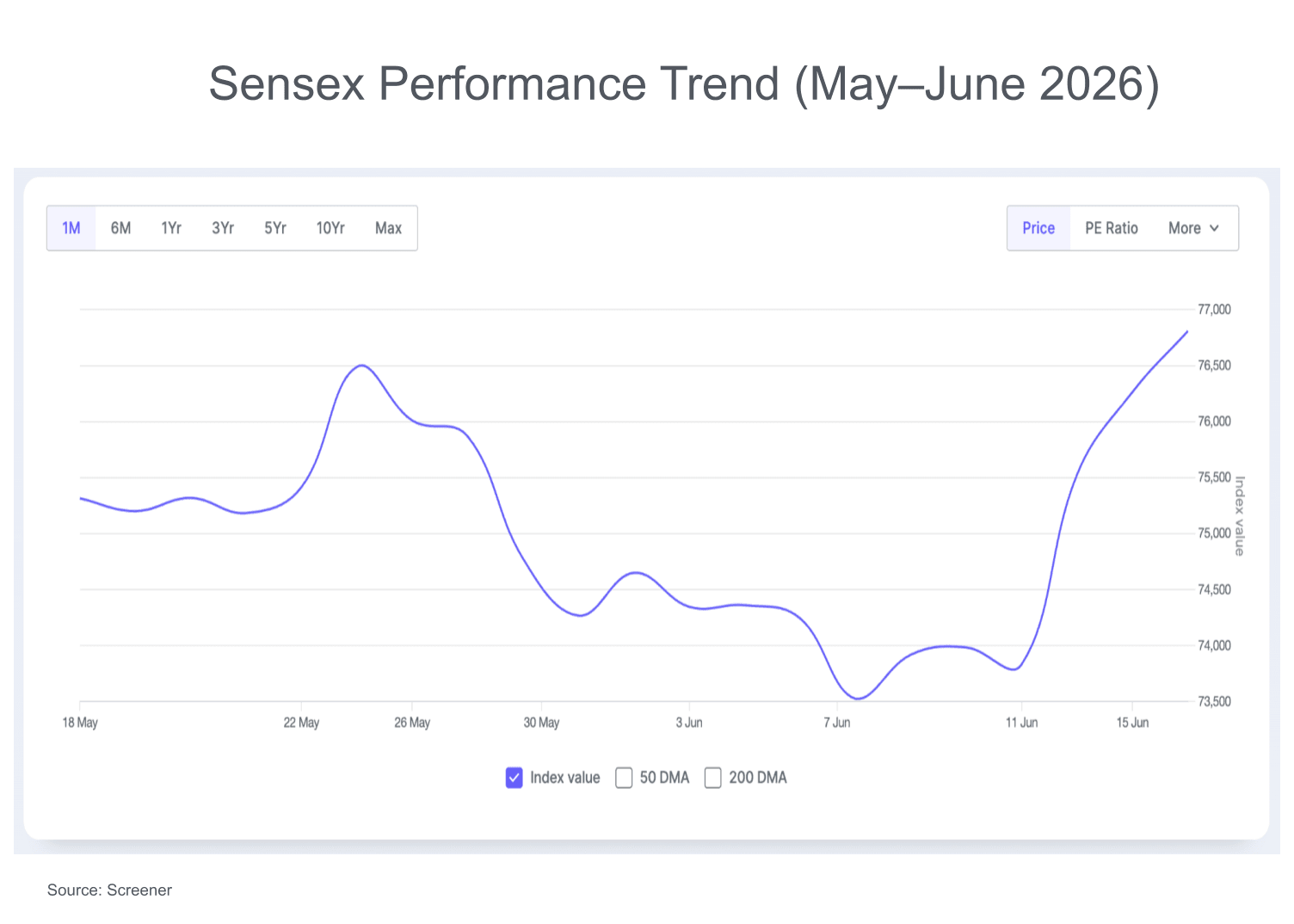
The Sensex has recently witnessed an upward move, supported by improving market sentiment and positive developments in global markets. The index gained along with the Nifty 50 as investors responded to easing crude oil concerns and improved risk appetite.
A rising Sensex highlights market optimism, but investors should focus on long term goals and portfolio diversification rather than short term movements.
What The Industry Experts Are Predicting For The Sensex In 2026?
Christopher Wood, the global head of equity strategy at American multinational independent investment bank Jefferies, predicts that the expectation of Sensex hitting the 1 lakh mark in 2026 remains achievable.
"The 2025 performance is roughly in line with the 10-15% return expectation. If we see a cyclical pickup in earnings, the Sensex can give another 10-15% from here on. That would put the Sensex really close to my long-term target of 100,000," Wood had recently mentioned in an interview.
Predicting an even more optimistic view, analysts at Morgan Stanley expect the Sensex to hit the 107,000 mark by December 2026. But that is a bull case scenario, and their base-case for the Sensex level by December 2026 is 95,000 level, to which they have attached 50% probability.
Also, an ET Markets Poll, which included 13 brokerages, gave an optimistic prediction, with an expectation of Sensex surpassing the 90,000 mark in 2026. The poll included Axis Securities, Angel One, ICICI Securities, Anand Rathi, Kotak Securities, YES Securities, Choice, Ashika, Geojit, Mehta Equities, Share.Market, SAMCO Securities and Centrum Broking.
These brokerages expect Fed rate cuts, accelerating earnings, and a potential reversal of foreign selloffs as some of the key reasons behind the target they have predicted.
On the other hand, UK-based bank HSBC has pegged the Sensex to hit the 94,000 mark in 2026.
Also Read: Understand What is Bull and Bear Market And Its Investment Strategies
What Do These Stock Market Predictions Indicate?
All these industry predictions for Sensex in 2026 are signalling an optimistic year for the Indian stock market. Sensex is expected to hit the 90,000-1,07,000 mark this year, as per industry experts.
Here is what these predictions would mean for the Sensex’s returns in 2026:
| Industry expert | Prediction for Sensex | Returns for 2026 |
| Morgan Stanley | 95,000-1,07,000 | 11.5%-25.6% |
| Jefferies | 1,00,000 | 17.3% |
| HSBC | 94,000 | 10.3% |
| ET Poll | 90,000 | 5.6% |
| (Note: Sensex began 2026 at the 85,188.60 mark on January 1st) | ||
Did The 2025 Predictions For Sensex Come True?
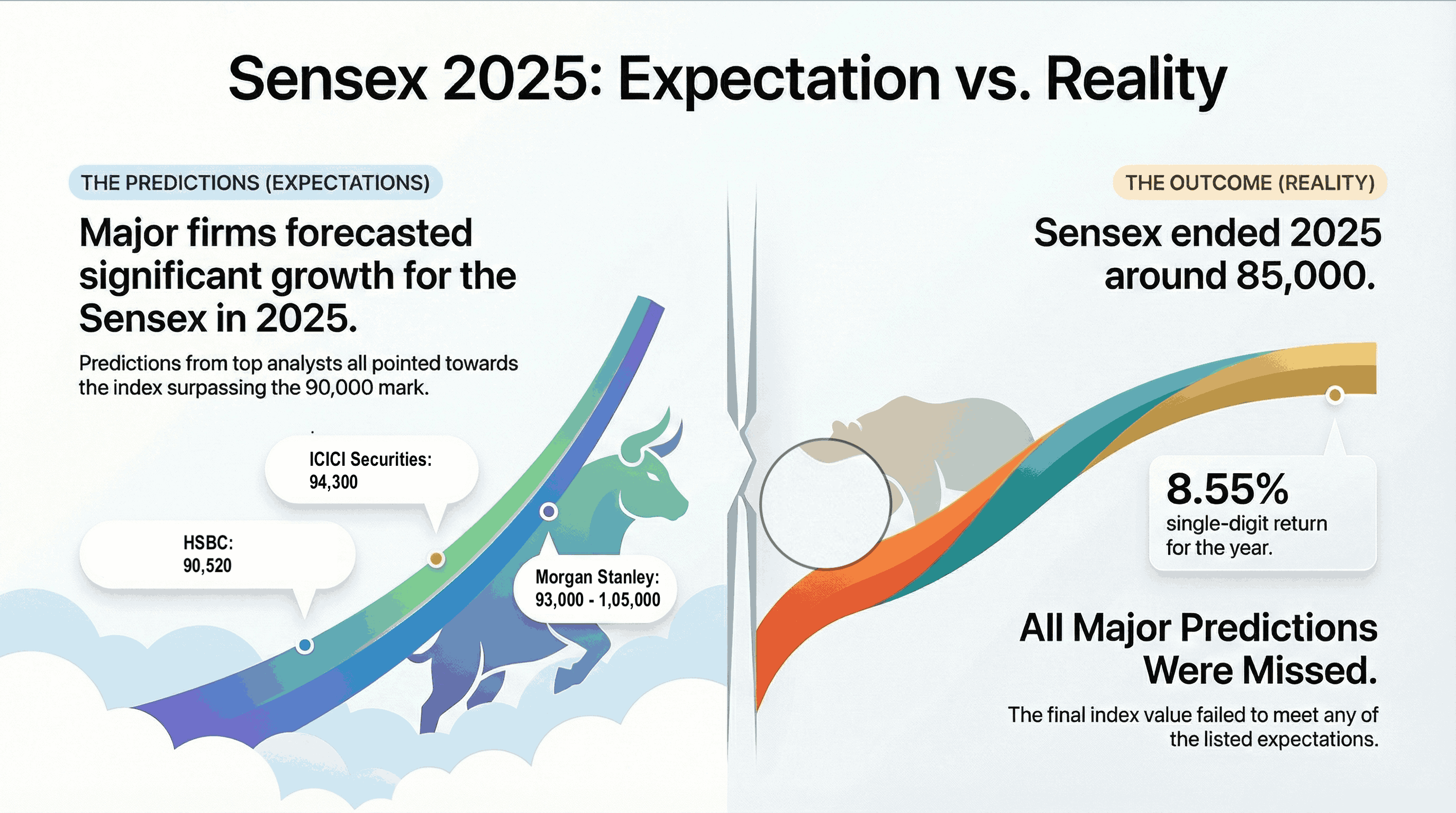
Sensex’s single-digit returns of 8.55% in 2025 were far below the ones predicted by some of the major financial firms.
Sensex ending the year 2025 around the 85,000 mark came as a disappointment for many. Morgan Stanley had predicted Sensex to hit the 93,000-1,05,000 mark in 2025, whereas HSBC had predicted the index to hit 90,520 mark.
On the other hand, ICICI Securities had expected the Sensex to hit the 94,300 mark. Clearly, the Sensex could not meet the expectations of any of them last year.
Why Is The Market Moving?
Indian equity markets are experiencing volatility due to a combination of global and domestic factors. Recent Sensex movement has been influenced by geopolitical tensions, fluctuating crude oil prices, foreign institutional investor flows, and sector rotation between banking, IT, and consumer stocks.
When global risk sentiment improves, domestic markets often see broad based buying, while uncertainty tends to drive investors toward defensive sectors like FMCG and pharma.
What Should Investors Do Now?
For long term investors, current market conditions present opportunities to build quality positions at attractive valuations. Market commentary suggests maintaining a buy on dips approach with proper risk management, focusing on fundamentally strong businesses, and avoiding overexposure to high volatility sectors. Diversification across large cap quality stocks, periodic portfolio reviews, and sticking to systematic investment plans remain key during uncertain periods.
"The India stock market outlook highlights a phase of short term volatility driven by global factors. While the near term trend may remain uncertain, India’s strong economic fundamentals continue to support long term growth. Investors should remain patient, disciplined, and focused on quality investments."
– Swastika Investmart Market Outlook, April 2026
What Factors Influence BSE Sensex?
There are multiple factors which influence Sensex, including both domestic and international changes.
1. Company performance
Sensex is an Indian stock market index comprising 30 well established companies across 13 key sectors in the Indian economy such as financial services, IT, oil and gas, FMCG etc. Performance of these companies directly impacts SENSEX, if these companies report higher profits, increased consumer demand and growth in sales, the Sensex will rise.
Poor earnings on the other hand will pull it down.
2. Interest rates and RBI policy
Another major factor impacting Sensex is RBI policy. RBI controls interest rates, borrowing capacity and liquidity in the market. When interest rates are low businesses borrow more and consumers increase spending which is positive for the stock market, causing Sensex to rise.
During times of inflation when the price of goods and services increases, RBI might reduce interest rates to discourage companies from borrowing more and to control consumer spending and demand. This slows down business growth causing the Sensex to fall.
Also Read: Inflation vs Deflation In 2026
3. Foreign investor activity
Foreign institutional investors (FIIs) and foreign portfolio investors (FPIs) invest billions of dollars in Indian markets, their investment greatly impacts performance of Indian stock market indices. When foreign investment in India increases, the Sensex will rise, when foreign investors withdraw their money from Indian markets, the Sensex falls.
4. Global events
Global economic and political conditions also strongly influence Indian stock markets. Situations such as global recession, war, US interest rates hike can affect investor sentiment worldwide. The war in West Asia has caused an increase in cost of crude oil, rising inflation and increase in cost of transportation, shipping and logistics, negatively impacting Indian businesses, and therefore negatively impacting the Sensex.
5. Government policies and Union budget announcement
Government policies also greatly influence Indian stock markets, since they impact company profits and investor confidence. For instance, if the government increases capital gain tax, GST, import duties etc. which hurts corporate earnings, the Sensex falls.
How To Track BSE Sensex?
There are several ways to track BSE Sensex, instead of just looking at the number it is also important to take into account daily percent change, market sentiment, crude oil price, RBI announcements and FDI activity apart from index value.
- Official website: The most reliable source of information is the official BSE website where you can track live Sensex value, daily gain/loss, top earners and losers and more index related metrics.
- Financial Apps and Websites: Platforms such as moneycontrol, Economic Times Market and Yahoo finance provide live Sensex tracking throughout the day along with charts and technical analysis.
- Brokerage apps: Apps like Zerodha and Groww provide live updates about the Sensex allowing investors to view the index’s performance alongside their investments.
Conclusion
Will the Sensex be able to meet the industry expectations for 2026? Will the market again witness a rollercoaster year, crash or jump to newer highs?
Well, we will have to wait and watch. But irrespective of how the stock market behaves in 2026, one thing that you can do is add stability to your portfolio through corporate bonds.
After all, adding a layer of diversification through predictable returns of corporate bonds can turn out to be a smart move for investors.
FAQs On Sensex Returns Outlook
1. What is the Sensex today?
The BSE Sensex is India's benchmark stock market index tracking the 30 largest and most actively traded companies on the Bombay Stock Exchange. Today's live value is updated daily on this page. Check the live Sensex value on top of this page.
2. What are the historical returns of the Sensex?
The Sensex has delivered an average annual return of approximately 12–15% over the long term, though returns vary significantly year to year based on market conditions and macroeconomic factors. It is also important to note that historical returns will also change every day as you change the time horizon.
3. What is the Sensex prediction for 2026?
Based on current market trends, analyst estimates, and India's GDP growth trajectory, the Sensex is expected to reach 90,000-1,07,000 by the end of 2026, according to Morgan Stanley reports. However, predictions are subject to global and domestic market risks.
4. What is the Sensex forecast for the next 5 years?
Analysts project the Sensex could reach 1,00,000–1,20,000 levels by 2030, driven by India's economic growth, FII inflows, and corporate earnings expansion. Long-term investors may benefit from SIP-based equity exposure.
5. What is the difference between Sensex and Nifty 50?
Sensex tracks 30 companies listed on the BSE, while Nifty 50 tracks 50 companies on the NSE. Both are benchmark indices but differ in composition, exchange, and methodology.
6. How is the Sensex calculated?
The Sensex is calculated using the free-float market capitalisation method, where only the shares available for public trading are considered. It is reviewed and rebalanced periodically by BSE.
7. What factors affect Sensex movement?
Key factors include RBI monetary policy, inflation data, FII/DII activity, global cues (US Fed, crude oil prices), corporate earnings, and geopolitical developments. For example, the Middle East war between Israel and Iran has affected the Sensex negatively.
8. Is it a good time to invest based on the current Sensex level?
Rather than timing the market, financial experts recommend a systematic investment approach (SIP) in equity mutual funds or index funds. Current valuations and risk appetite should guide investment decisions. It is recommended that you diversify your portfolio with debt instruments like corporate bonds to stabilise your overall returns.
9. What is the all-time high of the Sensex?
The BSE Sensex hit its all-time high of 86159.02 1st Dec 2025. Market analysts track ATH levels as key psychological resistance and momentum indicators.
Want to stay at the top of your finances?
Join the community of 4 lakh+ investors and learn more about Grip Invest, the latest financial knick-knacks, and shenanigans in the world of investing.
Happy Investing!
Disclaimer - Investments in debt securities/municipal debt securities/securitised debt instruments are subject to risks including delay and/ or default in payment. Read all the offer related documents carefully. The investor is requested to take into consideration all the risk factors before the commencement of trading.
This communication is prepared by Grip Broking Private Limited (bearing SEBI Registration No. INZ000312836 and NSE ID 90319) and/or its affiliate/ group company(ies) (together referred to as “Grip”) and the contents of this disclaimer are applicable to this document and any and all written or oral communication(s) made by Grip or its directors, employees, associates, representatives and agents. This communication does not constitute advice relating to investing or otherwise dealing in securities and is not an offer or solicitation for the purchase or sale of any securities. Grip does not guarantee or assure any return on investments and accepts no liability for consequences of any actions taken based on the information provided. For more details, please visit www.gripinvest.in
Registered Address - 106, II F, New Asiatic Building, H Block, Connaught Place, New Delhi 110001


