

Tata Mutual Fund Review 2026: Should You Add It To Your Portfolio?


Tata Mutual Fund, backed by the legendary Tata Group (Tata Capital), is one of the most trusted and oldest AMCs in the country. With a total AUM (Asset Under Management) of INR 2,20,745.20 crores, the AMC offers around 60 MF schemes across equity, debt, hybrid, and ETFs and has a total experience of around 30 years in the sector.
The schemes are often preferred by conservative investors as well as people who prefer disciplined compounding over aggressive high-risk strategies. Its funds are often favoured by investors who appreciate steady performance, dependable fund management, and a brand that stands for reliability.
With an increase in the popularity of data-based investment, passive investment strategies, and changing investor perceptions, it will be interesting to evaluate whether Tata Mutual Funds, with their offerings, philosophy, strengths, and suitability, should be a part of a modern-day or conservative investor’s portfolio in 2025/2026.
Overview Of Tata AMC
Tata AMC has been around for almost three decades and has enjoyed a stable position in the country’s mutual fund ecosystem. The AMC offers a mix of equity, debt, hybrid, solution-oriented, thematic, and passive products. For investors evaluating Tata MF India, the AMC provides a wide selection of schemes designed around long-term wealth creation, disciplined risk management, and category-specific consistency.
The philosophy of the AMC is simple: selecting quality-first investments, looking for sustainable growth and backing the selection of the stocks and investments with rigorous research. This is why the size of the AMC has increased substantially in the past few years.
Top Tata Mutual Fund Categories
As per the Tata Mutual Fund offerings page, the AMC offers a wide range of options based on the investment perspective of an individual. The categories include: equity, debt, index, hybrid, liquid, tax, overnight, FOF, solutions, ETF and NFO schemes.
Each category has a different risk level and expected rate of return. It is critical to understand that there is no good or better scheme when inter-category comparisons are made. There are pros and cons of each category, which should be considered. For instance, the equity category may offer the highest returns to the investors, but is quite risky, making the risk-averse investors avoid it.
Here is a broad classification of the funds offered by the Tata AMC:
Category | Fund Examples (from Tata MF site) | Typical Risk Level |
Tata Flexi Cap Fund, Tata Large & Mid Cap Fund, Tata Small Cap Fund, Tata Digital India Fund | High / Very High | |
Tata Balanced Advantage Fund, Tata Aggressive Hybrid Fund, Tata Conservative Hybrid Fund | Moderate to Moderately High | |
Multi-Asset & Solution-Oriented Funds | Tata Multi Asset Allocation Fund, Tata Retirement Savings Fund | Moderate to High |
Tata Corporate Bond Fund, Tata Money Market Fund, Tata Liquid Fund, Tata Gilt Securities Fund | Low to Moderate | |
Tata Nifty 50 Index Fund, Tata Nifty Next 50 Index Fund | Moderate to High | |
Tata Gold ETF, Tata Silver ETF | Moderate to High | |
Thematic / Sector Funds | Tata India Pharma & Healthcare Fund, Tata Consumption Fund | High to Very High |
Fund of Funds (FoFs) | Tata Gold Savings Fund, Tata International Nifty Fund | Moderate to High |
As underlined, the equity funds are the riskiest but have also provided some of the highest returns. For instance, let us take a look at the five-year annualised returns of the top three Tata Funds:
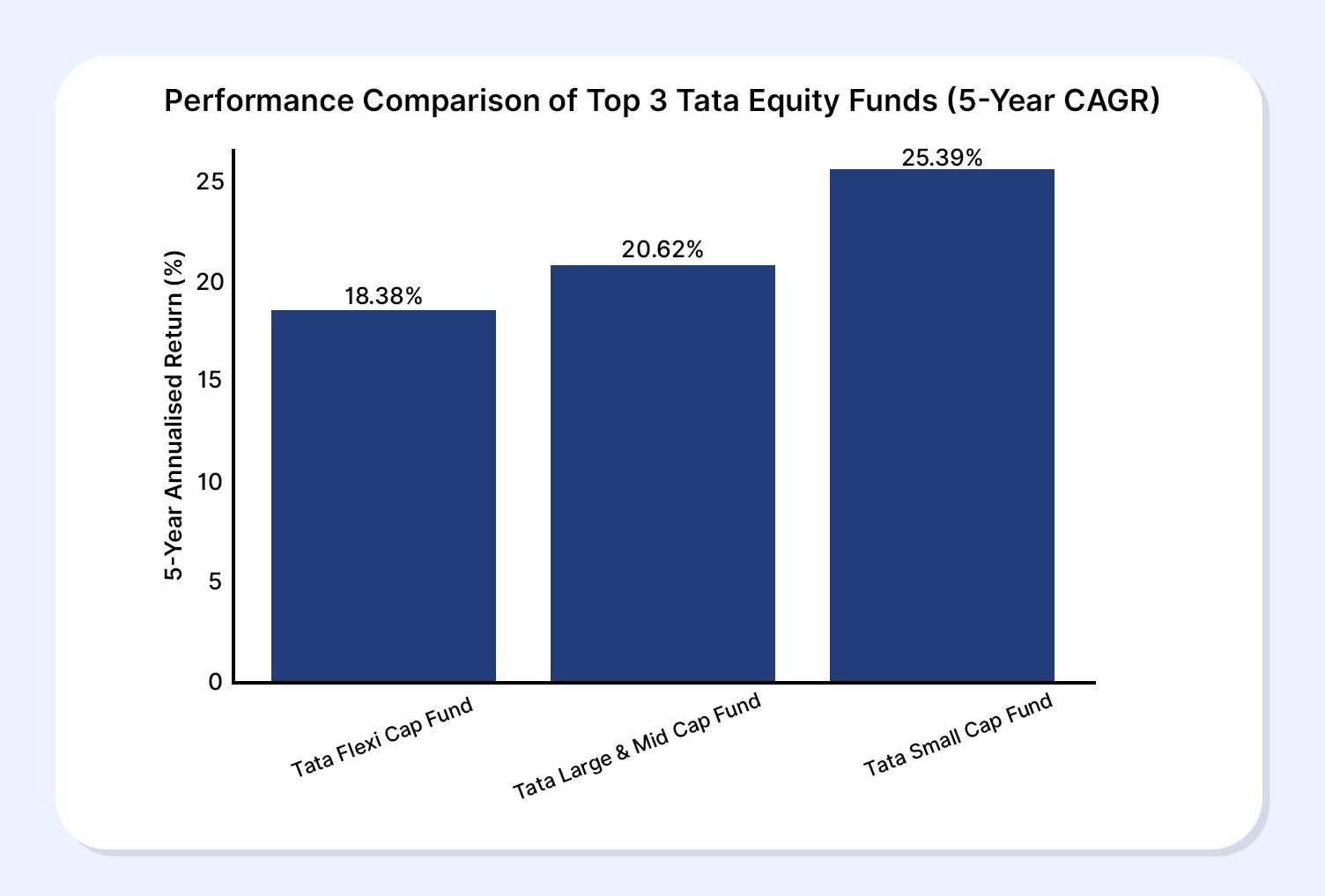
Figure 1.0: Tata Mutual Funds (Equity Schemes) Returns Comparison (5-Year Annualised)
Some of the top Tata mutual funds India searches revolve around the AMC’s diversified range that caters to both growth-seeking and risk-averse investors. As an example, the Tata large-cap fund performance often appeals to those wanting blue-chip stability, while the more aggressive Tata small-cap fund review caters to investors seeking higher long-term compounding potential.
Who Should Choose Tata Mutual Fund?
There are multiple reasons for choosing the Tata Mutual Fund, especially if you align with the investment philosophy of the AMC. The AMC’s disciplined investment framework, consistent communication, and research-backed fund management approach make it appealing to investors who prioritise stability.
Many investors evaluating Tata mutual fund SIP returns notice that while the AMC may not always rank among the top funds in every category, it delivers steady performance over long periods, especially in diversified equity, hybrid, and conservative strategies. Hence, before making an investment decision, it is advised to explore Tata mutual fund portfolio analysis to better understand sector allocations, risk metrics, and historical behaviour across cycles.
Considerations Before Investing
Irrespective of how much this statement has become a buzzline (or even a meme in a few cases), one cannot deny that mutual funds are indeed subject to market risks, and you should consider reading the offer document, analyzing your portfolio, long-term investment targets, and risk profile before investing. Here are a few considerations:
1. Expense Ratio Variations
Cost structures differ significantly across categories. Investors evaluating the Tata balanced fund 2025 or hybrid strategies must review expense ratios versus peers to ensure long-term cost efficiency.
2. Historical Consistency
While Tata AMC has several consistent performers, certain thematic or niche schemes have been known to fluctuate based on market cycles. That is why searches like Tata hybrid fund returns and category-specific reviews remain important.
3. Fund Manager Track Record
The AMC’s strength largely stems from experienced fund managers who follow research-driven frameworks. For tax savers exploring ELSS options, reviews of the Tata tax saving fund 2025 often highlight the importance of understanding manager tenure and investment style.
Why Fixed Income Still Matters
While making an investment or creating a portfolio, every individual has a long-term goal in mind. It could be higher education for children, children’s marriage, building a home or retirement planning (or any other). If your portfolio consists of riskier investments only, there is a huge risk involved in whether your portfolio could attain its investment goals.
This is why your portfolio should be balanced and must have fixed income securities that not only provide you with consistent returns but also hedge your portfolio against market volatility. Alongside Tata AMC’s debt offerings, investors today have access to predictable-yield opportunities on platforms like Grip Invest, which offers corporate bonds and SDIs designed for steady income. These instruments help create a diversified portfolio that balances growth-oriented equity exposure with stability-driven fixed-income allocations.
Conclusion
Tata Mutual Fund remains a credible, research driven AMC with a comprehensive product suite that can support long term wealth creation when schemes are chosen thoughtfully across equity, hybrid and debt categories. For most investors, the right question is not whether Tata Mutual Fund is “good” in isolation, but how specific Tata schemes fit their risk profile, time horizon and broader allocation between growth assets and stable income generators.
A prudent approach is to combine suitable Tata equity and hybrid funds with well researched fixed income options such as high quality corporate bonds and SDIs so that market volatility does not derail key goals like retirement, education funding or home purchase. To explore curated fixed income opportunities that can complement your Tata Mutual Fund holdings, log in to Grip Invest and start building a more balanced, goal aligned portfolio today
FAQs On Tata Mutual Fund
1. Is Tata Mutual Fund good for SIP?
Yes, Tata Mutual Fund is suitable for SIPs because its equity and hybrid schemes focus on stability, disciplined investing, and long-term consistency rather than aggressive, high-risk bets.
2. Which Tata MF schemes perform best?
Historically strong performers include Tata Flexi Cap Fund, Tata Large & Mid Cap Fund, and Tata Small Cap Fund, each known for solid long-term CAGR and research-driven stock selection.
3. Is Tata Mutual Fund suitable for long-term investors?
Yes. Tata Mutual Fund is well-suited for long-term investors who value steady compounding, disciplined fund management, and lower volatility over aggressive short-term gains. Its diversified equity, hybrid, and debt schemes align well with goal-based investing such as retirement, education, and wealth creation.
Join the community of 4 lakh+ investors and learn more about Grip Invest, the latest financial knick-knacks, and shenanigans in the world of investing.
Happy Investing!
Disclaimer - Investments in debt securities/municipal debt securities/securitised debt instruments are subject to risks, including delay and/ or default in payment. Read all the offer-related documents carefully. The investor is requested to take into consideration all the risk factors before the commencement of trading.
This communication is prepared by Grip Broking Private Limited (bearing SEBI Registration No. INZ000312836 and NSE ID 90319) and/or its affiliate/ group company(ies) (together referred to as “Grip”) and the contents of this disclaimer are applicable to this document and any and all written or oral communication(s) made by Grip or its directors, employees, associates, representatives and agents. This communication does not constitute advice relating to investing or otherwise dealing in securities and is not an offer or solicitation for the purchase or sale of any securities. Grip does not guarantee or assure any return on investments and accepts no liability for the consequences of any actions taken based on the information provided. For more details, please visit www.gripinvest.in
Registered Address - 106, II F, New Asiatic Building, H Block, Connaught Place, New Delhi 110001


