

Bond Maturity Vs Duration: Understanding The Difference And Why It Matters


At first appearance, bond investing looks simple, but confusion begins when comparing bond maturity vs the timing that comes into play. Most investors assume that bond maturity and bond duration are the same. This can lead to poor investment decisions during interest rate changes.
The comparison of bond maturity vs duration is not just in technicality. Understanding the difference affects how your bond portfolio reacts to market movements. Here, one measures time while the other measures the market risk.
Globally, as interest rates fluctuate, learning and comprehending these concepts become crucial. To learn more about bond maturity vs duration, read through this article and make an informed decision.
What Is Bond Maturity?
By definition, bond maturity refers to the date on which you repay the principal amount. In other words, it is the length of time a bond remains active and is measured from the date of issue to the date of repayment.
Bond maturity has three terms. These include short-term bonds with a maturity of 1 to 3 years, medium-term bonds with a maturity of 3 to 10 years, and long-term bonds that usually mature after 10 years.
Impact on returns
Factors that affect return rates via bond maturity include interest income and reinvestment risks. Higher risk yields come with bonds having longer maturity. It compensates for locking in capital for a longer period.
Longer maturity also means increased risk to market exposure. Newer bonds may offer better yields in this case if interest rates rise, reducing the relative attractiveness of the existing long-maturity bonds. Understanding bond maturity is not enough. You must also learn about bond duration to fully distinguish between the two.
What Is Bond Duration?
Bond duration is the measure of the sensitivity of a bond’s price to a change in interest rates. It not only focuses on repayment but also on the timing of cash flow. This is why we say it is risk-based and not time-based.
- Interest rate sensitivity
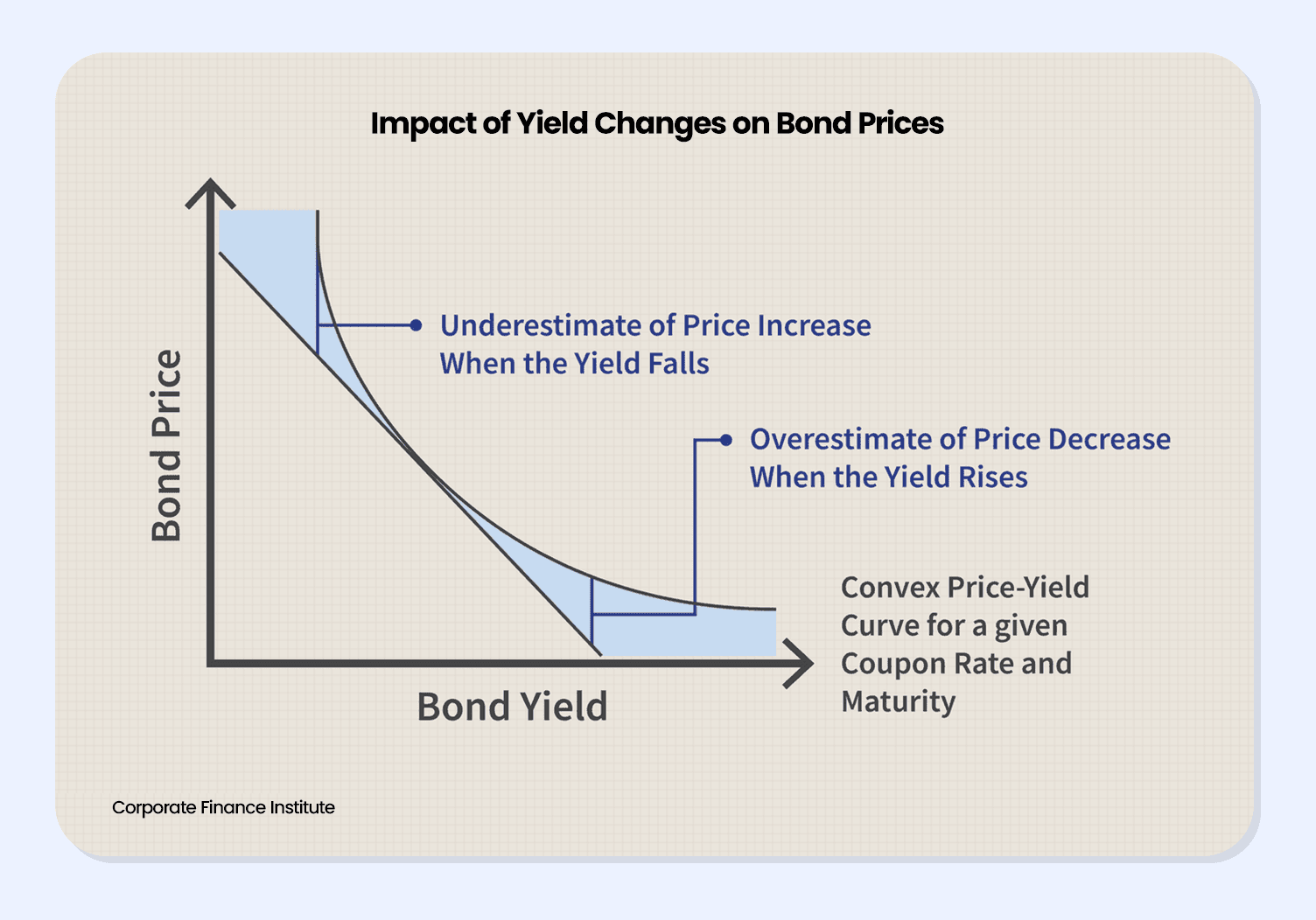
The best way to understand bond duration is by understanding interest rate movements. This means that when the interest rate rises, bond prices fall and vice versa. When we talk about the duration, it signifies how much the price of the bond will change for 1% shift in rates.
Let's take an example. A bond with a duration of 5 may lose almost 5% in value if the interest rates increase by 1%.
- Price movement
The bond price sensitivity duration depends on coupon rates and cash flow timings. This means that bonds with lower coupons have higher durations. This happens because cash flows are received later.
Investors use modified duration metrics in advanced analysis as they offer a more precise estimate of price movements.
Bond Maturity Vs Duration: Key Differences
To fully understand bond maturity and duration, we have to distinguish them based on various parameters.
Below, we have compared bond maturity vs duration.
Ready to put your investment plan into action? Try our Bond Investment Calculator to estimate your potential returns.
Why Duration Matters More Than Maturity
When we talk about bonds, the maturity tells us the time you will receive a return, and the bond duration tells us how much risk is involved today. This is where the distinction becomes critical in terms of interest rate.
Interest rate changes impact
Interest rates usually do not remain constant. The smallest rate movements affect the bond prices significantly, and this sensitivity is captured by the duration clearly.
This is a reason why portfolio managers prioritise duration over maturity. It is used to estimate downside risk, and this approach improves overall duration risk management.
Choosing Bonds Based On Goals
Your financial goals should align with bond selection. Only understanding the time horizon isn't sufficient; you must also understand the interest rate risk.
- Matching Duration with Investment Goals
With short-term goals, you need lower volatility, which is compensated by low-duration bonds. They reduce the exposure to a sudden change in interest rates.
Here, comparing bond maturity vs duration becomes practical. While maturity aligns with fund needs, duration, on the other hand, aligns with your level of risk tolerance.
- Building a Balanced Portfolio
Mixing durations reduces overall volatility. At the same time, short-duration bonds stabilize the portfolio. Longer-duration bonds add return potential. This strategy adapts well to changing interest rate cycles. You can start investing with platforms like Grip Invest to diversify and build an adaptive portfolio.
Conclusion
Investing in bonds not just knowing the maturity dates, but also understanding how bonds react to changing interest rates. The highlighting comparison of bond maturity vs bond duration is time and risk.
Complete reliance on maturity can expose hidden volatility. A clear image of interest rate risk bonds can be attained via understanding duration. Duration simplifies risk assessment for retail investors.
Building a good portfolio involves aligning your financial pals with bonds and market conditions. Platforms like Grip Invest offer investment options that can help balance your risk management.
To build a resilient and adaptive portfolio, start investing with Grip Invest today.
FAQs
Reference:
1. Corporate finance institute, accessed from: https://corporatefinanceinstitute.com/resources/fixed-income/duration-drift/
Want to stay at the top of your finances?
Join the community of 4 lakh+ investors and learn more about Grip Invest, the latest financial knick-knacks and shenanigans that take place in the world of investing.
Happy Investing!
Disclaimer - Investments in debt securities are subject to risks. Read all the offer-related documents carefully. The investor is requested to take into consideration all the risk factors before the commencement of trading. This communication is prepared by Grip Broking Private Limited (bearing SEBI Registration No. INZ000312836 and NSE ID 90319) and/or its affiliate/ group company(ies) (together referred to as “Grip Invest”) and the contents of this disclaimer are applicable to this document and any and all written or oral communication(s) made by Grip Invest or its directors, employees, associates, representatives and agents. This communication does not constitute advice relating to investing or otherwise dealing in securities and is not an offer or solicitation for the purchase or sale of any securities. Grip Invest does not guarantee or assure any return on investments and accepts no liability for the consequences of any actions taken based on the information provided. For more details, please visit https://www.gripinvest.in/.
Registered Address - 106, II F, New Asiatic Building, H Block, Connaught Place, New Delhi 110001.


